 RuggyBearLA / CC BY 2.0 via Wikimedia Commons
The Story
George Washington Carver was born on Moses Carver's farm, two miles west of Diamond, near the end of the Civil War. As nearly as he could trace it, he was about two weeks old when the war closed. His parents were both enslaved, and his father, he wrote, was killed hauling wood to town. Then he, his sister and his mother were "ku clucked," in his phrase, carried off by raiders and sold in Arkansas. Moses Carver sent a man after them. Only the baby came back, nearly dead with whooping cough.
The Carvers raised him. He was a sickly boy who spent his days in the woods, and because flowers were thought a waste of time in the neighborhood, he kept a garden hidden in the brush near the house. Plants did so well under his care that people brought him theirs and called him the plant doctor. There was no school for Black children nearby, so he went eight miles to one in Neosho, the start of a schooling that took him through Kansas and Iowa to Tuskegee, where he taught for 47 years and is buried.
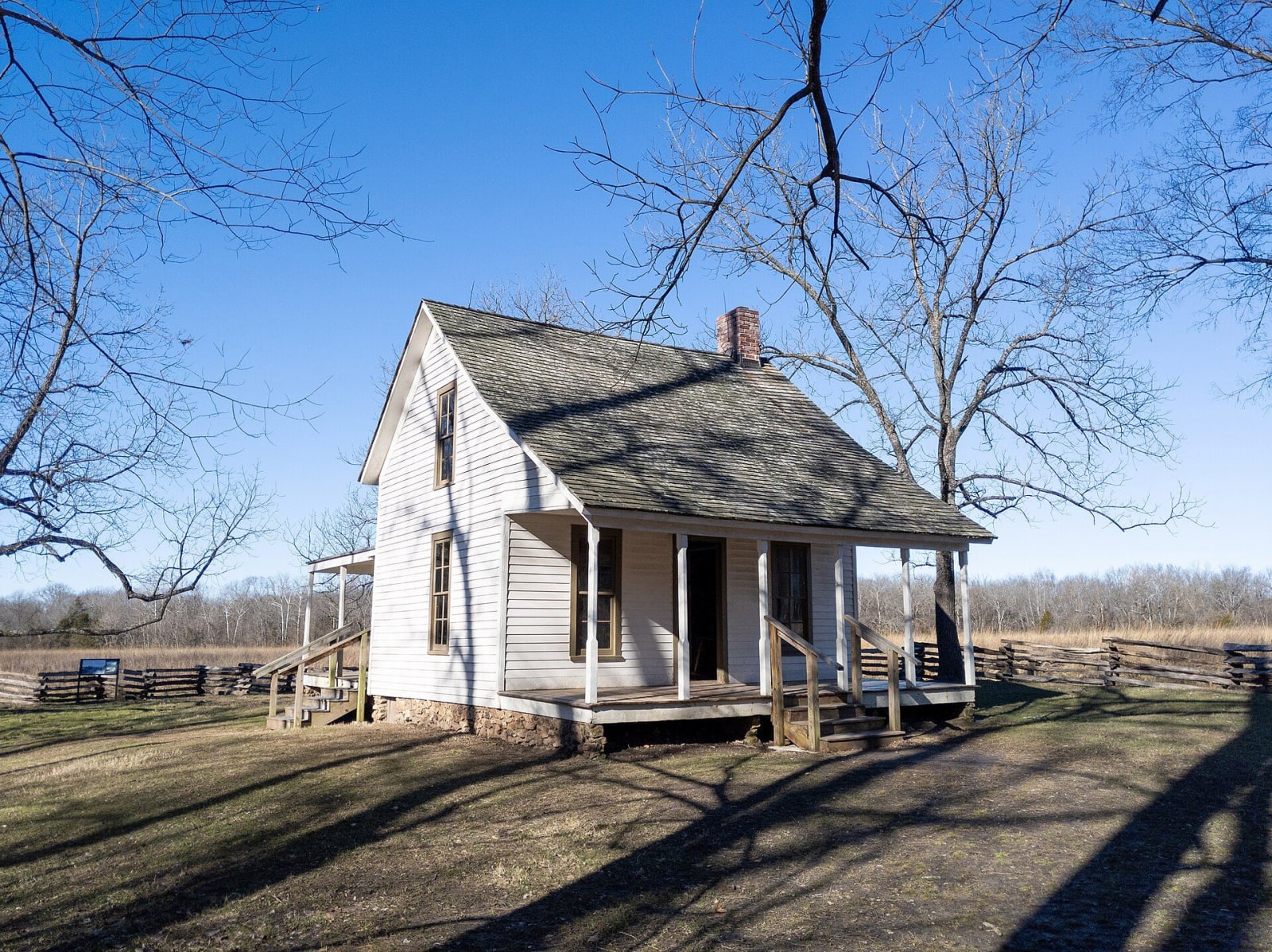
Congress established the monument in July 1943, the first national monument to an African American and the first to anyone not a president. Its 240 acres hold the 1881 Moses Carver house, the Carver cemetery, Robert Amendola's 1960 Boy Carver statue and a three-quarter-mile trail through woods and prairie. The visitor center has three floors of exhibits and a 28-minute film.
Visitor Info
On the Map
Nearby
The closest stops worth working into your route
Historical markers nearby
Roadside plaques and monuments within a short detour