Home / South Dakota / The Glacial Lakes & the Northeast / Fort Sisseton Historic State Park
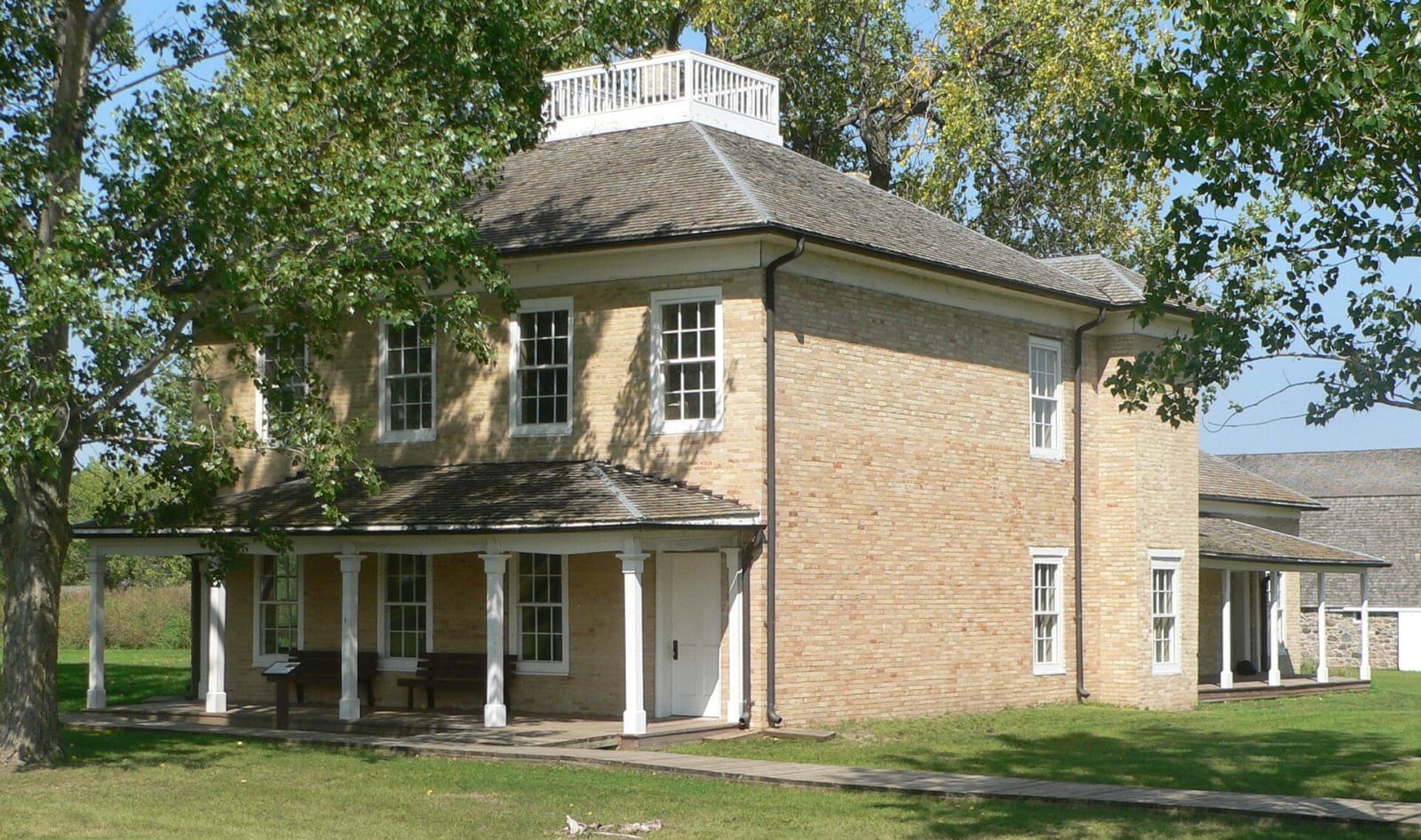
The two-story brick hospital at Fort Sisseton with its columned porch and rooftop lookout, under shade treesAmmodramus / CC0 via Wikimedia Commons
🏛️Historical

Fort Sisseton Historic State Park

Part ofThe Glacial Lakes & the Northeast

A stone fort on the Coteau des Prairies built to watch the Dakota after 1862, renamed for the Sisseton who scouted for it, restored by the WPA and saved again by a boy who grew up loving it.

SummerPaid Entry
⏱
Duration
One to two hours.
🎟
Admission
State park entrance license.
📅
Best Season
May through September.

The Story

After the Dakota war in Minnesota in 1862, the army pushed a line of posts out onto the plains, and on August 1, 1864, soldiers of the 30th Wisconsin Infantry began this one on the high ground of the Coteau des Prairies among a scatter of lakes. They called it Fort Wadsworth, for a general killed that spring in Virginia. The first buildings were logs, some of them hauled more than twenty miles from the timbered ravines at Sica Hollow; fieldstone and brick replaced them. In 1876 the army found it already had a Fort Wadsworth on Staten Island and renamed this one for the Sisseton, the Dakota band whose men served the post as scouts.

No fight ever reached it. For twenty-five years it was the center of a huge, thinly settled district, garrisoned in turn by Minnesota cavalry, regular infantry, and in 1885 a company of the 25th Infantry, one of the army's Black regiments. By the late 1880s it had no purpose left, and the last soldiers marched out in June 1889. The state took it over and let it fall apart.

It has been rescued twice since. Works Progress Administration crews restored the buildings in the 1930s, painting the interiors, for reasons nobody recorded, pink. Twenty years later they were decaying again, and Robert Perry, a man who had first seen the fort as a boy and came to be called the Fort Sisseton Kid, gathered petitions until the legislature made it a state park in 1959. Fourteen stone and brick buildings now stand around the parade ground, among them the barracks, the officers' quarters, the guardhouse, a powder magazine and a long stone stable.

Visitor Info

⏱
Time Needed
One to two hours.
🎟
Admission
State park entrance license.
📅
Best Season
May through September.
🛣️
Highway
SD-10

On the Map

Nearby

The closest stops worth working into your route

natural16 mi away
Sica Hollow State Park
Wooded ravines on the edge of the Coteau, on the Lake Traverse Reservation, where the springs run iron-red and the Dakota tell of a good land gone bad.
historical20 mi away
Joseph N. Nicollet Tower and Interpretive Center
A tower on the edge of the Coteau des Prairies honoring the French mapmaker who drew this country in 1838 and 1839 and kept the Dakota names on the map.
historical89 mi away
Ingalls Homestead and the De Smet Historic Homes
The quarter section a mile from De Smet that Charles Ingalls filed on in 1880 and proved up in 1886, the house in town he built, and the cottonwoods he planted.
historical135 mi away
Mitchell Prehistoric Indian Village
A fortified farming village of about seventy earth lodges above Firesteel Creek a thousand years ago, ancestral to the Mandan, still being excavated under a dome.
architectural136 mi away
Corn Palace
The last survivor of more than thirty corn palaces built across the Midwest, a basketball arena with domes by a Chicago theater firm, covered every year in new murals of corn.
historical143 mi away
Sitting Bull and Sakakawea Monuments
A granite head carved by the Crazy Horse sculptor over a grave dug up at Fort Yates by night in 1953, on a bluff above the Missouri on the Standing Rock Reservation.