Home / Kansas / The Little Balkans & the Southeast / Dalton Defenders Museum
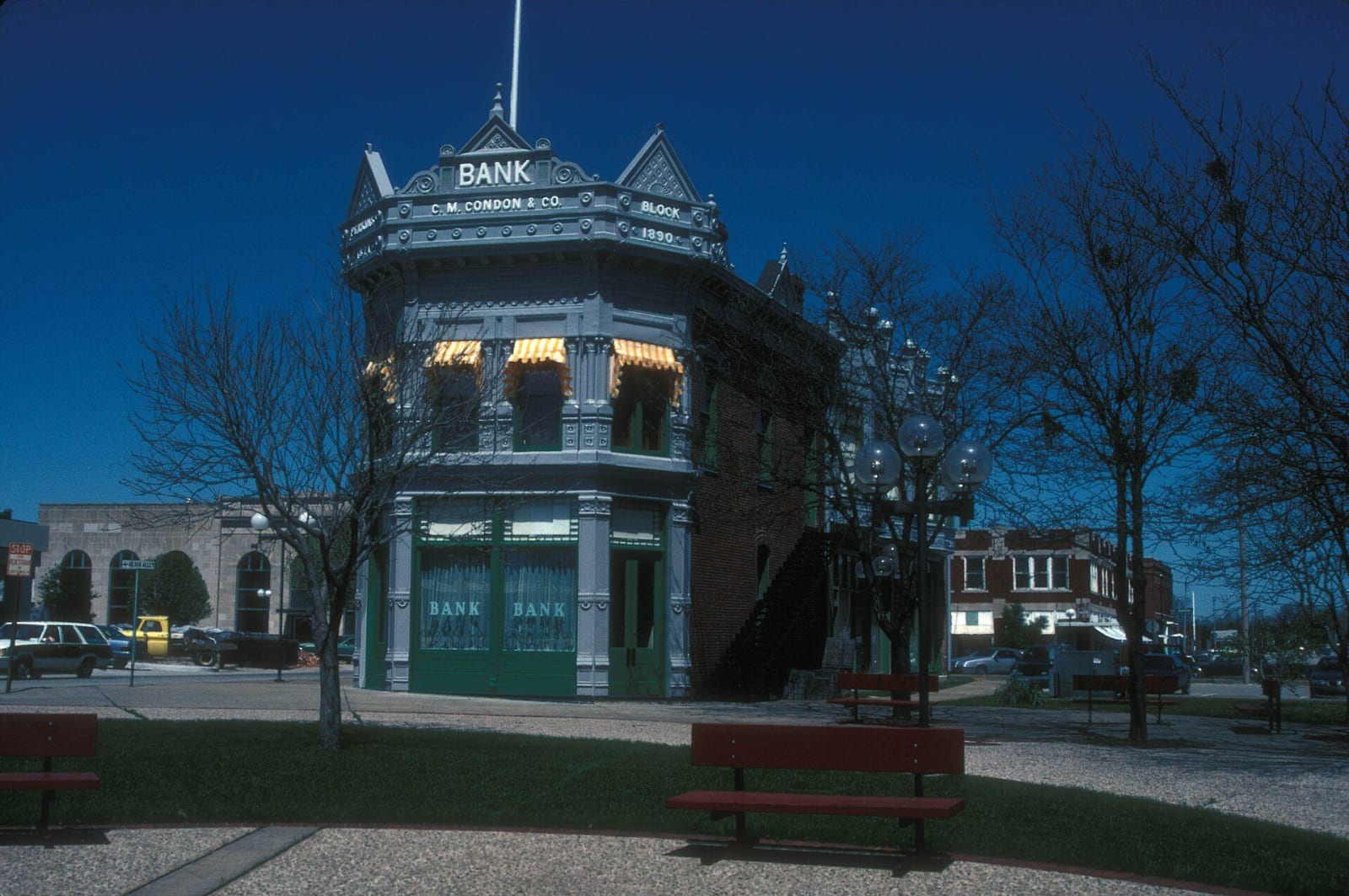
The restored Perkins Building in Coffeyville, which held the Condon Bank, with BANK lettered on its corner turret above a small plaza.Jerrye and Roy Klotz MD / CC BY-SA 3.0 via Wikimedia Commons
🏛️Historical

Dalton Defenders Museum

Part ofThe Little Balkans & the Southeast

Coffeyville's museum named for the four townsmen killed on October 5, 1892, when the Dalton gang tried to rob two banks at once, across the street from the bank where the plan fell apart.

⏱
Duration
One to two hours, with Death Alley.
🎟
Admission
Adults $8, seniors (65+) $7, ages 6-17 $5, under 6 free with an adult.
📅
Best Season
Year-round, Tuesday to Saturday.

The Story

The Daltons knew Coffeyville. Bob, Grat and Emmet had lived there, so they rode in disguised on the morning of October 5, 1892, with Dick Broadwell and Bill Power, to do what no gang had done and rob two banks at the same time. Eighth Street was torn up, so they tied their horses in an alley near the jail. Grat, Power and Broadwell took the Condon Bank; Bob and Emmet took the First National. At the Condon a clerk told Grat the safe would not open until 9:30. It was twenty past nine, and Grat said he would wait. The vault had no time lock.

In those minutes townsmen took guns and ammunition from Isham Hardware. The fight lasted twelve minutes. Four of the gang died, and so did four of Coffeyville's people: George Cubine, 36, and Charles Brown, 59, both shoemakers; Lucius Baldwin, a 23-year-old store clerk; and Charles T. Connelly, 46, a schoolteacher serving as marshal, who fell in what is now called Death Alley. Emmet Dalton survived 23 wounds, was sentenced to life at Lansing and was pardoned after 14 years.

The Coffeyville Historical Society opened the museum on October 5, 1963, in memory of the citizens rather than the outlaws, and has since moved it to 814 South Walnut, across from the Perkins Building that held the Condon Bank. Rooms also cover the town's industry, Native history and military service. Death Alley, with markers for the fallen and the old city jail, is close by.

Visitor Info

⏱
Time Needed
One to two hours, with Death Alley.
🎟
Admission
Adults $8, seniors (65+) $7, ages 6-17 $5, under 6 free with an adult.
📅
Best Season
Year-round, Tuesday to Saturday.
🛣️
Highway
US-166 / US-169

On the Map

Nearby

The closest stops worth working into your route

historical14 mi away
Little House on the Prairie Museum
The Ingalls family's claim of 1869 and 1870 southwest of Independence, a squatter's homestead on the Osage Diminished Reserve, with a replica cabin, schoolhouse and post office.
industrial41 mi away
Big Brutus
A 16-story electric coal shovel parked in 1974 where it stopped digging, among the flooded strip pits and reclaimed grassland of the Cherokee County coal field.
cultural46 mi away
Martin and Osa Johnson Safari Museum
Chanute's museum of the hometown singer and the jeweler's son who filmed the South Seas, East Africa and Borneo for paying audiences, and of the West African art that now shares their building.
roadside48 mi away
Brush Creek Bridge (Rainbow Bridge)
The last of three Marsh rainbow arch bridges on Kansas's short stretch of Route 66, built in 1923 and kept standing in 1992 when the road association refused to let it go.
historical60 mi away
Miners Hall Museum
Franklin's museum of the Crawford County coal camps and their immigrant families, and of the December 1921 morning the miners' wives marched to shut the mines.
historical75 mi away
Fort Scott National Historic Site
An 1840s army post on the old Missouri border where officers kept enslaved servants, and where twenty years later the 1st Kansas Colored Infantry was mustered onto the parade ground.

Historical markers nearby

Roadside plaques and monuments within a short detour

Marker1 mi away
Frontier in Montgomery County
Marker13 mi away
Drum Creek & the Civil War
Marker27 mi away
Opening of the Mid-Continent Oil Field