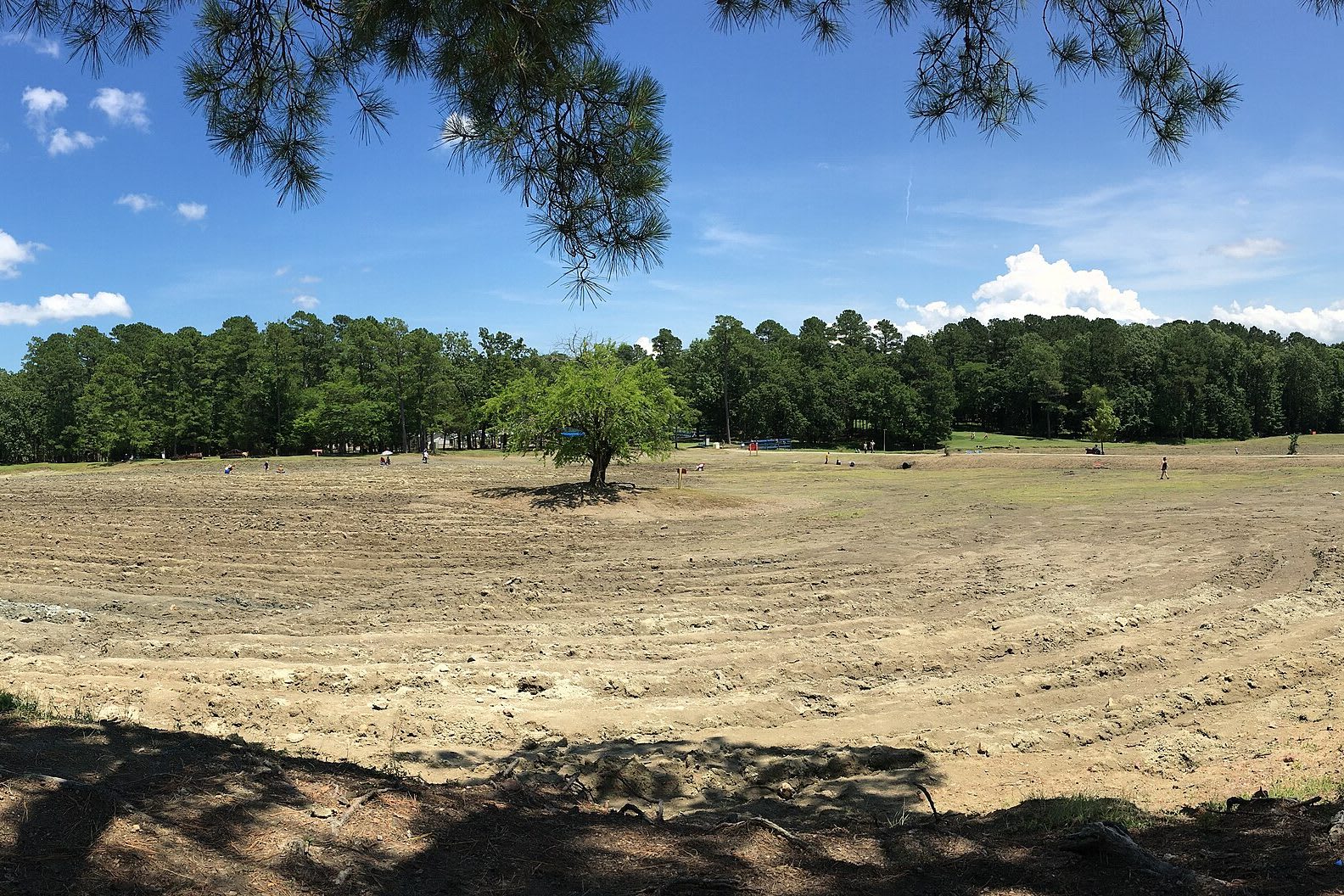
 HAL333 / CC BY-SA 4.0 via Wikimedia Commons
The Story
The diamonds here came up in lamproite, a volcanic rock. According to Smithsonian Magazine, they formed more than three billion years ago and rode a gas bubble in magma to the surface about 100 million years ago. The park's cone covers 83 acres and narrows to a point about 700 feet down.
In 1906 farmer John Wesley Huddleston found a glittering pebble on his land and became known as Diamond John. By 1907 more than 10,000 hopefuls had arrived in Murfreesboro, though most left within a couple of years. Rival processing plants burned on the same January night in 1919, and a miner found the 40-carat Uncle Sam in 1924, the largest diamond ever found in the United States. The state bought the property in 1972. Exploratory drilling approved in 1992 processed about 8,000 tons of rock and found diamonds too rare to pay.
Now it is a state park with a public diamond search area, and any rock or mineral you find is yours to keep. Arkansas State Parks counts more than 37,377 diamonds found since 1972, as of January 13, 2026. You can bring your own tools or rent them; ladders and battery-operated or motor-driven tools are not allowed.
Visitor Info
On the Map
Nearby
The closest stops worth working into your route