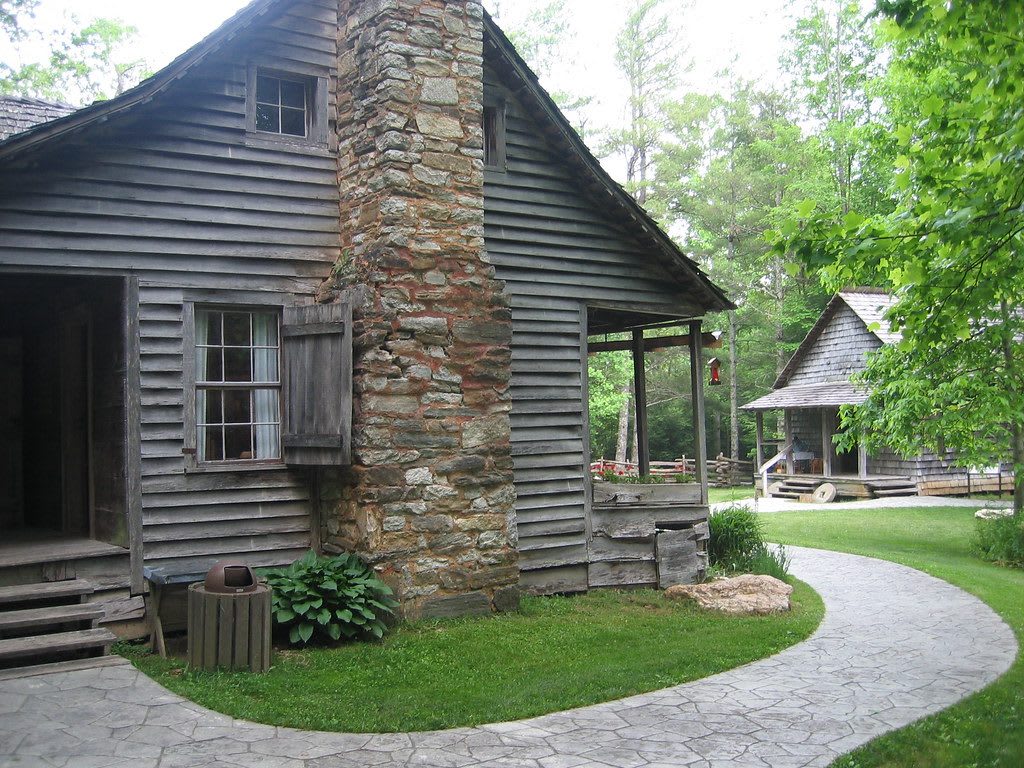
 Michael Sprague / CC BY-SA 2.0 via Flickr
The Story
George Vanderbilt bought far more land than Biltmore needed, much of it in poor condition, and his landscape architect, Frederick Law Olmsted, advised replanting most of it as a managed timber forest. Gifford Pinchot ran the forests first; in 1895 Vanderbilt brought Carl Schenck from Germany to replace him. Schenck began teaching apprentices in 1896 and published the first catalog of the Biltmore Forest School in 1898, the first school of forestry in North America, weeks ahead of the college program at Cornell.
The school ran on a single year of lectures in the morning and work in the woods every afternoon: felling, logging, sawing, nursery work and forest economics. Tuition was $200, more than Harvard charged, and students found their own lodging in abandoned farmhouses; at the summer camp in the Pink Beds valley they named their quarters Hell Hole, Little Bohemia, The Palace and Rest for the Wicked. Schenck clashed with Pinchot in 1903 and with Vanderbilt in 1908 and left the estate in 1909; the school wandered between other forests and Germany until it closed in 1913. Its 300 or more graduates became the country's first generation of professional foresters, and the land Vanderbilt's widow sold to the government after his death became the core of Pisgah National Forest.
The Cradle of Forestry was dedicated in 1964, and Congress set aside the 6,500-acre site in 1968. The Forest Discovery Center holds the exhibits, and two trails pass the school's buildings, a 1914 Climax logging locomotive and a sawmill.
Visitor Info
On the Map
Nearby
The closest stops worth working into your route
Historical markers nearby
Roadside plaques and monuments within a short detour