 TravelingOtter / CC BY-SA 2.0 via Flickr
The Story
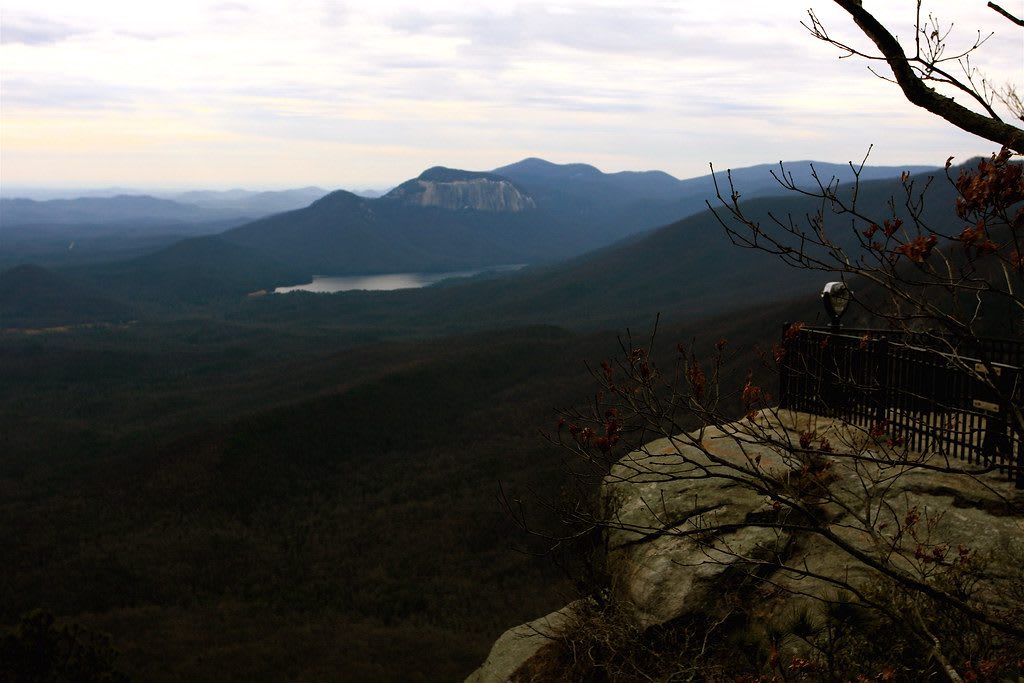
Here the Blue Ridge simply ends. The escarpment drops some 2,000 feet from this granite brow to the foothills, and from the overlook the Piedmont runs out flat and blue toward Greenville, with Table Rock's bare dome to the southwest. The headland itself is granitic gneiss, a monadnock left standing as softer rock wore away. The Blue Ridge gets more rain than anywhere else in the state, about seventy-nine inches a year here, and it feeds the Middle Saluda and a run of waterfalls.
This was Cherokee land until the cession of 1816. By the mid-1800s Colonel Benjamin Hagood owned 500 acres here and built a hotel in 1860, and after a highway arrived in the 1920s a small summer colony grew up around it. The state made a park of it in 1979, and since 1996 it has been part of the Mountain Bridge Wilderness Area with Jones Gap State Park and Wildcat Wayside. Nobody knows how the cliff got its name: one story credits a hunting dog named Caesar that leapt from it, another a garbled word for a chief, a third a likeness to Julius Caesar's profile.
The overlook is open from 9 a.m. to sunset. The best day hike is Raven Cliff Falls, about two miles each way, which ends at a view of a 420-foot cascade. Parking is first-come, roadside parking is not allowed, and trails close an hour before sunset.
Visitor Info
On the Map
Nearby
The closest stops worth working into your route
Historical markers nearby
Roadside plaques and monuments within a short detour