 Carol M. Highsmith / public domain via the Library of Congress
The Story
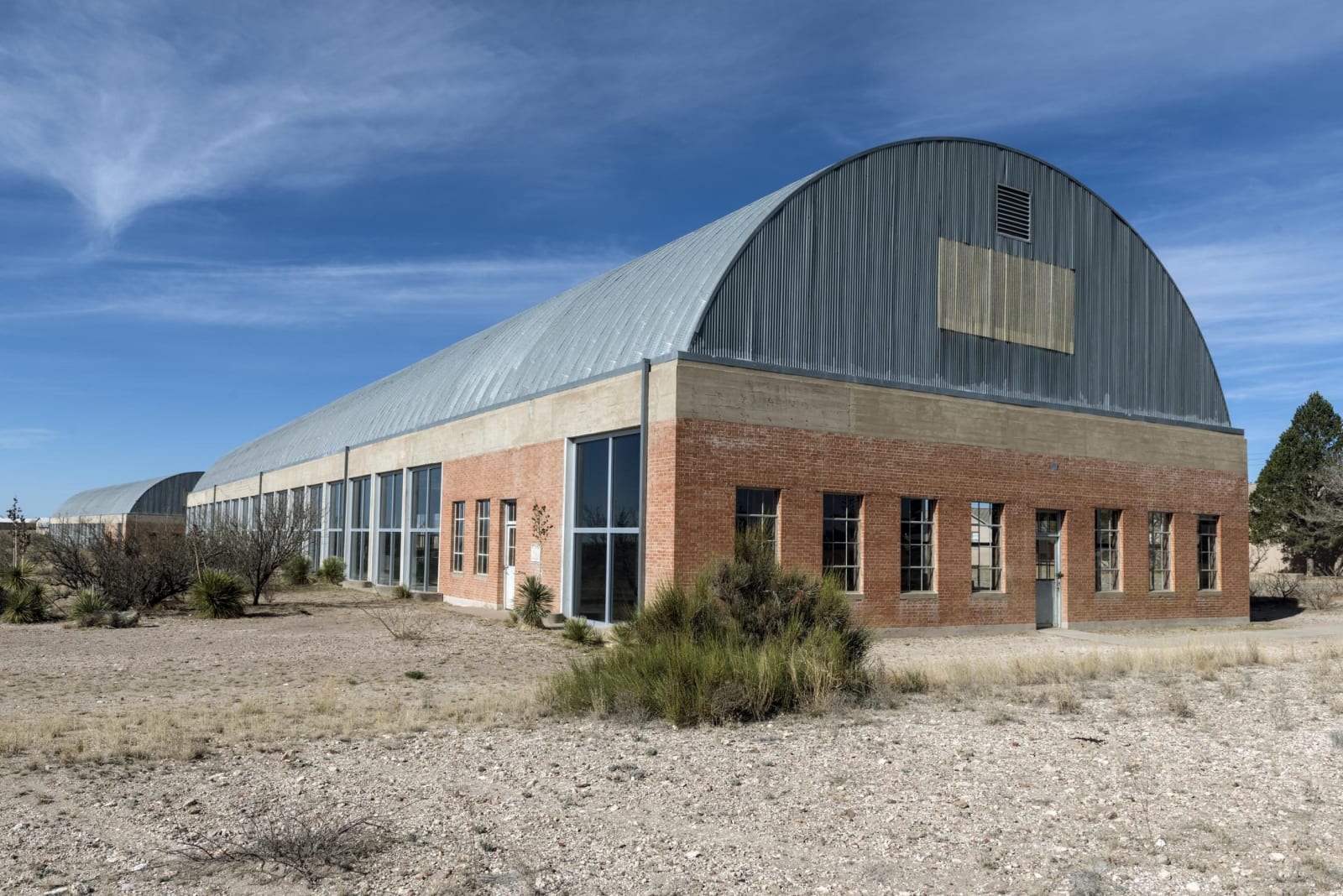
In the early 1970s the artist Donald Judd, who had made his name in New York, bought a 45,000-acre ranch overlooking the Rio Grande and a number of buildings in and around Marfa. Among them were the barracks, hangars and gymnasium of Fort D. A. Russell, an abandoned army post. Judd turned the big buildings into galleries and began installing work meant to stay permanently in one place. He had backing from the Dia Foundation, and when that arrangement broke down in the mid-1980s, Judd and Dia agreed to create the Chinati Foundation, which took over the artworks and the old post. Judd died in 1994.
Chinati's idea is that art, architecture and the surrounding land form one whole, and that a small group of artists show their work as they intended it. The collection is installed across 21 buildings and two off-site locations, with three site-specific outdoor works.
Guided tours are the only way to see most of the collection and grounds, so book ahead. The two artillery sheds that hold Judd's 100 untitled works in mill aluminum are closed to the public during a major restoration. Judd's 15 untitled works in concrete, set out in the field, can be seen free of charge from a trail during museum hours. Check the foundation's site for tour times and which buildings are open.
Visitor Info
On the Map
Nearby
The closest stops worth working into your route
Historical markers nearby
Roadside plaques and monuments within a short detour