 Matthew Rutledge / CC BY 2.0 via Flickr
The Story
Calvert was laid out in January 1868 when the Houston and Texas Central Railway came through, and merchants from Sterling and Owensville moved to the new townsite within weeks. It took its name from Robert Calvert, who had started a plantation west of it in 1850. The first trains arrived in 1869, the town incorporated in 1870, and the same year it replaced Owensville as county seat during the Reconstruction struggle for control of Robertson County.
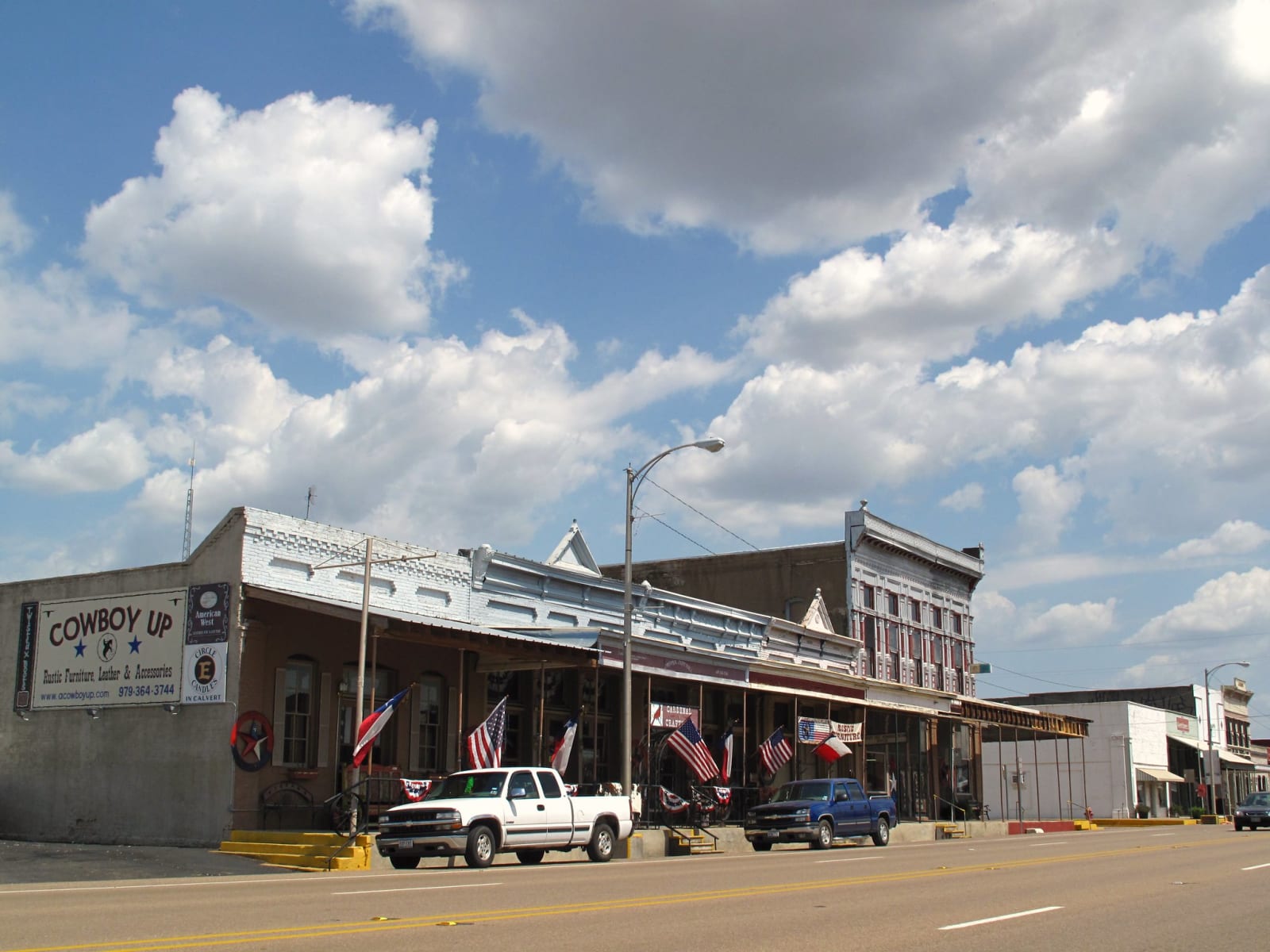
The Republican party drew its strength from Black voters on the plantations around Calvert, and for some years it elected Black men from Calvert to county and state office. Federal troops briefly occupied the town in 1870. As a rail center the town boomed. In 1871 it claimed the largest cotton gin in the world, and by 1884 it had about 3,000 people, five churches, two banks, an opera house and a weekly paper. Yellow fever struck in 1873, the county seat moved to Morgan in 1879, and a flood in 1899 and a fire in 1901 hit the business district. The county jail of 1875 was still a landmark a century later.
The population peaked at 3,322 in 1900 and fell to about 1,400 a century later. Calvert celebrated its centennial in 1968, when many former residents came home for it.
Visitor Info
On the Map
Nearby
The closest stops worth working into your route