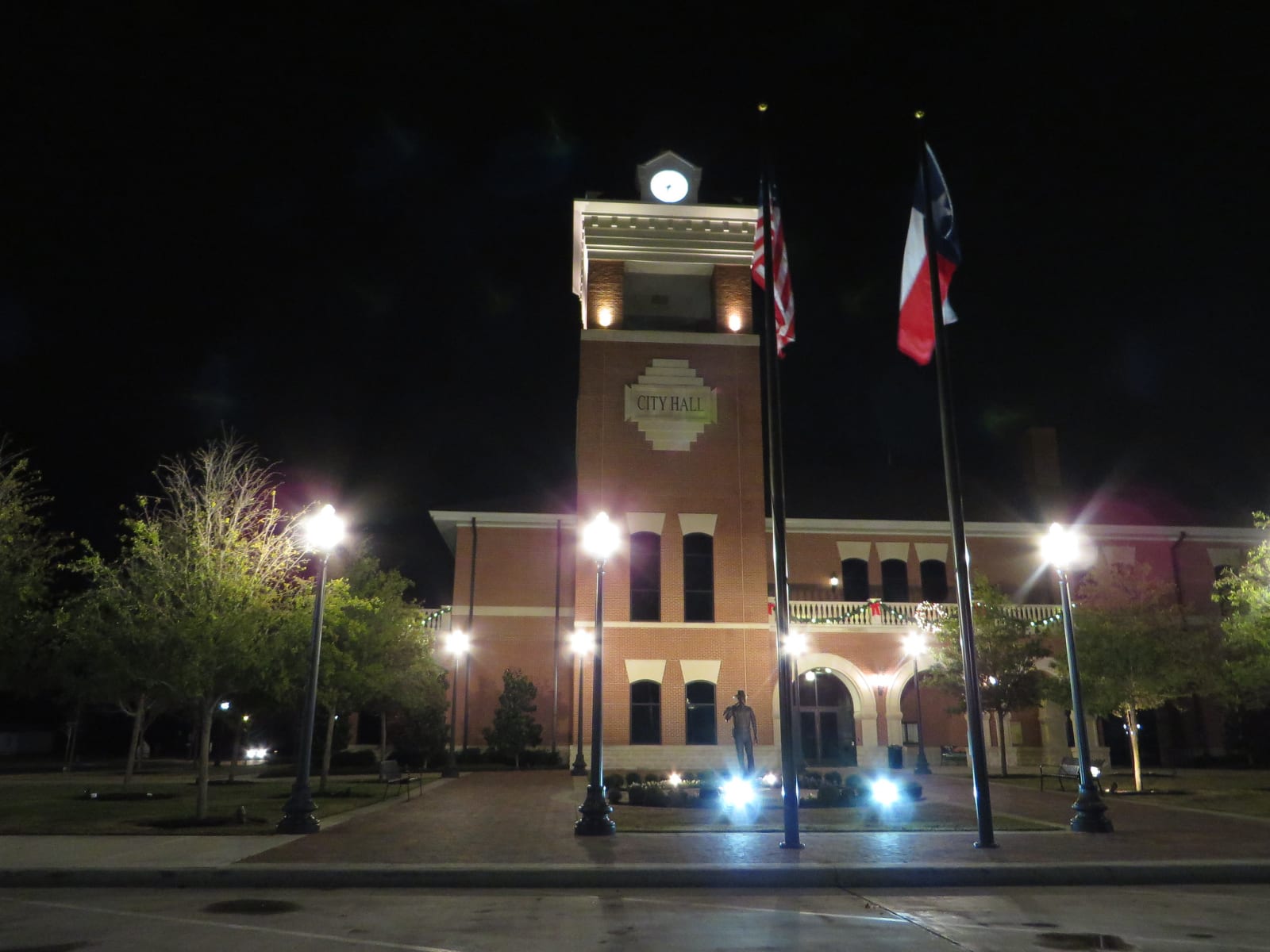
 Ken Lund / CC BY-SA 2.0 via Flickr
The Story
The town grew at a crossroads, near where the La Bahia Road forded the Navasota River and halfway between Anderson and Washington. James Nolan's log cabin of 1852 became a stage stop, four stage lines stopped here by the mid-1850s, and the place took the river's name with its post office in 1854. When the Houston and Texas Central Railway arrived in September 1859, Navasota became the shipping point for the country around it.
Its worst years followed the Civil War. In 1865 disgruntled Confederate veterans set fire to a warehouse of cotton and gunpowder, and the explosion killed several people and burned much of the town. Cholera followed and then, in 1867, yellow fever, and the population fell by about half. The Ku Klux Klan was active here in the late 1860s. The town recovered with cottonseed oil, two more railroads and an opera house seating 1,000.
Mance Lipscomb was born in the Brazos bottoms near Navasota in 1895, the son of a man born into slavery in Alabama. He farmed as a tenant for half a century and called himself a songster, not a bluesman, with some 350 songs spanning two centuries. Chris Strachwitz and Mack McCormick recorded him in 1960, and he played the Berkeley Folk Festival before 40,000 people.
Visitor Info
On the Map
Nearby
The closest stops worth working into your route
Historical markers nearby
Roadside plaques and monuments within a short detour