 Valis55 / CC BY-SA 3.0 via Wikimedia Commons
The Story
The bluffs on the White River's north bank gave Calico Rock its name. The Encyclopedia of Arkansas says bands of blue, black, gray, red and orange on the rock looked like strips of calico cloth, and Henry Schoolcraft was already writing "calico rock" in 1818 and 1819. Before that the land was Osage hunting ground, then Cherokee reservation land after 1818, and Shawnee families settled in the area until about 1833. The Benge Trail of Tears passed about three miles east of town.
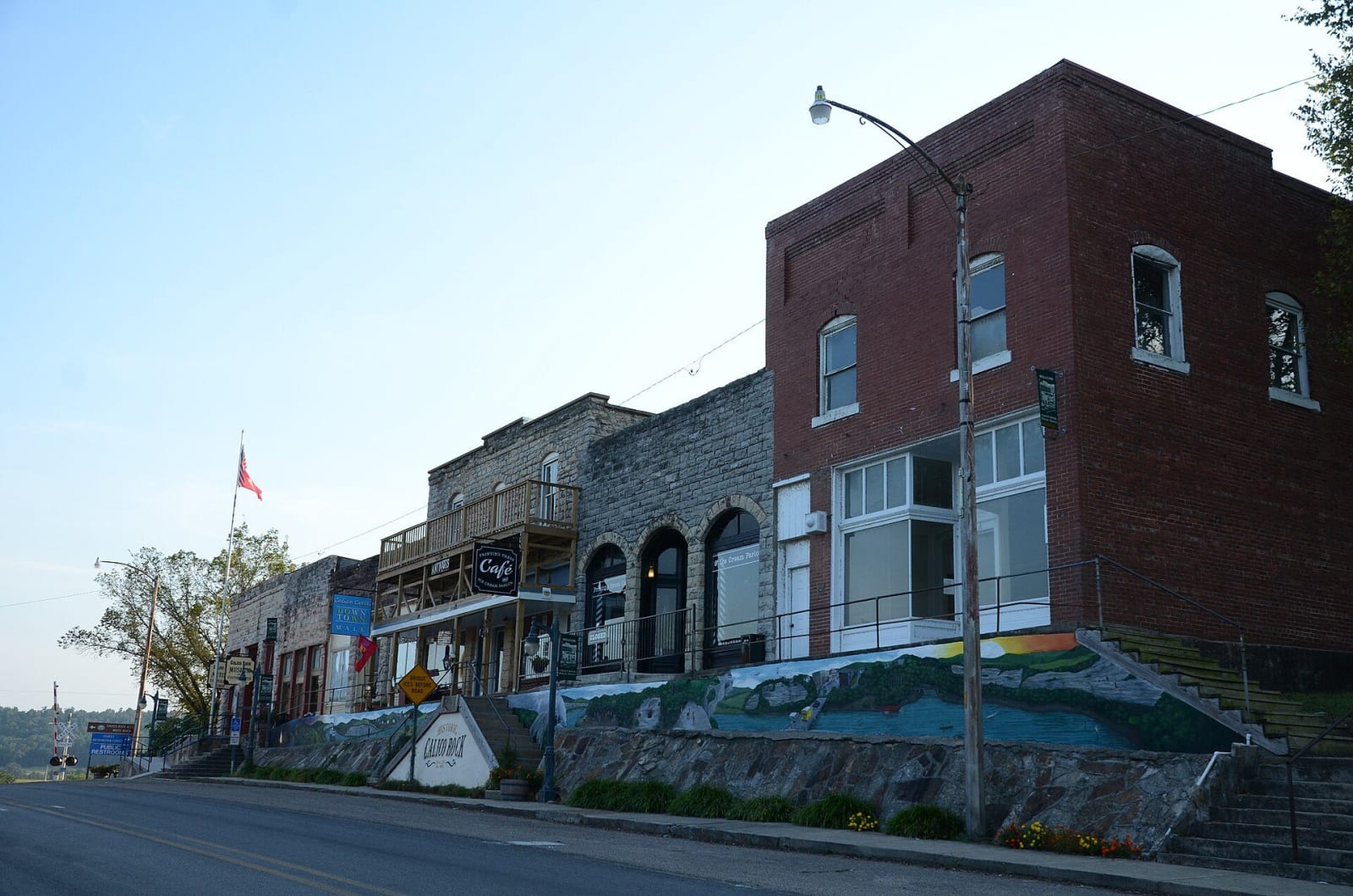
The historic district covers the first block of Main Street above the river plus the Riverview Hotel. The Iron Mountain Railway's White River Line began freight and passenger service to Calico Rock in 1903. Elbert Benbrook platted the business district on the hillside that year. On Saturdays people came from Izard, Stone, Baxter and Fulton counties to shop, see doctors and watch movies. On April 7, 1923, cinders from a switch engine started a fire that burned every building on the low side of Main Street, and merchants rebuilt in brick and stone. Their basements open onto Peppersauce Alley, about ten feet below the street.
In 1924 Benjamin Sanders built the Riverview Hotel on Rodman Street from cement blocks he fired in a kiln in the front yard. The district, listed on the National Register in 1985, still has the teller's cages and vault of the People's Bank, the soda fountain at Clinkingbeard's Old Fashioned Ice Cream Parlor and the balcony of the Calico Rock Museum.
Visitor Info
On the Map
Nearby
The closest stops worth working into your route