Home / Tennessee / Knoxville & the Great Smoky Mountains / Blount Mansion
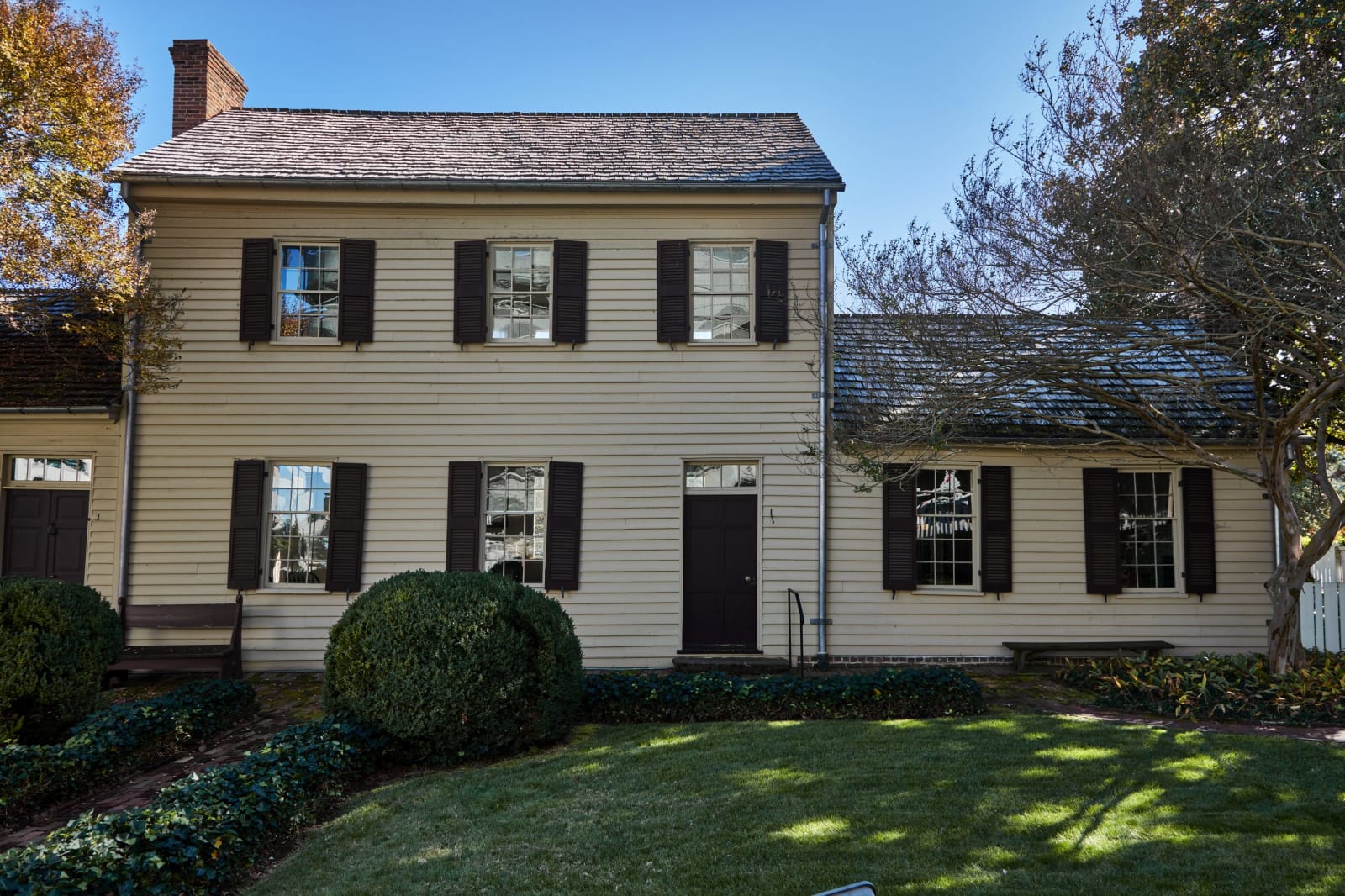
A two-story cream clapboard house with dark shutters, a brick chimney and a lawn with trimmed shrubs in front.Carol M. Highsmith / public domain via Library of Congress
🏛️Historical

Blount Mansion

Part ofKnoxville & the Great Smoky Mountains

The 1792 frame house of William Blount, governor of the Southwest Territory, Knoxville's only National Historic Landmark, where the people he enslaved are named.

⏱
Duration
One hour.
🎟
Admission
Ticketed; see Blount Mansion for current prices and tour times.
📅
Best Season
Year round; the house is shown on guided tours.

The Story

Knoxville begins with a treaty. On July 2, 1791, William Blount, governor of the Southwest Territory, signed the Treaty of Holston with the Cherokee near the mouth of First Creek, before more than a thousand Cherokee people and their chiefs. It was called a treaty of peace and friendship, but it was aimed at settling boundaries and gaining land, and the Cherokee reportedly called Blount "the Dirt Captain." That fall James White's land was divided into 64 lots and sold by lottery, and the town was named for the Secretary of War, Henry Knox.

Blount began his house in early 1792, a frame building in a country of log houses and the largest in the area. Its Native American name was reportedly "the House With Many Glass Eyes," for its many windows. The city planned to tear it down for a parking lot in 1925, the Blount Mansion Association saved it, and it opened as a museum in 1930. It is Knoxville's only National Historic Landmark.

Enslaved people were part of daily life here from 1792 through the Civil War, and an 1797 deed lists 26 people enslaved to the Blount family. The museum names several. Hagar and Venus came with Mary Blount's dowry. Jack, Hagar's son, was the only person to cross the mountains with Blount in 1790. Cupid, a skilled builder, may have directed the mansion's construction, and Sall cooked in the detached kitchen. Cupid and Sall had two daughters, Nann and Issabella. Billy Blount sold Cupid and Sall on August 27, 1806.

Visitor Info

⏱
Time Needed
One hour.
🎟
Admission
Ticketed; see Blount Mansion for current prices and tour times.
📅
Best Season
Year round; the house is shown on guided tours.
🛣️
Highway
West Hill Avenue

On the Map

Nearby

The closest stops worth working into your route

cultural1.2 mi away
Beck Cultural Exchange Center
Knoxville's Black history museum and archive, opened in 1975 in the 1912 Dandridge Avenue house the community bought for $22,500.
cultural16 mi away
Green McAdoo Cultural Center
The 1935 school in Clinton that sent twelve Black students down Foley Hill to desegregate Clinton High School in August 1956, now a museum with bronze statues of the Clinton 12.
cultural17 mi away
Museum of Appalachia
John Rice Irwin's 65-acre collection of moved log cabins and mountain objects north of Knoxville, opened in 1969, with a cabin believed to be Mark Twain's father's.
historical19 mi away
American Museum of Science and Energy
The Oak Ridge museum that opened in 1949, when the Manhattan Project city's gates opened, in a town whose Black workers were housed in the Gamble Valley hutments.
industrial21 mi away
Norris Dam and Norris Dam State Park
TVA's first dam, finished in 1936 on the Clinch River, and the state park beside it with the 1798 Rice Grist Mill, built for a valley whose families were moved out.
historical25 mi away
Cades Cove
A Smokies valley ringed by mountains, once the Cherokee hunting ground of Tsiyahi and later a farming community of 685 people, kept by the park after its families were bought out.

Historical markers nearby

Roadside plaques and monuments within a short detour

Marker0 mi away
Blount Mansion
Knoxville
Marker0.1 mi away
Old Knox County Courthouse
Knoxville
Marker0.1 mi away
Treaty of Holston
Knoxville
Marker0.1 mi away
James H. Robinson
Knoxville
Marker0.1 mi away
Staub's Theatre
Knoxville
Marker0.2 mi away
White's Mill
Knoxville