 popo.uw23 / public domain mark via Flickr
The Story
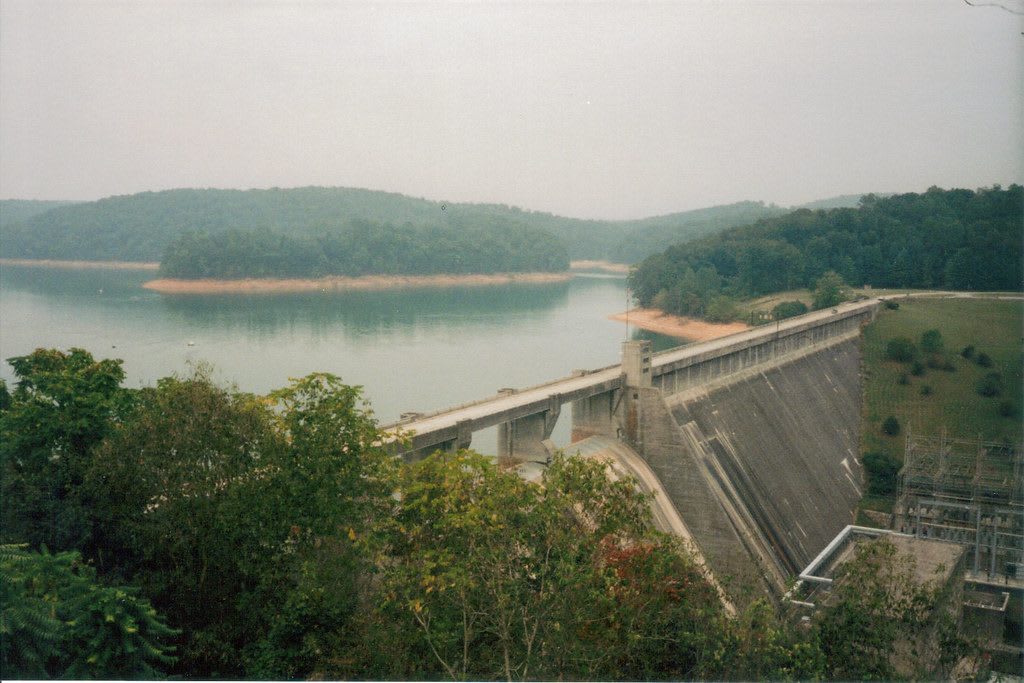
Norris Dam was the first big project of the Tennessee Valley Authority, begun in October 1933 and finished in March 1936 on the Clinch River. It is a concrete gravity dam 265 feet high and 1,860 feet long, named for Senator George Norris of Nebraska. The Bureau of Reclamation first planned it in 1927 as Cove Creek Dam, and TVA's first chief architect, Roland Wank, reworked the design.
The reservoir took a valley. TVA bought roughly 150,000 acres, moved more than 2,800 families and relocated some 5,000 graves. Loyston, a community about twenty miles upstream, was flooded entirely, and the planned town of Norris was built for the dam's workers. The 1982 book TVA and the Dispossessed studies the resettlement.
Norris Dam State Park, about 4,000 acres, keeps some of what was moved. The Rice Grist Mill was built in 1798 on Lost Creek and run by four generations of the Rice family, who also used its power for a sawmill, a cotton gin and, in 1899, a dynamo that lit their house. The Caleb Crosby Threshing Barn stood about a century before TVA's Cherokee Dam threatened its land, sat dismantled for 34 years and was rebuilt in the park in 1978. The Lenoir Museum holds the early American collection of Will G. and Helen H. Lenoir.
Visitor Info
On the Map
Nearby
The closest stops worth working into your route
Historical markers nearby
Roadside plaques and monuments within a short detour