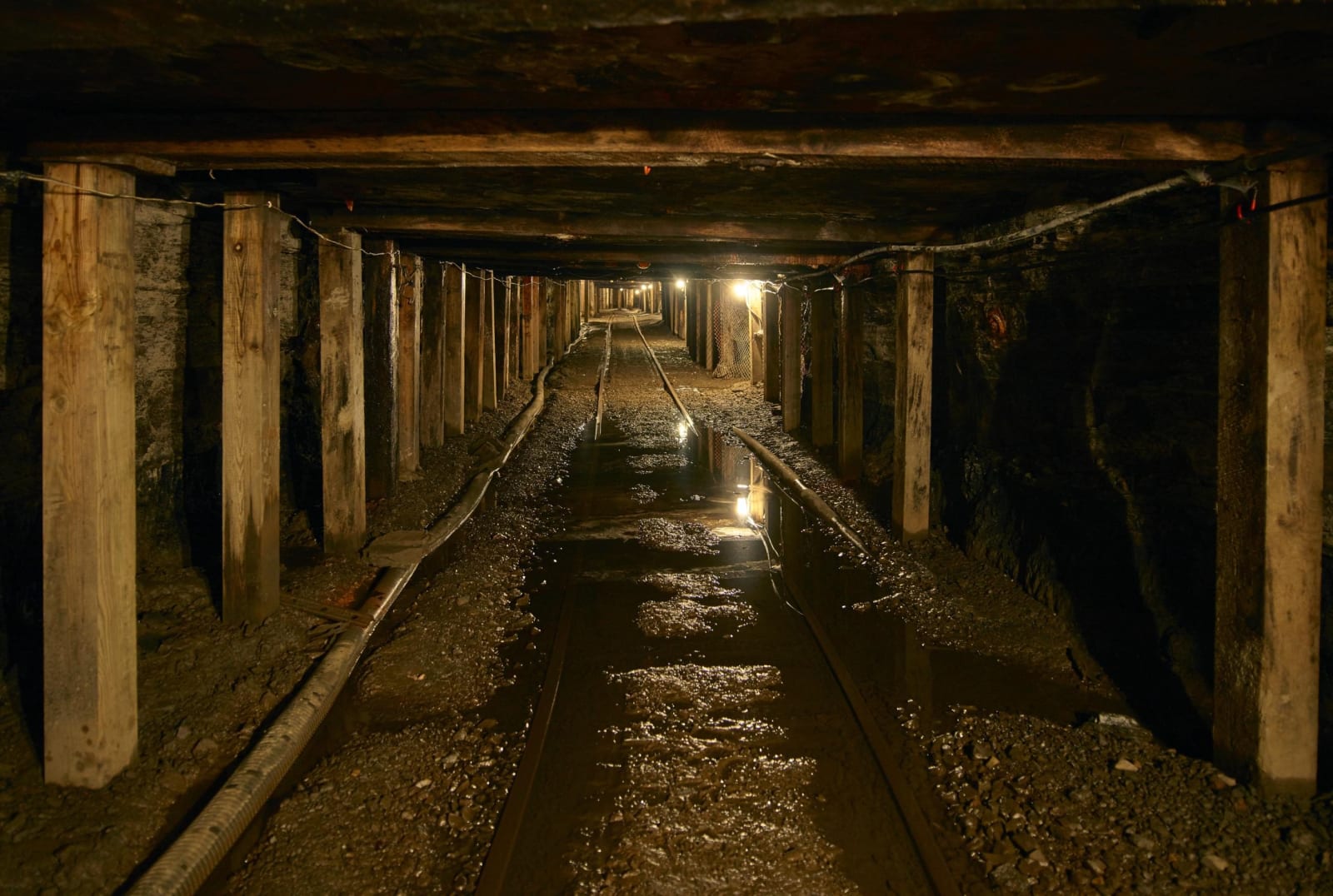
 Carol M. Highsmith / public domain via Library of Congress
The Story
John A. Phillips bought 50 acres here from Beckley's founder, Alfred Beckley, in 1850 and farmed it until the family noticed coal showing on the land; by the 1880s they had a small drift mine for household fuel. The Cranberry Fuel Company bought the farm and opened the Sprague Mine in early 1906 in the thick, clean Beckley seam, naming it for its company town, itself named for the industrialist C. H. Sprague. By 1908, 50 men and 15 mules worked about 4,000 feet of passages, and the coal went by the Chesapeake and Ohio to Hampton, Virginia, for navy steamships and northeastern furnaces. The New River Company closed the mine in 1953.
The city bought the land for a park, and crews building it found the old entrance buried under a slag heap. Street commissioner D. Elmer Warden pushed to clear it and restore the passages, and the Exhibition Coal Mine opened on July 23, 1962. Retired miners lead the tours, riding visitors in a mantrip through 1,500 feet of passage from family digging to hand-loading, when each miner tagged the cars he filled, to the machines. Across southern West Virginia, Black miners were a fifth to a quarter of the workforce into the early 1930s, and they remembered that the first loading machines went where they worked.
Above ground stands a coal camp built from donated buildings: a company house, a superintendent's home, the Pemberton coal camp church and the Helen coal camp school, and a visitor center with a company store replica. The Youth Museum of Southern West Virginia shares the grounds.
Visitor Info
On the Map
Nearby
The closest stops worth working into your route
Historical markers nearby
Roadside plaques and monuments within a short detour