 John LaRoe / CC BY-SA 4.0 via Wikimedia Commons
The Story
Most of the men who fought here had escaped slavery in Missouri and Arkansas; others were free Black men who had come to Kansas. Senator Jim Lane began recruiting them in August 1862, before the federal government would take Black soldiers, and they formed the 1st Kansas Colored Volunteer Infantry. In late October, 240 soldiers and 12 officers marched from Fort Lincoln, Kansas, on the Fort Scott Road to break up guerrillas camped on Hog Island in the Marais des Cygnes River.
They reached Bates County on October 27 and took over the farm of Enoch and Christiana Toothman, Southern sympathizers, pulled down the fence rails for breastworks and renamed the farmstead Fort Africa. On October 29 the guerrillas set the tallgrass prairie on fire and drew a small scouting party out of sight behind a low hill called Island Mound. About 130 horsemen caught the soldiers on its southern slope, with the prairie burning around them, and the Kansans fought hand to hand with bayonets and rifle butts until help came from the camp. Eight of the regiment were killed and eleven wounded; one of the dead was John Six-Killer, a Cherokee soldier. A rebel from Butler was quoted in The New York Times saying the Black troops had fought like tigers.
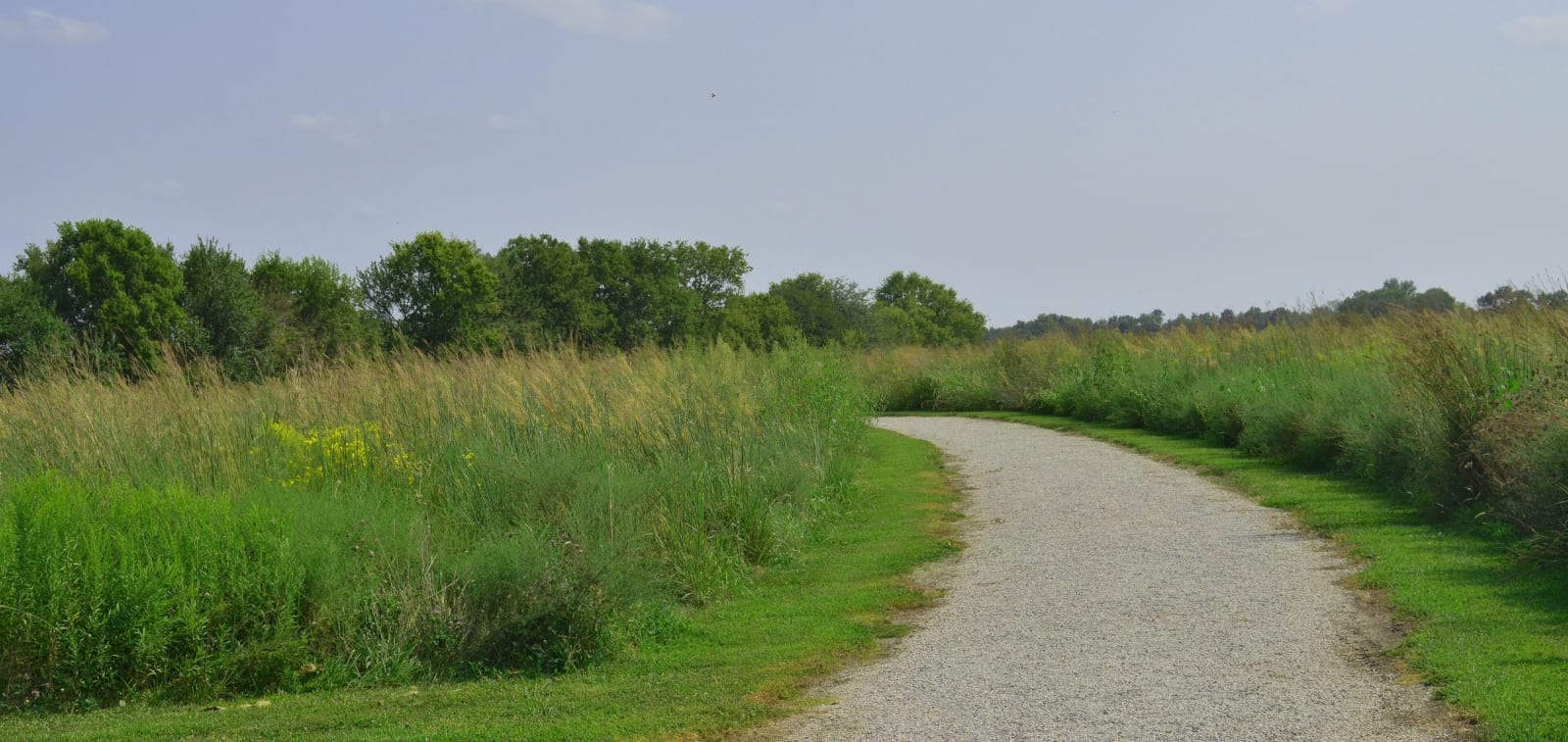
The farm is open prairie now, with a picnic shelter and the half-mile Courage Trail, whose wayside panels walk the ground. Ten months after the fight, General Order No. 11 emptied most of Bates County, and plunder and prairie fires burned the abandoned farms.
Visitor Info
On the Map
Nearby
The closest stops worth working into your route
Historical markers nearby
Roadside plaques and monuments within a short detour