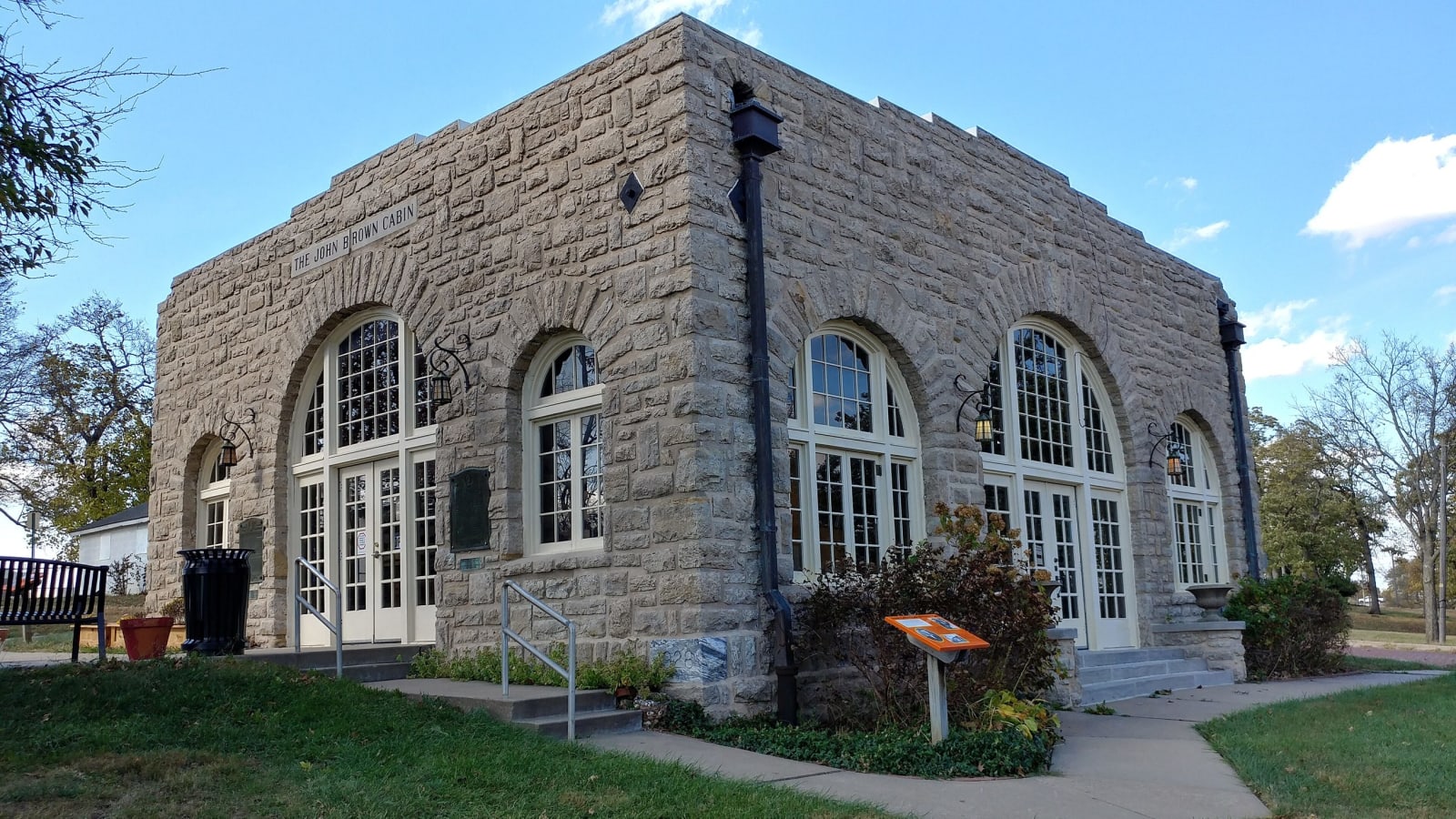
 Dcomputerman12 / CC BY-SA 4.0 via Wikimedia Commons
The Story
Samuel and Florella Adair were both graduates of Oberlin, the coeducational and biracial college in Ohio, and they came west in the free-state migration of the mid-1850s to settle near Osawatomie. Florella's half brother, John Brown, followed his sons to the territory, and the Adairs' log cabin northwest of town became his headquarters. It was also a station on the Underground Railroad.
Those were the years of Bleeding Kansas. On the night of May 24, 1856, Brown and his men abducted and killed five proslavery settlers along Pottawatomie Creek, the most disputed act of his life even among his allies. On August 30 proslavery forces attacked and burned Osawatomie; the Adair cabin, some distance from town, survived. Samuel, a Congregational minister, gathered a congregation and built the town's first church of walnut and native stone from his own claim; it was dedicated on July 14, 1861, and still stands. In the Civil War he served as a chaplain at Fort Leavenworth while Florella carried the farm alone, until her health failed and she joined him there. She died in 1865.
Samuel came home to the cabin and the church, served eleven years as unpaid chaplain at the state's first insane asylum at Osawatomie, and died in 1898, leaving the cabin to his son Charles. Today its two rooms hold the family's furnishings, among them a melodeon, with displays on Brown, the Battle of Osawatomie and Civil War weapons.
Visitor Info
On the Map
Nearby
The closest stops worth working into your route
Historical markers nearby
Roadside plaques and monuments within a short detour