County guide · South Carolina
Richland County
6 places to stop and 143 historical markers in Richland County, South Carolina.
Towns: Columbia (131), Blythewood (3), Gadsden vicinity (2), Hopkins (1), White Rock (1), Dentsville Community (1), Horrell Hill (1), Lower Richland (1), Horrell Hill vicinity (1), Hopkins vicinity (1)
Places to stop
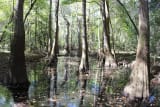
natural · Hopkins
Congaree National Park
The largest stand of old-growth bottomland hardwood forest left in the United States, on the Congaree River floodplain below Columbia.
historical · Columbia
Mann-Simons Site
A downtown Columbia lot held by one Black family from at least 1843 until 1970, with the 1870s house and ghost frames of the buildings urban renewal took.
historical · Columbia
Modjeska Monteith Simkins House
The Columbia cottage where the civil rights organizer Modjeska Monteith Simkins lived from 1932 until her death in 1992, and where Thurgood Marshall stayed.
historical · Columbia
Randolph Cemetery
Columbia's first formal Black cemetery, begun in 1872 and named for the assassinated state senator Benjamin F. Randolph, with more than a dozen Reconstruction legislators.
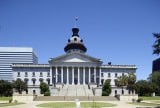
historical · Columbia
South Carolina State House
The granite capitol begun in 1855 by enslaved and immigrant stonecutters, still marked by Sherman's shells, where the Confederate battle flag came down in 2015.
cultural · Columbia
South Carolina State Museum
The state's museum of history, art, science and natural history, inside the 1894 Columbia Mills, the first textile mill in the world run entirely on electricity.
Historical markers
Columbia · Erected 1938
"Chesnut Cottage"
The cottage is remembered for Mary Boykin Chesnut, who lived here in 1864 with her husband, a former aide to Jefferson Davis.
Columbia · Erected 1974
"Commissioners' Oak"
All five commissioners owned land nearby and had stakes in the choice. In April 1786 they bought 2,471 acres from ten owners, two miles square, and laid it out with ten…
Columbia · Erected 1982
100th Inf Division
The Century Division was assembled at Fort Jackson in the fall of 1942. Its unit commanders reported here in October after special schooling, joined by about 400…
Columbia · Erected 2001
102nd Cavalry
The regiment traces its start to a parade in Newark in May 1890. Col. James E. Fleming, grand marshal for the unveiling of a statue of the inventor Seth Boyden, lost his…
Columbia · Erected 2003
108th Division
The Golden Griffons took their number in sequence after the 107th, a Black infantry division placed on the Army's World War II troop list but never activated.
Columbia · Erected 1972
30th Inf Division
When the Old Hickory Division came to Fort Jackson in 1940, it was a National Guard outfit drawn from Georgia, North Carolina, South Carolina and Tennessee, its ranks…
Columbia · Erected 1997
31st Inf Division
The Fort Jackson the Dixie Division came back to in 1951 had nearly been closed. In 1949 the Defense Department announced the post would shut; legend says President…
Columbia · Erected 1979
81st Inf Division
Columbia's citizens raised the money to buy the land, and the first draftees reached Camp Jackson on September 5, 1917, to find barracks on a ridge of thickly wooded…
Columbia · Erected 1972
87th Inf Division
Many of the soldiers who trained here in 1944 were barely out of high school. The 87th had been ordered into service at Camp McCain, Mississippi, on December 15, 1942…
Columbia · Erected 1986
8th Infantry Division
The division was rebuilt here on a new pattern. It was reactivated at Fort Jackson on July 1, 1940, to become a triangular division built around three infantry regiments…
Columbia · Erected 2014
A.S. Salley House
By the 1940s Salley was the man writers called for a fact. A Newberry columnist asking whether any delegate had published notes on the state constitution was sent to the…
Columbia · Erected 2011
Allen University
Payne Institute was failing at Cokesbury, in debt and stuck in a quiet village, before Bishop William F.
Columbia · Erected 2014
Alston House
Caroline Alston was one of only about twenty-five Black business people at work in the Columbia area in the late nineteenth century, and this cottage held both her home…
Columbia · Erected 1977
Assembly Street
This was long Columbia's market street. The city market had started in the basement of city hall and moved to Assembly after the 1860s; in 1919 council weighed selling…
Columbia · Erected 2011
Benedict College
The college began on an eighty-acre former plantation with ten students, all men, one teacher and, for a building, the run-down house of the man who had held people…
White Rock · Erected 2012
Bethel Lutheran Church
Early on, Bethel shared a pastor with Zion on Twelve Mile Creek and St. Peter's on Eighteen Mile Creek, a circuit later called the Saluda charge.
Columbia · Erected 1988
Bethlehem Church [First Marker]
The fifteen churches that joined in 1787 and 1788 bound themselves to a detailed rule.
Columbia · Erected 1938
Birthplace of General Maxcy Gregg
Gregg studied botany, birds and the stars and shared the valedictory of his 1836 college class.
Columbia · Erected 1978
Blanding Street
Blanding's waterworks went into full operation in April 1821. A steam engine built by Galloway and Bowman of Manchester, England, drove forcing pumps that lifted spring…
Blythewood · Erected 2019
Blythewood School
The town, and so this school, took its name from an earlier school. The Blythewood Female Institute resumed classes in March 1866 under its principal and the…
Columbia · Erected 2009
Booker T. Washington School
The school's last surviving building is its auditorium, raised in 1956 with state money meant to equalize Black schools and so head off integration, to a design by James…
Columbia · Erected 1938
Broad River
For decades travelers paid to cross the Broad here. The Broad River Bridge Company, headed by Gen.
Columbia · Erected 2023
Brown Chapel A.M.E. Church
In April 1926 Arthurtown's church news ran under its own heading in Columbia's Black weekly. At Brown Chapel, I.
Columbia · Erected 1977
Bull Street
Stephen Bull was a nephew of Lieutenant Governor William Bull Jr., and unlike most of his family he took up arms against the king.
Columbia · Erected 2015
Burning of Columbia
Who burned Columbia was argued before the ashes cooled. Wade Hampton called Sherman a barbarian within days, and Sherman's April report blamed Hampton for leaving cotton…
Columbia · Erected 2006
Cain-Matthews-Tompkins House
The house shows a builder's taste for durable materials. Brick veneer covers its wood frame, and four heavy brick pillars with bracketed capitals carry a front porch…
Columbia · Erected 1938
Camp Jackson
Army engineers picked the site for its sandy soil and mild year-round climate, and Columbia citizens raised the money to buy the first acreage.
Dentsville Community · Erected 1993
Camp Johnson
In late August 1861 a York District volunteer company, the Palmer Guards, reached this camp by the Charlotte railroad and pitched their tents beside the tracks seven…
Columbia · Erected 2011
Carver Theatre
The Carver sat mid-block in a run of Harden Street businesses serving Waverly and the Allen and Benedict students across the road.
Columbia · Erected 1980
Church of the Good Shepherd
Music set the Church of the Good Shepherd apart in the 1910s. In 1916 a Columbia paper singled out its evening song services, held on the first Sunday of each month with…
Columbia · Erected 1987
City Hall
The new federal building drew complaints before it opened. In May 1875 a Columbia paper reported that Judge Bryan of the United States District Court had inspected it…
Columbia · Erected 1979
Columbia Bible College
The school grew from Emily Dick's work. From 1913 she held Bible classes in homes, sewing classes for women and programs for children in the mill villages around…
Columbia · Erected 2007
Columbia Bible College, 1937-1960
The man who commissioned this house never lived in it. Ainsley Hall, an English-born merchant, had already built the mansion across the street and sold it to Wade…
Columbia · Erected 1938
Columbia Canal
The canal's second life was electrical. The state enlarged it in the late 1880s to draw industry, and in 1894 the Columbia Water Power Company finished a powerhouse…
Columbia · Erected 2017
Columbia Civil Rights Sit-Ins
Barr was one of five sit-in cases the Supreme Court decided on June 22, 1964; two came from Columbia. In the other, Bouie v.
Horrell Hill · Erected 1938
Congaree Baptist Church
It grew from a Separate Baptist revival. Philip Mulkey began preaching in the neighborhood about 1764, and within a year his converts included William Tucker, Jane…
Columbia · Erected 1966
Congaree River Bridges
Before the first bridge, travelers crossed by ferry just below the first falls, where the Broad and Saluda meet and the Congaree runs over a mile of rapids, shoals and…
Lower Richland · Erected 2014
Congaree River Ferries
The Bates crossing took its last form in 1910, when a new ferry opened at Buckhead Island.
Columbia · Erected 1970
Court House Square
The Athenaeum at this intersection was meant to give the capital a public intellectual life.
Columbia · Erected 2011
Curtiss-Wright Hangar
The 1930 dedication show starred Casey Jones, president of the Curtiss flying service; Bill Winston, who had taught Charles Lindbergh to fly; and Elliott White Springs…
Columbia · Erected 2019
Cyril O. Spann Medical Office
Spann first shared space with a dentist, Noble Cooper, at 2200 Hampton Street. He bought this lot in February 1962, weeks before he operated on Lennie Glover, a Benedict…
Columbia · Erected 1977
Debruhl-Marshall House
The walls are solid brick, three feet thick at the base and tapering as they rise, and steps climb from an arched basement to a marble portico of four massive Doric…
Columbia · Erected 2016
DuPre Building
In January 1919, DuPre Auto Co. of Columbia was advertising the Fordson as a tractor that plowed ten to thirteen acres a day on kerosene, with one man running both…
Columbia · Erected 1938
Early Country Homes
The master of Cooper's Hill was a lightning rod in antebellum Columbia. Thomas Cooper, an English-born lawyer and chemist, became president of South Carolina College in…
Columbia · Erected 1990
Early Howard School Site
By June 1870 the school's year closed with three days of public examinations, one for each department.
Columbia · Erected 1938
Ebenezer Lutheran Church
The postwar chapel was designed in 1870 by Columbia architect Gustav Theodore Berg and remade in 1900 by the firm of Wilson and Edwards.
Columbia · Erected 2020
Edwards v. S.C.
South Carolina had convicted the marchers of breach of the peace, a common-law crime the Supreme Court found it could not define with any precision.
Columbia · Erected 1978
Elmwood Avenue
Columbia's old northern edge became a suburban main street. Between 1891 and 1919, eight tracts bordering the avenue were platted for houses, producing the Elmwood Park…
Columbia · Erected 2011
Fair-Rutherford House
William H. Rutherford was thirteen and almost certainly enslaved when the Civil War ended.
Columbia · Erected 1938
First Baptist Church
The secession convention met in this church on December 17, 1860, because the General Assembly was sitting and the State House had no room.
Columbia · Erected 2016
First Calvary Baptist Church
In November 1914 First Calvary was expelled from its own association. At the annual meeting of the Gethsemane Association, held that year at Zion Baptist Church in…
Columbia · Erected 1938
First Presbyterian Church
The congregation first met in the State House and the college chapel; its first church, raised in 1813, reused materials from the old Lexington County courthouse at…
Columbia · Erected 1938
Former Site of Columbia Theological Seminary
The seminary began in 1828 at Lexington, Georgia, and opened classes here in 1831 after Columbia citizens who wanted a southern theological school helped buy the Ainsley…
Columbia · Erected 2009
Fort Jackson Elementary School
The school ended a long arrangement. Before it opened, white children from post families went to Andrew Jackson Elementary just outside the gate while Black children…
Columbia · Erected 1977
Gadsden Street
Christopher Gadsden built his fortune before his politics: a purser's pay from the warship Aldborough, then four stores, merchant ships, two rice plantations worked by…
Blythewood · Erected 2007
George P. Hoffman House
The house is the oldest building in present-day Blythewood and older than the town itself.
Columbia · Erected 1980
Gibbes Green
By the early 1970s the old green was, in one student's words, a run-down dust bowl, and the university's plan to turn it into a paved mall beside the Pickens Street…
Columbia · Erected 1987
Gladden Home Site
Adley Gladden's war in Mexico was fought at close quarters. At Churubusco in August 1847, as the wounded Col.
Columbia · Erected 2018
Gonzales Gardens
The three brothers the complex honored were sons of a Cuban general, Ambrosio Jose Gonzales, and Harriet Rutledge Elliott of the lowcountry.
Columbia · Erected 2014
Good Samaritan-Waverly Hospital
Columbia's Black community largely paid for this building itself. When an earlier philanthropic offer collapsed, Modjeska Monteith Simkins led a drive from 1944 that set…
Columbia · Erected 1938
Governor's Mansion
Before the Civil War South Carolina gave its governors no house; each ran the office from his own home. Amid a postwar housing shortage, Governor James L.
Horrell Hill vicinity · Erected 1976
Grave of Joseph Reese
Richard Furman, the young convert Reese won for the Baptists in 1771, became the denomination's leading figure in the South.
Columbia · Erected 1978
Gregg Street
Before this street honored Maxcy Gregg, it carried the name of Richard Winn, as does a town to the north.
Columbia · Erected 1938
Hampton-Preston House
Robert Yates built Ainsley Hall's house, with Zachariah Philips acting as architect. Under the Hamptons and then the Prestons it displayed a fortune drawn from…
Columbia · Erected 1978
Harden Street
William Harden was captured when Charleston fell in May 1780 and paroled to his plantation near Beaufort, but within a few months he ignored that parole and began…
Hopkins vicinity · Erected 2010
Harriet Barber House
The Barbers' 42 1/2 acres were lot 35 of the Hopkins Tract, one of six Lower Richland tracts the state Land Commission bought to resell to freedpeople in plots of 25 to…
Columbia · Erected 2014
Harriett Cornwell Tourist Home
No sign marked this as a tourist home, perhaps deliberately, keeping the family clear of boardinghouse rules.
Columbia · Erected 2008
Heidt-Russell House
The house is a story and a half of weatherboard on brick piers, its five-bay front under a full-width hipped porch, a round-headed glass entry door with transom and…
Columbia · Erected 1978
Henderson Street
Before the war Henderson held a large grant on the south side of the river near Grindal Shoals, in what became Union County, and his sister's family, the Beckhams…
Columbia · Erected 2022
Hettie Anderson Homesite
By 1895 Anderson was in New York with her mother, sewing for a living and taking classes at the Art Students League. Artists hired her for weeks at a time.
Horell Hill · Erected 1975
Horrell Hill
On April 30, 1924, twin tornadoes met at Horrell Hill and overturned the community's schoolhouse.
Columbia · Erected 1988
Howard School Site
The new building here opened in September 1924, and within months its setting was under protest.
Columbia · Erected 1977
Huger Street
Isaac Huger was one of the sons of a Huguenot merchant whose wealth sent them to school in Europe.
Columbia · Erected 2012
I. DeQuincy Newman House
Newman called every part of his career an extension of ministry, and his methods were a pastor's: patient, slow to anger, given to diplomacy over confrontation.
Congaree · Erected 1993
James H. Adams
Adams inherited Live Oak and by 1860 enslaved 192 people. As governor, in his 1856 message he urged reopening the African slave trade, arguing that cheaper captives…
Columbia · Erected 2008
James M. Hinton House
Hinton came to Columbia as an insurance man, an officer of Augusta's Black-owned Pilgrim Health and Life, and took up NAACP leadership reluctantly; he even opposed…
Columbia · Erected 2004
Jefferson Hotel
When J. J. Cain announced the project in September 1911, he described a four-story hotel of a hundred rooms costing about $100,000.
Eastover vicinity · Erected 2005
Kensington
Jacob Stroyer was born here about 1846 to a mother owned by the Singletons and a father brought from Africa as a boy, whose two marriages produced fifteen children.
Gadsden vicinity · Erected 2010
Kingville
The railroad that made Kingville was built largely by enslaved labor. Contractors used enslaved men, most landowners along the route granted free right-of-way and hired…
Columbia · Erected 1938
Ladson Presbyterian Church
In the 1830s First Presbyterian built a two-story lecture room on this block for all its members: white worshippers met upstairs, and Black members, enslaved and free…
Columbia · Erected 1978
Lady Street
The woman who saved Mount Vernon had Columbia ties of her own. Ann Pamela Cunningham, born in 1816 at Rosemont plantation in Laurens District, attended the South…
Columbia · Erected 1938
Last Home of Wade Hampton
Hampton reached this house broke and out of power. He had headed the Democrats' 1876 campaign to end Reconstruction, in which armed Red Shirts intimidated Republican…
Columbia · Erected 1988
Lincoln Street
Benjamin Lincoln's southern command went wrong in 1779, when he marched most of his army up the Savannah River toward Augusta and General Augustine Prevost slipped past…
Columbia · Erected 2021
Manigault's Funeral Home
William Manigault entered the undertaking trade through a partnership. In July 1921 the Columbia firm of Hardy & Pinckney dissolved, and Alonzo P.
Columbia · Erected 1977
Marion Street
Marion's nickname came, the story goes, from Banastre Tarleton, who gave up a long chase through the swamps saying the devil himself could not catch the old fox.
Columbia · Erected 2014
Matilda A. Evans House
Hospitals were only part of what Evans built. She paid for medical examinations of Black schoolchildren and pressed schools to make regular physicals routine, ran a…
Columbia · Erected 2008
Matthew J. Perry House
Perry settled on the law in the Army, after watching white American soldiers and Italian prisoners of war eat together in a depot restaurant that would not serve Black…
Columbia · Erected 2018
McCord House
Louisa McCord had inherited fifty enslaved people from her grandmother in 1830, and her father gave her Lang Syne plantation on her marriage in 1840.
Columbia · Erected 2009
Monteith School
The Monteith household on its small farm outside Columbia was its own school in civic duty.
Columbia · Erected 2011
Nathaniel J. Frederick House
Frederick appeared before the state Supreme Court thirty-three times and won twelve appeals.
Columbia · Erected 2011
North Carolina Mutual Building
The insurer behind the building was founded in Durham in 1898 by John Merrick and six other Black businessmen; it became the North Carolina Mutual Life Insurance…
Columbia vicinity · Erected 2017
Olympia Cemetery
The families buried here worked in the four mills W. B. Smith Whaley built in Columbia from 1895 to 1904.
Columbia · Erected 1979
Original Site of Columbia College
When classes began in 1859, 121 students met a faculty of ten women and six men under president Whitefoord Smith, a Methodist minister, and thirteen graduated in June…
Columbia · Erected 1938
Original Site of Winthrop College
Johnson's appeal to Robert C. Winthrop, who chaired the Peabody Education Fund's trustees, brought $1,500 of Peabody money and $50 from Winthrop's own pocket, and…
Columbia · Erected 1978
Park Street
Gates took the Southern army in July 1780 and made the choices that ended at Camden. Johann de Kalb urged a longer march through Salisbury and Charlotte, where friendly…
Columbia · Erected 1982
Paul R. Redfern
Redfern's father had come to Columbia in 1910 to teach at Benedict College, and the boy built a full-sized wooden airplane, lacking only an engine, in high school.
Columbia · Erected 1977
Pendleton Street
Henry Pendleton's name traveled far beyond Columbia's grid. The town of Pendleton, created in 1790 as the seat of the new Pendleton County, sat on the Cherokee Path in…
Columbia · Erected 1977
Pickens Street
Andrew Pickens married Rebecca Calhoun in 1765, binding himself to several leading upcountry families.
Columbia · Erected 2011
Pine Grove Rosenwald School
The building money came in pieces: $265 from Black families, $315 from white neighbors, $1,200 in public funds and a $700 Rosenwald grant with plans attached.
Columbia · Erected 2003
R.L. Bryan Co. Warehouse
Richard Lathan Bryan came up from Charleston in 1844 to run a newsstand and stationery shop on Richardson Street owned by his brother-in-law.
Columbia · Erected 1976
Richardson Street
Richard Richardson's standing in the backcountry came first from peacemaking: in 1768 he helped negotiate an end to the violent Regulator movement.
Gadsden vicinity · Erected 1980
Richland Presbyterian Church
The congregation grew from an 1873 mission Sunday school, and the building rose in 1883 when Lutheran and Presbyterian neighbors joined to raise it on land bought from…
Columbia · Erected 1978
Richland Street
Alexander Gillon, one of the first lot owners on this street, was born in Rotterdam in 1741 and reached the colonies as master of a merchant brigantine.
Columbia · Erected 2014
S.C. Confederate Soldiers' Home
The General Assembly set aside $12,000 in 1908 for a Confederate infirmary on the grounds of the State Hospital for the Insane, under a commission named by Governor…
Blythewood · Erected 2007
Sandy Level Baptist Church
In the late nineteenth century this church was a gathering place for the Baptists of upper Richland and Fairfield.
Columbia · Erected 2003
Seaboard Air Line Passenger Depot
The Seaboard line reached Columbia in 1899 and built a freight depot at 902 Gervais Street in 1903, a year before this passenger station.
Columbia · Erected 1986
Shandon
Columbia lawyer Robert W. Shand formed the Columbia Land and Investment Company in 1889, and the next year it paid $24,000 for 305 acres east of the city.
Columbia · Erected 2011
Sidney Park C.M.E. Church
Some six hundred members walked out of Bethel together and worshiped at Stenhouse Hall on Assembly Street until they had a building of their own.
Columbia · Erected 1938
Site of Columbia Female Academy
The academy kept going through war and fire. In 1836 its trustees reorganized the school year into two sessions, the first opening on the first Monday in October.
Columbia · Erected 1938
Site of Columbia Male Academy
Hugh Smith Thompson ran the academy so well that Columbians called it Thompson's school.
Columbia · Erected 1938
Site of Gibbes House
Robert W. Gibbes collected birds, shells and minerals, but his lasting work was on fossils.
Columbia · Erected 1966
Site of Palmetto Iron Works
The armory was born of the 1850 secession scare, when northern efforts to keep slavery out of the new southwestern territories led the legislature, on Governor…
Columbia · Erected 1938
Site of Parade Ground
The troops quartered around this square played their last part in Reconstruction in April 1877.
Columbia · Erected 1938
Site of Wayside Hospital
Wayside hospitals sprang up at depots across the state for soldiers in transit, most giving meals and nursing, the larger ones beds and surgeons.
Blythewood vicinity · Erected 2003
Skirmish at Killian's Mill
Matthew Calbraith Butler, whose cavalry fought here, had gone to war in 1861 as captain of the Edgefield Hussars in the Hampton Legion.
Columbia · Erected 2010
South Carolina Memorial Garden
Loutrel Briggs helped define the walled Charleston garden after arriving there in 1929, and this design is unusual among his works as a public space rather than a…
Columbia · Erected 1938
South Carolina State Hospital
For decades the asylum held almost no Black patients: an 1849 act opened admission to enslaved and free Black people, yet only five were in residence in 1865.
Columbia · Erected 2024
St. James A.M.E. Church
Wheeler Hill was bought out piece by piece. The University of South Carolina formed the Carolina Research and Development Foundation in 1965 to acquire land, and its…
Columbia · Erected 2021
St. Luke's Episcopal Church
By 1914 St. Luke's worshipped at 912 Hampton Avenue, with an early celebration at 7:30, matins at eleven and summer vespers, and its Sunday school picnicked at Geiger's…
Columbia · Erected 1938
St. Peter's Church and Ursuline Convent
Columbia's first resident Catholic priest arrived in 1820, and Irish laborers digging the Columbia Canal formed the core of his congregation.
Columbia · Erected 2018
St. Timothy's Episcopal Church
Fire took the Calhoun Street chapel on July 8, 1912, the year the parish joined the diocese. The blaze, of unknown origin, also destroyed the neighboring home of G. H.
Columbia · Erected 2005
State Dispensary Warehouse
Tillman sold the dispensary as a cure for drink and for dirty politics, and it delivered neither.
Columbia · Erected 2013
State Fairgrounds
Two earlier State Agricultural Societies ran fairs, the first from 1839 to 1849 and the second from 1855 to 1861.
Columbia · Erected 2013
State Fairgrounds
The fair's grandest building came secondhand. The Hippodrome had served at the 1907 Jamestown Exposition in Virginia and then in Greensboro, North Carolina, before the…
Columbia · Erected 1978
Sumter Street
Thomas Sumter grew up tending livestock at his father's Virginia mill; his father was a former indentured servant and his mother a midwife.
Columbia · Erected 1968
Taylor Cemetery
Governor John Taylor, buried here, changed course in mid-career. A nationalist in Congress, he returned to the state Senate in 1818 and moved with South Carolina toward…
Columbia · Erected 1978
Taylor Street
John Taylor, the governor named on the family's street, was born near Granby in 1770, studied at academies in Camden and Winnsboro and graduated second in his class from…
Columbia · Erected 2008
The Lighthouse & Informer
McCray began in Charleston, where his 1939 paper, the Lighthouse, went after police abuse and whites-only beach signs, and a story headlined as a frame-up of a Black…
Columbia · Erected 1999
The State House
South Carolina's first capitol rose from 1753 at Broad and Meeting Streets in Charleston, a stuccoed brick building that burned in 1788 and was rebuilt as the county…
Irmo · Erected 1989
Town of Irmo
Riders called the Columbia, Newberry and Laurens the Crooked, Noisy and Late, and the line chose this spot as a refueling stop for its steam engines.
Columbia · Erected 2019
Town Theatre
In 1923 the New York Times singled out this little theatre as the place where noncommercial drama had been carried further than anywhere else in America.
Columbia · Erected 1938
Trinity Episcopal Church
Edward Brickell White, who designed the steeple of St. Philip's and the Huguenot Church in Charleston, modeled this church on York Minster, making it one of the earliest…
Columbia · Erected 2022
U.S.C. During Reconstruction
The two pioneers came by very different roads. Henry E. Hayne, son of a white father and a free Black mother, joined the Confederate army meaning to cross the lines, and…
Columbia · Erected 1938
University of South Carolina
Lawmakers chartered the college in 1801 to unite the sons of the lowcountry's Federalist elite with those of upcountry Jeffersonians, and placed it in the young capital…
Columbia · Erected 2017
Veterans Hospital
Columbia won this hospital in 1931, as the Depression bit hard. South Carolina's per capita income fell from $261 in 1929 to $151 in 1933, Greenville's schools and…
Columbia · Erected 1978
Washington Street
On May 23, 1791, Washington spent the noon hour receiving gentlemen gathered from Columbia, Granby, Winnsboro, Camden, Statesburg and Orangeburg, then met sixty ladies…
Columbia · Erected 1938
Washington Street Methodist Church
William Capers, converted at a camp meeting in 1808, began Methodist missions to the enslaved on lowcountry plantations in 1829, and in 1833 published a catechism for…
Columbia · Erected 2011
Waverly
Named for an antebellum plantation outside Columbia, Waverly traces the hardening of the color line: a mostly white suburb with Black neighbors in the late 1800s became…
Columbia · Erected 2008
Waverly Five and Dime
Elmore's suit answered a legal trap. In 1944 the General Assembly repealed every state law touching party primaries, betting that a private party could keep Black voters…
Columbia · Erected 2008
Wesley Methodist Church
Wesley's own denomination was divided by race. When northern and southern Methodists reunited in 1939, Black members were set apart in a separate Central Jurisdiction…
Columbia · Erected 1977
Williams Street
Both generals behind these street names were Marylanders. Otho Williams, orphaned at thirteen and trained as a county clerk in Frederick, was captured at Fort Washington…
Columbia · Erected 1978
Wilson House
Joseph Ruggles Wilson built the house in 1872 in the fashionable cottage style, a modified Tuscan villa whose bracketed eaves, arched windows and latticed entry porch…
Columbia · Erected 1938
Woodlands and Millwood
Wade Hampton I held more than 2,000 people in slavery on plantations in South Carolina, Louisiana and Mississippi, and after his death in 1835 his land and the people he…