 Carol M. Highsmith / public domain via Library of Congress
The Story
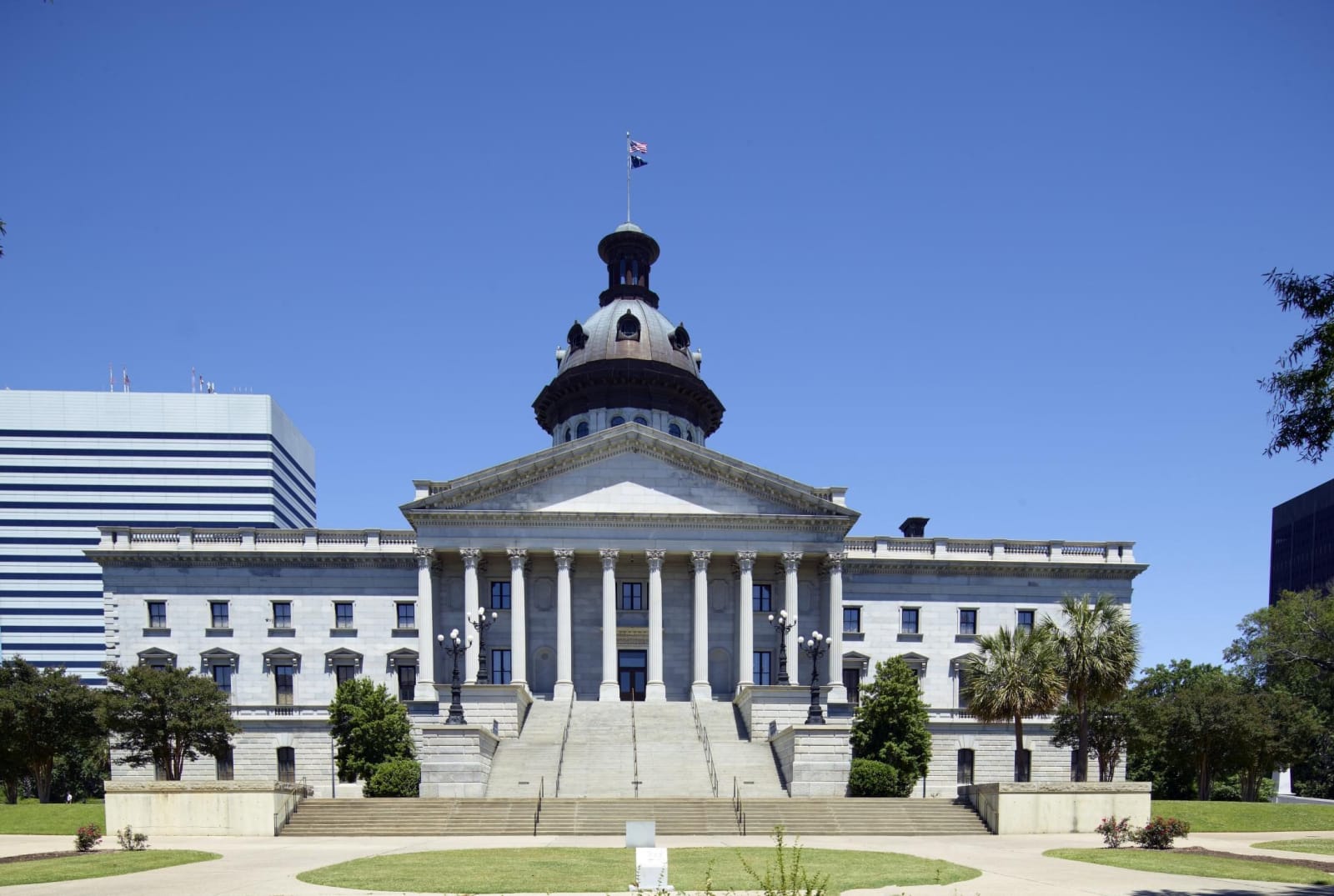
Work on this capitol began in 1851, but the first foundations proved defective, the architect was fired for fraud, and the Vienna-born John R. Niernsee started over in 1855. Between 375 and 500 men cut and hauled granite from a quarry near the Congaree River, about 60 percent of them enslaved African Americans and many others Irish immigrants. Work stopped in 1861 with the walls nearly up and no roof.
In February 1865 Union gunners on the west bank of the Congaree shelled the unfinished building, and six bronze stars on the granite mark where rounds from their 20-pound Parrott guns struck. The fire of February 17 destroyed the old wooden statehouse next door and about a third of the town. In 1869 legislators moved in under a temporary roof, and from 1868 to 1877 more than 80 African Americans served here in the only Black-majority state legislature in the nation's history. After Reconstruction Black officials were systematically pushed out of government, and from 1902 until 1970 none served in the legislature.
The grounds hold their own history. In March 1961 several hundred Black protesters, many from Columbia's sit-ins, marched here against segregation. The Confederate battle flag went up over the dome that year for the Civil War centennial, was moved to a pole on the grounds in 2000, and came down on July 10, 2015, the day after the governor signed its removal, weeks after nine Black worshippers were murdered at Mother Emanuel in Charleston. The African American History Monument has stood on the grounds since 2001. Free tours start inside.
Visitor Info
On the Map
Nearby
The closest stops worth working into your route
Historical markers nearby
Roadside plaques and monuments within a short detour