 Carol M. Highsmith / public domain via Library of Congress
The Story
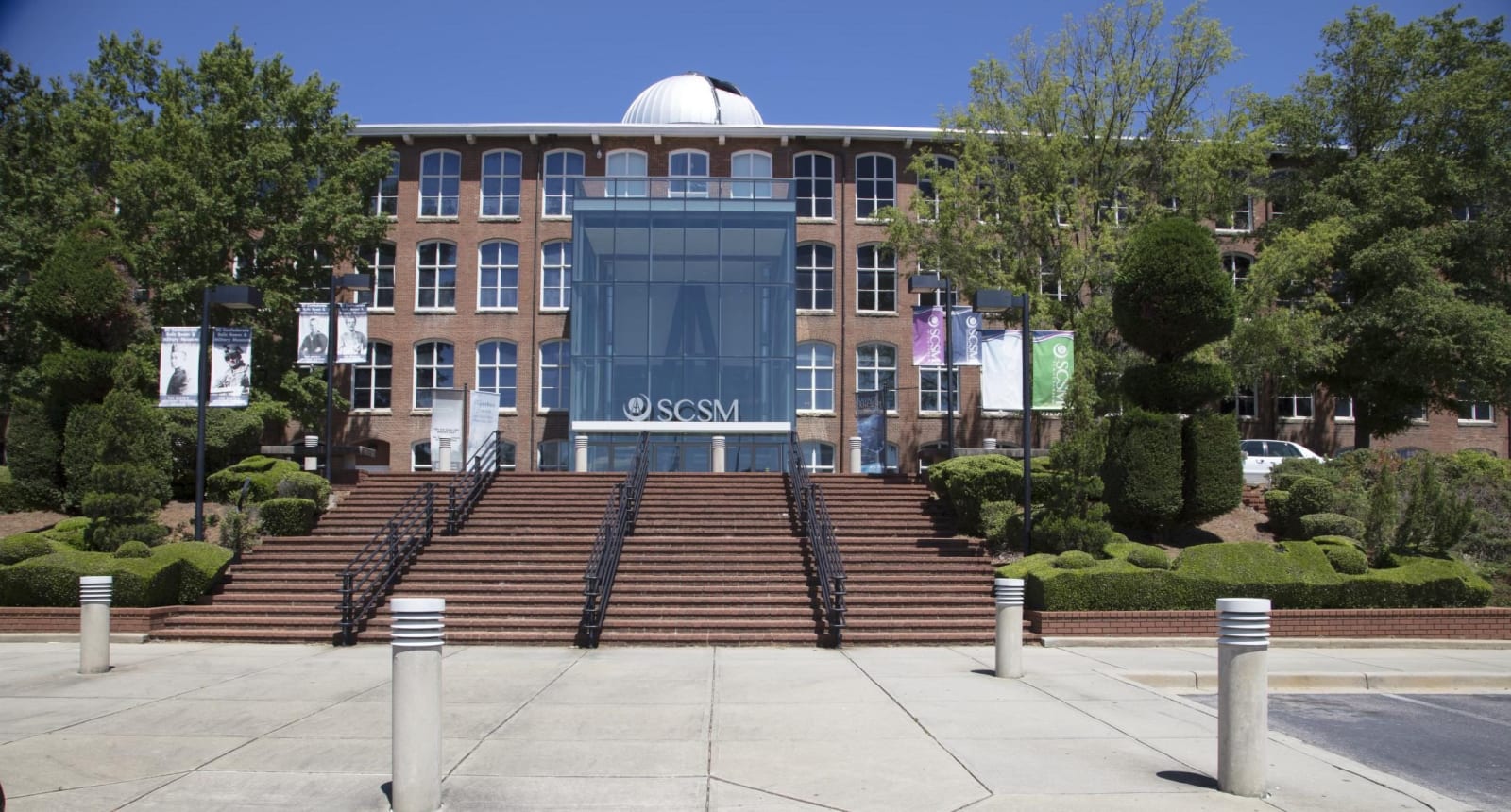
The building is the exhibit before you reach the door. In 1891 the Columbia Water Power Company enlarged the Columbia Canal, and in 1893 a group of Northern investors chartered the Columbia Mills Company to use it. The mill had to sit on a bluff 600 feet from the canal, too far for belts and shafts, so a General Electric salesman named Sidney B. Paine proposed alternating current and induction motors that would not spark in a lint-filled room. Two 1,000-horsepower turbines at the end of the canal fed fourteen 65-horsepower motors hung from the ceilings, and when the mill started in April 1894 it was the first textile mill in the world powered entirely by electricity.
It wove cotton duck and sailcloth for belting, awnings and tents. The company built a mill village for its workers across the river in West Columbia and named it Aretasville, after its president, Aretas Blood of New Hampshire. Baltimore's Mount Vernon-Woodberry Cotton Duck Company bought the mill in 1899, and by 1907 it ran more than thirty thousand spindles with twelve hundred employees. Production continued until 1981.
Mount Vernon Mills gave the building to the state, and the State Museum opened in it on October 29, 1988. The galleries cover South Carolina's geology, plants and animals, art and crafts, science and technology, and the everyday lives of its people, with a planetarium and an observatory. The museum also sends traveling exhibitions and staff help to smaller museums around the state.
Visitor Info
On the Map
Nearby
The closest stops worth working into your route
Historical markers nearby
Roadside plaques and monuments within a short detour