County guide · South Carolina
Georgetown County
5 places to stop and 32 historical markers in Georgetown County, South Carolina.
Towns: Georgetown (20), Pawleys Island (6), Murrells Inlet (2), Georgetown vicinity (2), Plantersville (2), Murrells Inlet vicinity (2), Pawleys Island vicinity (1), Andrews (1), Hemingway vicinity (1)
Places to stop
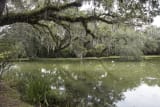
cultural · Murrells Inlet
Brookgreen Gardens
The Huntingtons' sculpture garden laid over four rice plantations, where the Lowcountry Trail tells of the more than a thousand people Joshua John Ward enslaved.
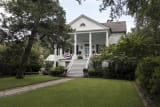
historical · Georgetown
Georgetown Historic District
South Carolina's third-oldest town on Winyah Bay: the rice port, Joseph Rainey's hometown, and the Rice Museum in the 1842 market building.
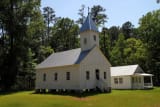
historical · Georgetown
Hobcaw Barony
Sixteen thousand acres on Waccamaw Neck: rice plantations, four villages built by enslaved people, Bernard Baruch's hunting retreat and a research reserve.
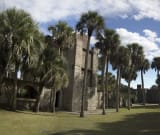
natural · Murrells Inlet
Huntington Beach State Park
Three miles of undeveloped beach, salt marsh and the Huntingtons' Moorish-style winter house, Atalaya, across the highway from Brookgreen.
natural · Georgetown
Waccamaw National Wildlife Refuge
Old tidal rice fields and blackwater swamp where the Waccamaw and Great Pee Dee rivers run side by side, with a visitor center at Yauhannah.
Historical markers
Pawleys Island · Erected 1993
All Saints Academy Summer House
The academy was the Waccamaw planters' answer to schooling children far from Charleston. Robert F. W.
Pawleys Island vicinity · Erected 2001
All Saints Parish
Rice made this one of the richest parishes in America, and enslaved people made the rice.
Georgetown · Erected 1983
Antipedo Baptist Church
The minister buried here came to the Baptists by way of the army. Edmund Botsford, born in Bedfordshire in 1745 and orphaned by seven, arrived in Charleston as a young…
Georgetown · Erected 1938
Attacks Upon Georgetown
The British had held Georgetown since July 1780. Indigo and rice had made the port at the head of Winyah Bay rich, and planters had built town houses and, in 1747, the…
Georgetown vicinity · Erected 2016
Beneventum Plantation
The house is counted among the oldest surviving main houses of the Georgetown County rice plantations, and the fields around it produced on a large scale.
Plantersville · Erected 2001
Chicora Wood Plantation
Robert F. W. Allston held 630 people in slavery, and their labor made these rice fields. When he died in 1864 most of his property was mortgaged.
Georgetown · Erected 1940
Clifton Plantation
Washington left Dr. Flagg's at about six in the morning and rode here for breakfast. He judged William Alston "a Gentleman of large fortune" and one of the neatest rice…
Georgetown · Erected 1967
General Arthur M. Manigault
Manigault died holding a state office. Born in Charleston in 1824 to a rich Huguenot family, he served as a lieutenant in the Palmetto Regiment in Mexico and worked in…
Georgetown · Erected 1940
Georgetown
Timber, then paper and steel, carried the town after rice. Three lumber mills ran by 1890, and in 1903 the Atlantic Coast Lumber Company built a mill on the Sampit, then…
Georgetown · Erected 2023
Georgetown
In 1850 the town counted 604 white residents, 924 enslaved people and 100 free people of color.
Georgetown · Erected 1997
Georgetown County Courthouse
Mills trained under the best builders of the young republic. He studied with James Hoban, the designer of the White House, used Thomas Jefferson's architecture library…
Georgetown · Erected 1940
Hopsewee
The house is older than the signer it is known for. Built about 1735 of black cypress on a brick cellar, it was sold by the Lynch family in 1752, when Thomas Jr.
Murrells Inlet vicinity · Erected 1981
Joseph Alston
Alston's rice lands in All Saints Parish came to 6,287 acres, worked by 204 enslaved people.
Pawleys Island · Erected 1993
Joseph Blyth Allston House ("Pawley House")
The family that named the island knew its dangers firsthand. In August 1745, during the War of Jenkins' Ear, Spanish privateers out of Cuba captured a schooner carrying…
Georgetown · Erected 1994
Joseph Hayne Rainey
Rainey's father, a barber, bought the family's freedom and moved to Charleston about 1846, and by 1860 the son was cutting hair at the Mills House hotel.
Georgetown · Erected 1940
Lafayette
Congress had no money for his passage, so Lafayette bought the ship Victoire himself. Letters from his family made him turn back to Bordeaux once, and an order sent him…
Andrews · Erected 2016
Oak Grove Methodist Church
The first church here burned in 1932, the worst year the nearby town had seen. Andrews was formed in 1909, when Harpers and Rosemary, two Georgetown and Western Railroad…
Pawleys Island · Erected 1993
P. C. J. Weston House / Pelican Inn
The builder of this beach house was raised partly in England. Plowden Weston, born in London in 1821, was sent back at twelve to Harrow and went on to Cambridge, then…
Pawleys Island · Erected 1975
Pawley's Island
When rice declined, timber took its place on the Waccamaw Neck: in 1901 the Atlantic Coast Lumber Company ran a railroad from the river to the beach and set up a retreat…
Hemingway vicinity · Erected 2001
Pleasant Hill School
This was built as the white school of a segregated district; the district's school for Black children, Chopee, still stands but has been heavily altered.
Plantersville · Erected 2001
Prince Frederick's Chapel
The tower that still stands was begun with ceremony. The rector, Joseph Hunter, laid the cornerstone on November 17, 1859, and former governor R. F. W.
Georgetown vicinity · Erected 1996
Prince George Winyah Parish (1721)
The parish was asked for before it was made. In 1720 the settlers of Winyah, on Sampit Creek, petitioned the assembly because they lived so far from the nearest parish…
Georgetown · Erected 1940
Prospect Hill
The house where Monroe slept belonged, strictly, to his host's wife. Thomas Allston began building it about 1794 and died before it was finished, leaving the plantation…
Pawleys Island · Erected 1994
R. F. W. Allston Causeway
Rice planters brought their families and enslaved servants to Pawleys each summer to escape river-plantation malaria, living in cottages of cypress and pine; by 1858…
Pawleys Island · Erected 1993
R. F. W. Allston House
Allston trained as a soldier and surveyor before he planted. He graduated from West Point in 1821, served briefly with the topographical service, and in 1823 won a…
Georgetown · Erected 1997
Robert Stewart House
Washington's own diary gives the day. On April 30, 1791, he came down the Waccamaw by boat to Georgetown to a cannon salute and a uniformed infantry company.
Georgetown · Erected 1938
Sergeant McDonald
Peter Horry, who led the Americans here, later gave his hoard of wartime papers and letters to Mason Locke Weems, whose popular, largely invented life of George…
Georgetown · Erected 2011
Sinking of the USS Harvest Moon
Harvest Moon was a side-wheeler built at Portland, Maine, and bought at Boston in November 1863.
Georgetown · Erected 1997
Town Clock
Enslaved people were sold on the open ground floor here, along with farm produce and livestock. A wooden market had stood on the site until a hurricane destroyed it.
Murrells Inlet vicinity · Erected 1941
Washington Allston
Allston was a writer as well as a painter, and among the first noted Americans named for George Washington. His mother remarried Dr.
Georgetown · Erected 1980
William Screven
Screven was born about 1629 in Somerton, Somerset, and came to New England in the 1640s.
Georgetown · Erected 1985
Winyah Schools
The school grew from a planters' club. Rice and indigo planters around Georgetown began meeting in 1740 as a convivial society to trade news from London and talk about…