County guide · Alabama
Hale County
3 places to stop and 9 historical markers in Hale County, Alabama.
Towns: Greensboro (7), Newbern (2), Moundville (1), Havana (1), Prairieville (1)
Places to stop
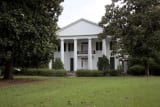
historical · Greensboro
Magnolia Grove
An 1840 temple-form Greek Revival townhouse in Greensboro, built for a cotton planter, with its original kitchen and a one-room slave house still standing behind it.
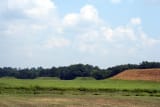
historical · Moundville
Moundville Archaeological Park
The Mississippian town of 29 earthen mounds above the Black Warrior River, second only to Cahokia, with the University of Alabama's Jones Archaeological Museum.
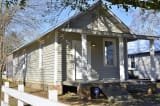
historical · Greensboro
Safe House Black History Museum
Two shotgun houses in Greensboro's Depot neighborhood, one of them where neighbors hid Martin Luther King Jr. from the Klan on March 21, 1968.
Historical markers
Greensboro · Erected 1957
Gayle - Tunstall House
John Gayle built this house as he settled in Greene County, which sent him to the legislature and made him speaker in 1829, and by 1830 he held 10 people in slavery.
Havana · Erected 1958
Greene Springs School
Henry Tutwiler had quit the University of Alabama in 1837 with the rest of the faculty and taught at small colleges before opening this school, and he held 20 people in…
Greensboro · Erected 1959
Greensboro Presbyterian Church
The congregation and the town's present name date from the same year. The land was Choctaw until the 1816 Treaty of Fort St. Stephens opened it for sale.
Newbern · Erected 1964
Newbern Baptist Church
Newbern is the base of Auburn University's Rural Studio, which Samuel Mockbee and Dennis K. Ruth founded in 1993 and moved here from Greensboro.
Newbern · Erected 1964
Newbern Presbyterian Church
This church's North Carolina founders came to a town other North Carolinians had laid out. The place was first called Cane Brake for the cane that covered it.
Greensboro · Erected 1956
Southern University
Greensboro citizens put up $113,000 to found the school, hoping it would turn out graduates able to govern themselves and serve others.
Prairieville · Erected 1956
St. Andrew's Church
The church was built in 1853 by enslaved men owned by members of the congregation, working under two master carpenters, Peter Lee and Joe Glasgow, who were themselves…
Greensboro · Erected 1956
St. Paul's Episcopal Church
Nicholas Hamner Cobbs, the bishop chosen here, was a Virginian then serving in Cincinnati, and he took on a diocese of 18 churches and fewer than 500 active members.
Greensboro · Erected 1954
The Alabama Baptist State Convention
The convention formed at this meeting had no real power over its churches, which settled their own affairs by majority vote, yet it came to speak for white Alabama…