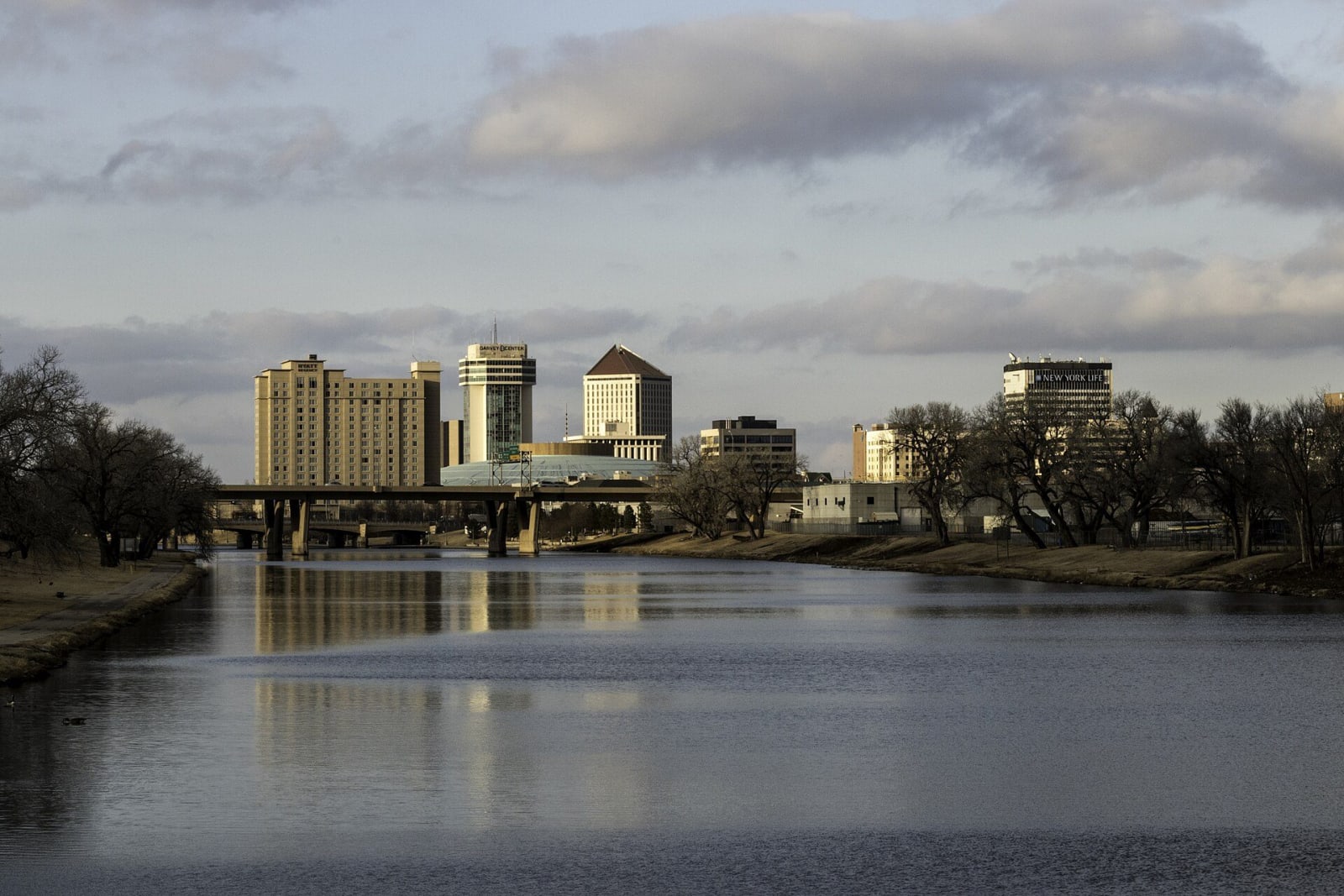
Wichita & South Central Kansas
Etzanoa on the Walnut River, the Keeper of the Plains at Wichita's confluence, Mennonite North Newton, and Hutchinson's salt mine and space museum.
This is the homeland of the Wichita and Affiliated Tribes, whose peoples include the Wichita proper, Waco, Taovaya, Tawakoni and Kichai. Their ancestors farmed these river valleys in towns of grass houses. On the Walnut River at Arkansas City, Spanish soldiers in 1601 found one so large they called it the Great Settlement, Etzanoa, and turned back rather than fight it. In 1864, refugees from Indian Territory, Wichita among them, built grass houses at the mouth of the Little Arkansas, and the city that grew up there kept their name.
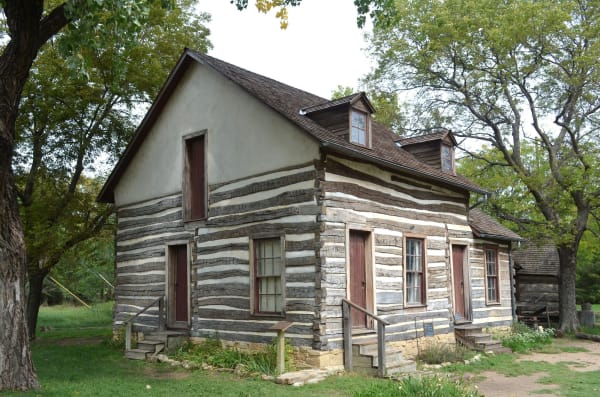
The region follows the Arkansas River and I-135. In Wichita, Blackbear Bosin's Keeper of the Plains stands over that confluence beside the Mid-America All-Indian Museum. The city was a cattle railhead from 1872 before it was anything else. North on I-135 the Mennonite towns begin, and the Kauffman Museum at Bethel College in North Newton tells how Mennonite families from Prussia, Poland and South Russia came to these plains in the 1870s.
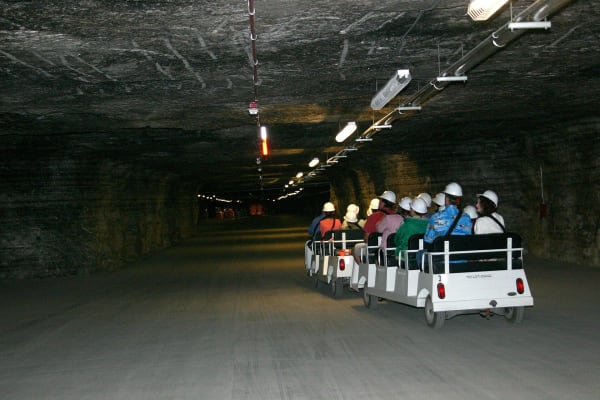
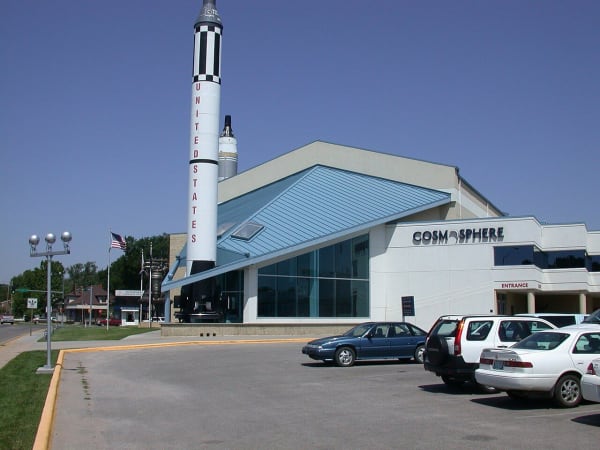
Northwest, Hutchinson sits on a bed of rock salt about 275 million years old. Strataca takes visitors 650 feet down into a working salt mine, and across town the Cosmosphere, which began as a planetarium in a fairgrounds poultry building, keeps the Apollo 13 command module Odyssey and more than 13,000 other spaceflight artifacts.
What to See in Wichita & South Central Kansas
6 places across the region, grouped by what they are.
Historic Sites
Towns & Gateways
Industry & Mining
Attractions
Wichita & South Central Kansas rewards the unhurried. Pick a base, fan out, and let the country between the headline stops surprise you.
← Explore more of Open Road Guide