Virginia · Region

Norfolk, Virginia Beach & Hampton Roads

Fort Monroe and 1619, the Nansemond Nation's river, the Great Dismal Swamp, Aberdeen Gardens and the Attucks, and the wild beaches of Back Bay and False Cape.

12 places to explore

Before the English came, the Chesapeake people held the shore at the mouth of the bay, the Nansemond fished and farmed along their river, and the Warraskoyak lived across the James near Smithfield, all within or drawn into Powhatan's paramount chiefdom. The Nansemond Indian Nation, federally recognized in 2018, holds its homecoming each August at Mattanock Town, and the Chesapeake dead from Great Neck rest at First Landing.

The English landed at Cape Henry in 1607, and in 1619 the White Lion brought enslaved Africans to Point Comfort, where Fort Monroe now stands. In 1861 three men who crossed into that fort forced the contraband decision, and Mary Peake taught freedpeople under the Emancipation Oak. Enslaved men dug the Washington Ditch into the Great Dismal Swamp, where maroons made their lives, and at Great Bridge in 1775 Black men fought on both sides.

The twentieth century is here too: Aberdeen Gardens, built by Black workers for shipyard families; the Attucks Theatre on Church Street; the museum Newport News shipyard hands built in 1930; and Seashore State Park, closed in 1955 rather than integrated. St. Luke's Church and Smithfield's hams round out the drive, and Back Bay and False Cape keep the wild beaches.

What to See in Norfolk, Virginia Beach & Hampton Roads

12 places across the region, grouped by what they are.

Natural Areas
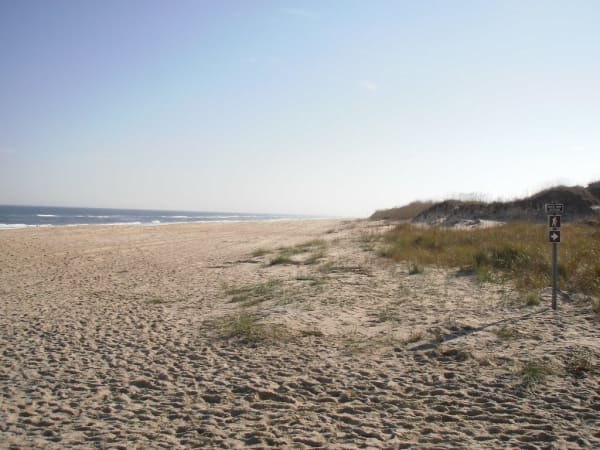
An empty sand beach running south beside grassy dunes, a small refuge trail sign at the right and surf at the left.

Back Bay National Wildlife Refuge and False Cape

Virginia Beach

A 1938 waterfowl refuge on the barrier spit south of Virginia Beach, and beyond it False Cape, a roadless park on the site of a village built from shipwreck timber.

View details →

First Landing State Park

Virginia Beach

Cape Henry's bay shore, homeland of the Chesapeake people, where the English first landed in 1607 and where Virginia closed a state park rather than integrate it.

View details →
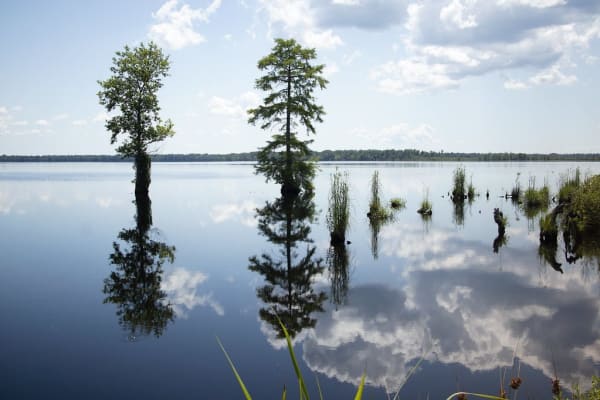
Two cypress trees standing in the still water of Lake Drummond, mirrored with the clouds above a distant line of forest.

Great Dismal Swamp National Wildlife Refuge

Suffolk

The Virginia side of the Great Dismal Swamp: the Washington Ditch that enslaved men dug in the 1760s, the road to Lake Drummond, and the ground of the swamp's maroons.

View details →

Historic Sites

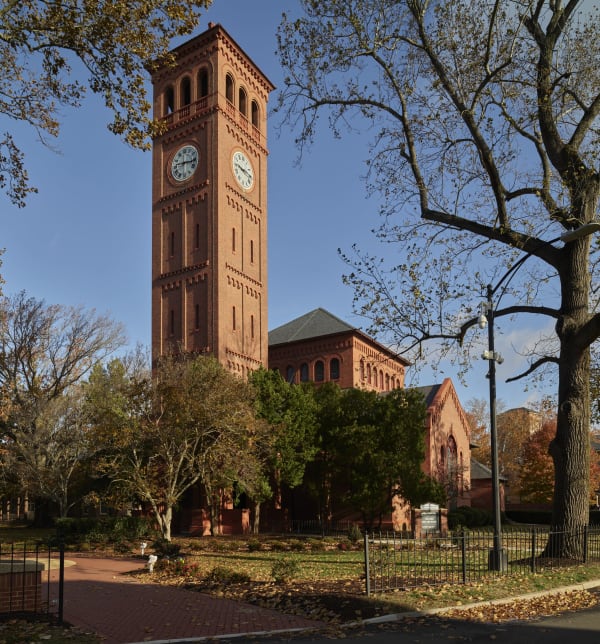
The red brick clock tower of the 1886 Memorial Chapel at Hampton University, framed by autumn trees and a brick walk.

Emancipation Oak and Hampton University Museum

Hampton

The live oak where Mary Peake taught freedpeople in 1861 and Hampton heard the Emancipation Proclamation, beside the oldest African American museum in the country.

View details →
The stone wall of Fort Monroe rising from its water-filled moat under a clear sky, a flag flying beyond the ramparts.

Fort Monroe National Monument

Hampton

Point Comfort, where the first documented Africans in English North America landed in 1619, and the stone fort where three men forced the contraband decision of 1861.

View details →

Great Bridge Battlefield and Waterways Museum

Chesapeake

The causeway south of Norfolk where Virginians beat Lord Dunmore's force in December 1775, a battle fought by Black men on both sides.

View details →

Towns & Gateways

Attucks Theatre

Norfolk

Norfolk's 1919 theater on Church Street, financed, designed and built by Black Virginians, named for Crispus Attucks and called the Apollo of the South.

View details →

Mattanock Town (Nansemond Indian Nation)

Suffolk

The Nansemond Indian Nation's land on the Nansemond River, returned by the City of Suffolk, where the nation holds its homecoming pow wow each August.

View details →
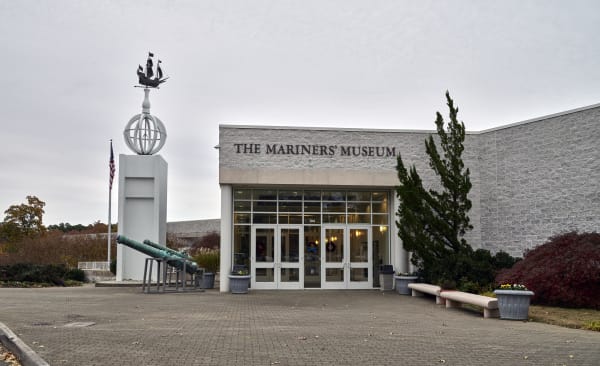
The entrance of The Mariners' Museum, a pale stone building with glass doors, two old cannons on the plaza and autumn shrubs.

The Mariners' Museum and Park

Newport News

A maritime museum built by Newport News shipyard workers in the Depression, now keeper of the USS Monitor turret, with a five-mile trail around its lake.

View details →

Architecture

Aberdeen Gardens

Hampton

The first New Deal homestead community built for Black families, designed by a Black architect and built by Black workers for Newport News shipyard and coal-pier hands.

View details →
The square brick tower and buttressed nave of St. Luke's Church among red autumn trees and fallen leaves.

Historic St. Luke's Church

Smithfield

Virginia's oldest church and the oldest brick church in English North America, a Gothic-buttressed building in Warraskoyak country, dated by its timbers to 1682.

View details →

Food & Drink

Isle of Wight County Museum

Smithfield

Smithfield's county museum, keeper of a ham cured in 1902 and the story of the town's dry-cured hams, with galleries on free Black Virginians and the Blackwater.

View details →

Norfolk, Virginia Beach & Hampton Roads rewards the unhurried. Pick a base, fan out, and let the country between the headline stops surprise you.

← Explore more of Open Road Guide