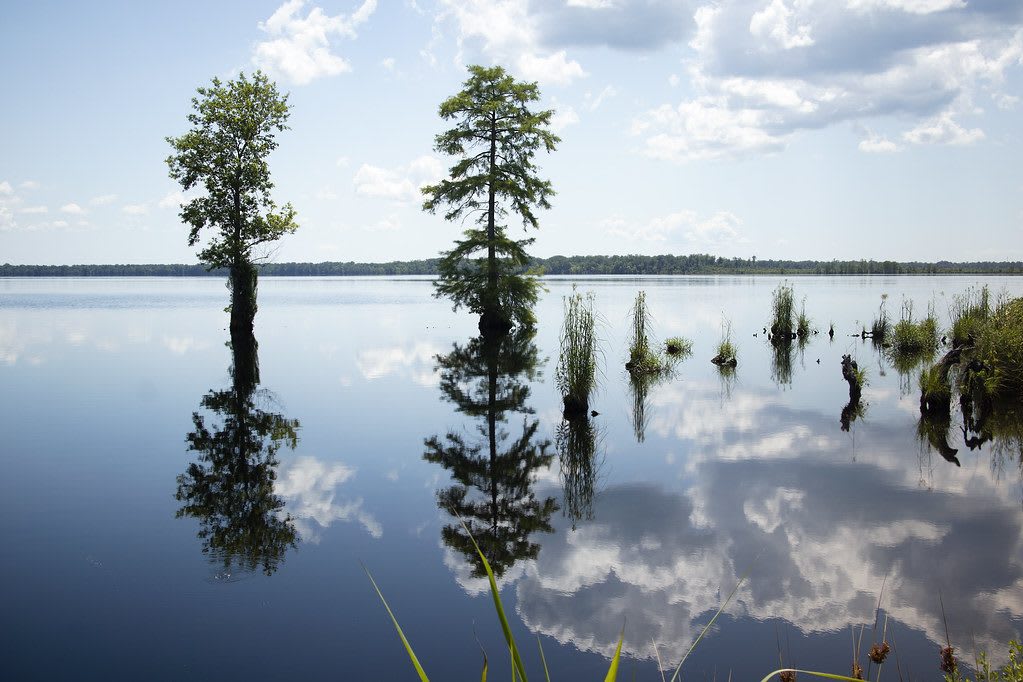
 watts_photos / CC BY 2.0 via Flickr
The Story
The swamp was a hunting ground long before the English came, and in the 1600s the Chesapeake, the Nansemond and other peoples used it. In 1763 George Washington surveyed it as a member of the Dismal Swamp Land Company, which meant to drain and log it. In the mid to late 1760s enslaved laborers cleared the land and dug the ditch that carries his name, a straight cut that has served as the route through the swamp to Lake Drummond ever since.
The swamp also sheltered people who had escaped slavery. From the 1600s until the Civil War, maroons lived on the islands of high, dry ground in the interior, along with free Black people and enslaved men who worked on the swamp's canals, and estimates of the population run to the thousands. Archaeologists from American University began digging in the swamp in 2003, and since 2009 a field school with the Fish and Wildlife Service has studied the island settlements. The refuge keeps an Underground Railroad Education Pavilion off Desert Road, on the Lake Drummond Wildlife Drive.
The refuge covers about 113,000 acres, the largest intact remnant of a swamp that once spread over more than a million, with the 3,100-acre lake at its center and black bears and about 200 kinds of birds. The Washington Ditch entrance on White Marsh Road has a three-quarter-mile boardwalk through the swamp forest and a 4.5-mile dirt road to a pier on Lake Drummond. Bring water and insect repellent in the warm months.
Visitor Info
On the Map
Nearby
The closest stops worth working into your route
Historical markers nearby
Roadside plaques and monuments within a short detour