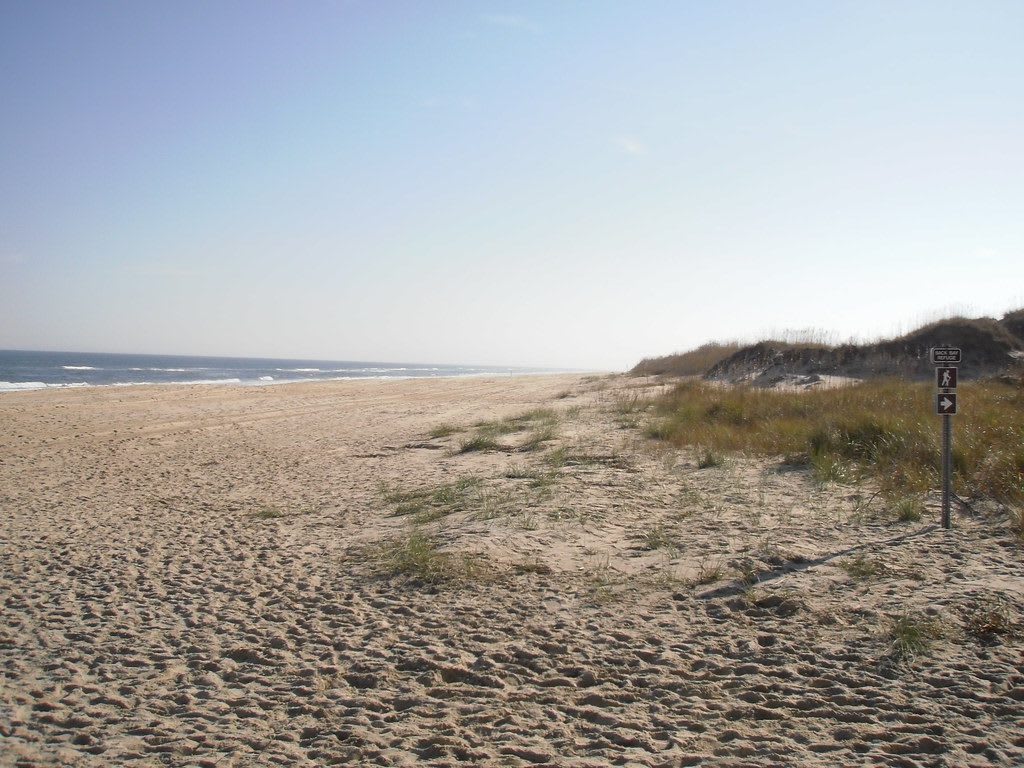
 U.S. Fish and Wildlife Service / public domain via Flickr
The Story
South of the resort strip, Sandpiper Road runs down a narrow spit of beach, dunes, marsh and woods between Back Bay and the Atlantic. The refuge was set aside in 1938 to protect migratory and wintering waterfowl on the Atlantic Flyway, and it has grown to more than 9,000 acres, a buffer between the bay's watershed and the city to the north. Trails and dikes lead from the visitor center through the marshes, and the refuge beach runs south toward False Cape.
Beyond the refuge lies False Cape State Park, six miles of undeveloped ocean beach with no public road. The cape took its name because its shape resembled Cape Henry and drew ships into the shallows. Survivors of one such wreck settled here and built the village of Wash Woods, raising their church and houses from cypress timber that washed ashore. From about 1900 until the 1960s hunt clubs came for the waterfowl, and one old clubhouse is now the park's Wash Woods Environmental Education Center.
Visitors to False Cape walk, bicycle or paddle in, or take a tram tour that leaves from the refuge visitor center by reservation and stops at Barbour Hill and the Wash Woods site. From November through March the dike trails close for wintering birds, and the only way to False Cape is along the beach. Pets are not allowed on the refuge, so they cannot pass through to False Cape. Carry water and sun protection.
Visitor Info
On the Map
Nearby
The closest stops worth working into your route
Historical markers nearby
Roadside plaques and monuments within a short detour