The Central Mountains
The Lenape at Bulltown and the Pringle sycamore, Weston's asylum, Jackson's Mill told plainly, Holly River's New Deal forest, two lakes and Glenville's folk festival.
This was Lenape and Shawnee country before it was anyone's county. In the late 1760s the Lenape leader Captain Bull, exiled from New York, settled at the salt licks on the Little Kanawha with a few families and traded salt with incoming settlers; in 1772 his people were killed and the village destroyed by men from the new Buckhannon settlement, at what is now the Bulltown Historic Area. The Pringle brothers' hollow sycamore marks where that settlement began, and Buckhannon may carry the name of the Lenape war leader Buckongahelas.
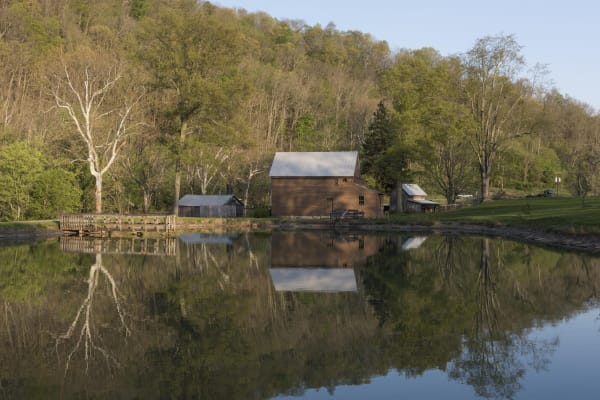
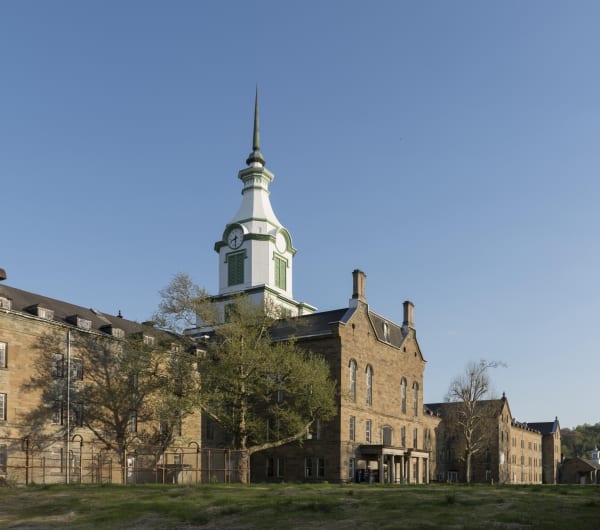
Then came turnpikes, salt and timber. Stonewall Jackson grew up at Jackson's Mill on a farm worked by enslaved people, and the 1915 boulder there is Lost Cause memory. At Weston, Virginia began its great sandstone asylum in 1858; the Trans-Allegheny Lunatic Asylum held patients until 1994, through overcrowding and the lobotomy years. Logging stripped the hills until New Deal crews rebuilt Holly River, and Webster Springs, once a spa, now crowns world champion woodchoppers.
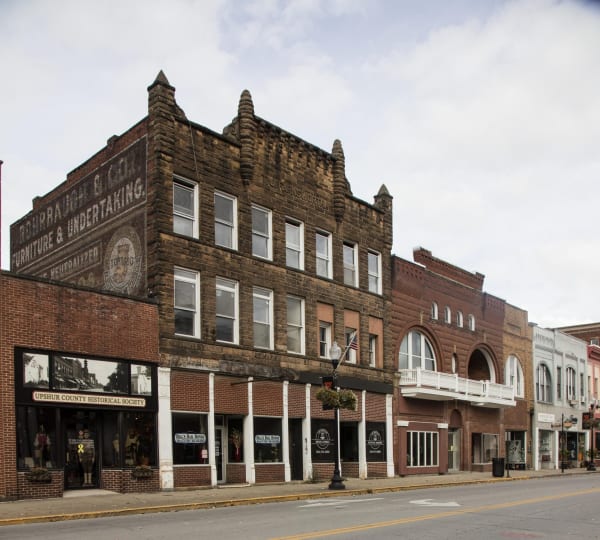
The Corps of Engineers dammed the Elk at Sutton and the Little Kanawha at Burnsville, and Sutton's Main Street keeps a museum for the Flatwoods Monster of 1952. The Wildlife Center at French Creek shows bison and elk again, Cedar Creek keeps a 1910 one-room school, and Glenville holds the State Folk Festival each June, grown from Patrick Gainer's 1950 college class.
What to See in The Central Mountains
12 places across the region, grouped by what they are.
Natural Areas
Hikes & Trails
Historic Sites
Towns & Gateways
The Central Mountains rewards the unhurried. Pick a base, fan out, and let the country between the headline stops surprise you.
← Explore more of Open Road Guide