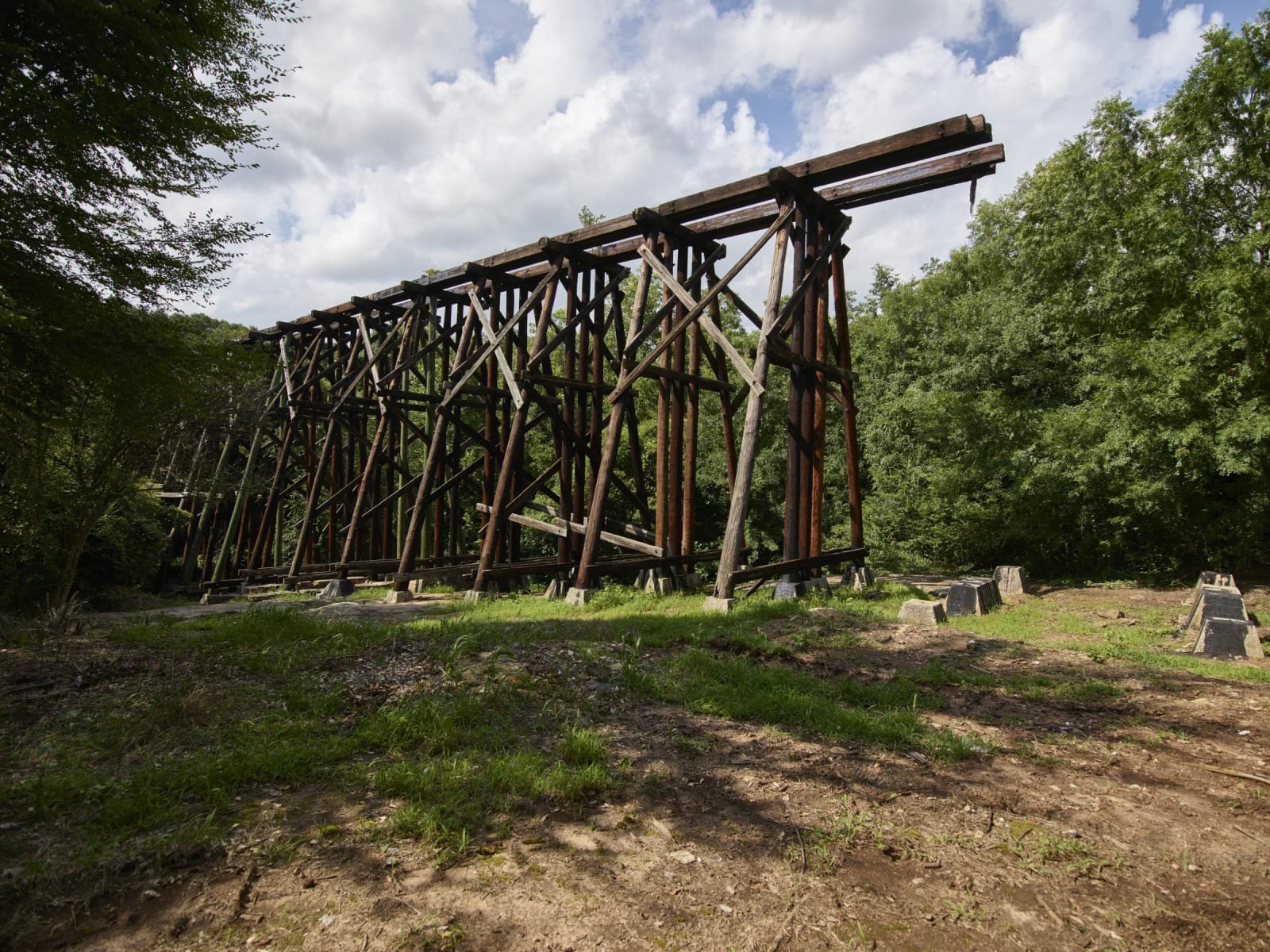
Athens & the Northeast Piedmont
Athens and the Piedmont: Muscogee and Cherokee country, Madison's cotton town, Moore's Ford, UGA's 1961 desegregation, the Morton Theatre and the 40 Watt.
This was Muscogee (Creek) and Cherokee country, ceded in pieces from 1773 to 1818. Settlers raised the Fort Yargo blockhouse against the nations whose land they had taken, Morgan County's western line marked the Muscogee frontier at Hard Labor Creek, and at Scull Shoals the Mississippian mounds that gave the place its name are a burial ground left undisturbed.
Cotton and slavery built Madison, where nearly half of Morgan County was enslaved by 1820, and they built the University of Georgia, where the remains of enslaved people found at Baldwin Hall in 2015 now have a memorial. Silt from worn-out cotton fields buried the mills at Scull Shoals, and in the 1930s the Civilian Conservation Corps turned spent farms at Hard Labor Creek into lakes and woods. On July 25, 1946, a white mob murdered Roger and Dorothy Malcom and George and Mae Murray Dorsey near Moore's Ford Bridge; a marker on US 78 names them. In January 1961 Hamilton Holmes and Charlayne Hunter desegregated the university through a jeering crowd.
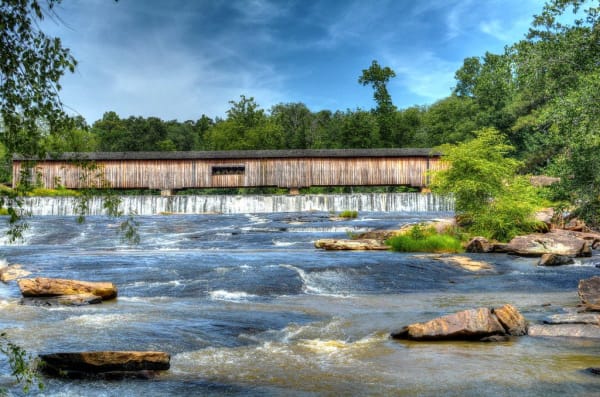
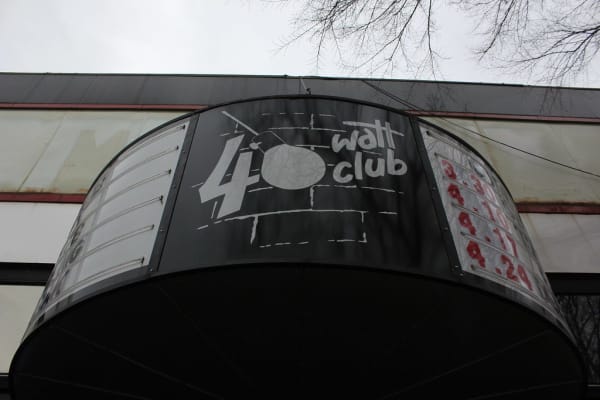
Athens carries the music, from Pink Morton's 1910 vaudeville house at Hot Corner to the 40 Watt Club, where R.E.M. played its early shows. W. W. King's 1885 covered bridge spans the South Fork of the Broad River at Watson Mill, Crawford Long first used ether in Jefferson, and Elberton cuts granite for memorials across the country.
What to See in Athens & the Northeast Piedmont
11 places across the region, grouped by what they are.
Natural Areas
Historic Sites
Towns & Gateways
Athens & the Northeast Piedmont rewards the unhurried. Pick a base, fan out, and let the country between the headline stops surprise you.
← Explore more of Open Road Guide