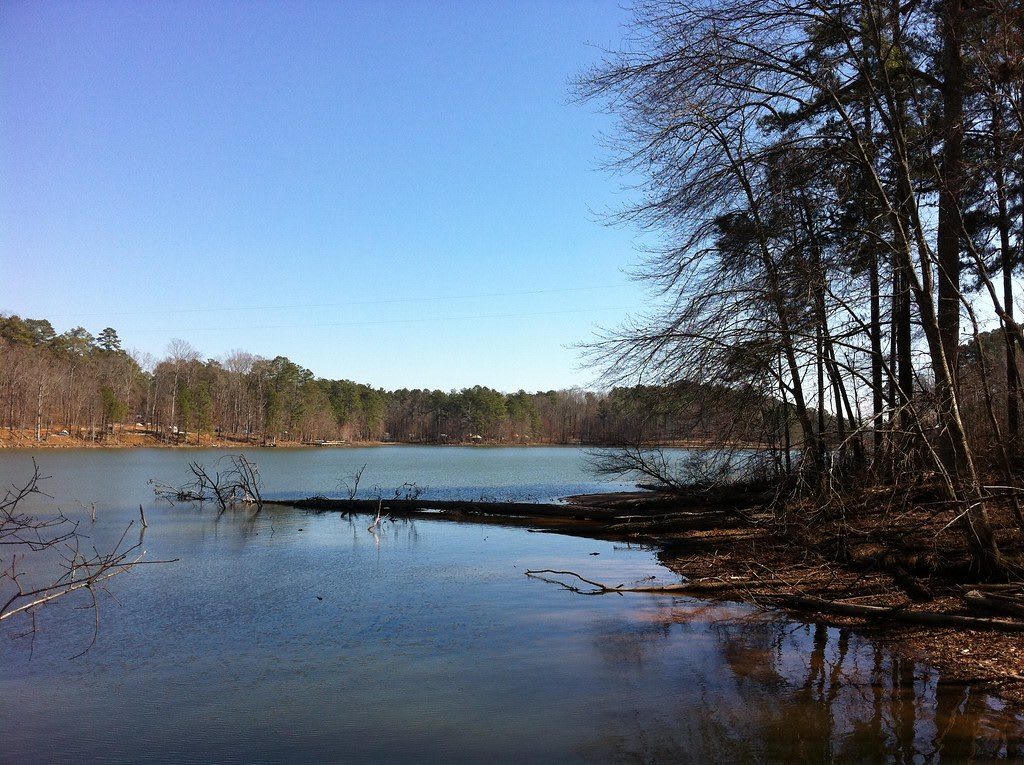
 TranceMist / CC BY 2.0 via Flickr
The Story
Muscogee (Creek) and Cherokee people were the first to live in what is now Barrow County, many of them at a settlement known as Snodon. Their land here passed to Georgia in the cessions that followed the Revolution, and veterans with land grants arrived from 1784. A Native American story of the area tells of Nodoroc, a small lake of boiling blue mud that was a place of punishment and religious meaning.
The log blockhouse dates to 1792, built by white settlers for protection against the Muscogee and Cherokee whose land they had moved onto. It is two stories, about 18 by 22 feet, with logs some ten inches thick joined at the corners by wedge-shaped notches, and it is one of the few frontier forts of its kind still standing in Georgia. Volunteers keep up the fort and stage living history encampments several times a year.
The rest of the park's 1,816 acres are woods around a 260-acre lake, with a swimming beach, boat ramps, cottages, yurts and campsites. Will-A-Way, opened in 1971, is an accessible camp for people with disabilities. Mountain bikers come for the trail system, and Winder, home of the longtime senator Richard B. Russell Jr., is a mile north.
Visitor Info
On the Map
Nearby
The closest stops worth working into your route
Historical markers nearby
Roadside plaques and monuments within a short detour