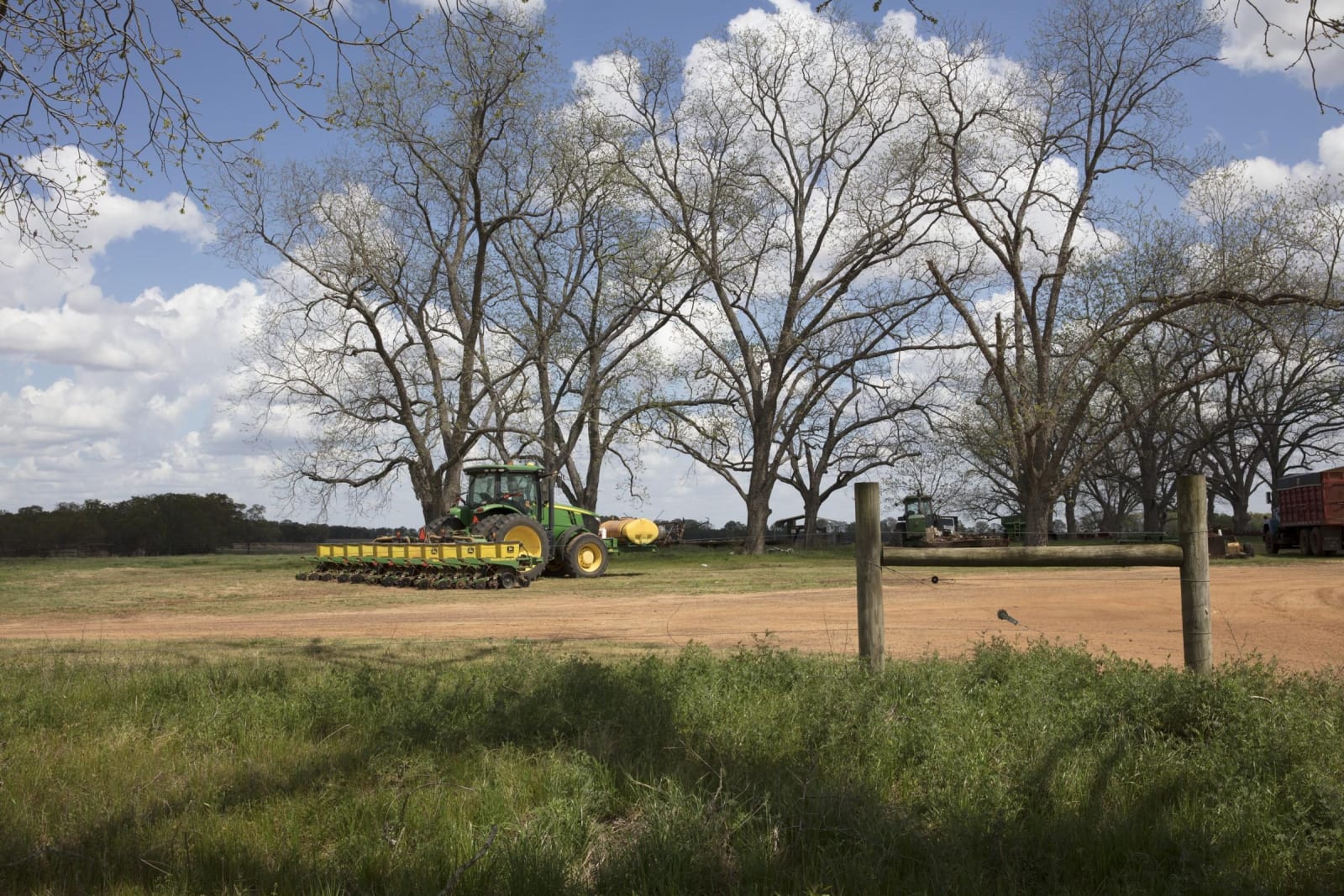
A green tractor and planter on red clay beneath tall bare pecan trees on a farm near Plains, a fence post in the foreground.
Carol M. Highsmith / public domain via Library of Congress
Georgia · Region

Andersonville, Plains & Southwest Georgia

Southwest Georgia: Kolomoki's Woodland mounds, Andersonville's prison, Carter's Plains, Koinonia Farm, the Albany Movement, Providence Canyon and the Leesburg Stockade.

10 places to explore

Between about A.D. 350 and 600 the people of Kolomoki raised a 57-foot platform mound and buried their dead beside a great plaza near Blakely. Later this was Muscogee (Creek) country, taken by treaty in the 1820s; in 1818 Georgia militia burned the friendly town of Chehaw near Leesburg, and in 1836 Muscogee fighters burned Roanoke on the Chattahoochee before soldiers drove the nation west, some in chains.

Cotton and the people enslaved to grow it filled the new counties, and the plowed fields west of Lumpkin washed away into Providence Canyon. Americus grew on the trade and built the towering Windsor Hotel. At Andersonville nearly 13,000 Union prisoners died in fourteen months inside a stockade built by forced Black labor. In Plains, Jimmy Carter grew up on a farm at Archery among Black neighbors, and the depot ran his 1976 campaign.

This corner of Georgia carried the civil rights movement. The Albany Movement met first at Old Mt. Zion Church in 1961; in 1963 girls arrested in Americus were held without charges at the Leesburg Stockade; at Koinonia Farm an interracial community outlasted boycott and bombing and gave rise to Habitat for Humanity. The blue spring at Radium Springs and the lake at Florence Marina are the places to rest.

What to See in Andersonville, Plains & Southwest Georgia

10 places across the region, grouped by what they are.

Geology & Rock Formations
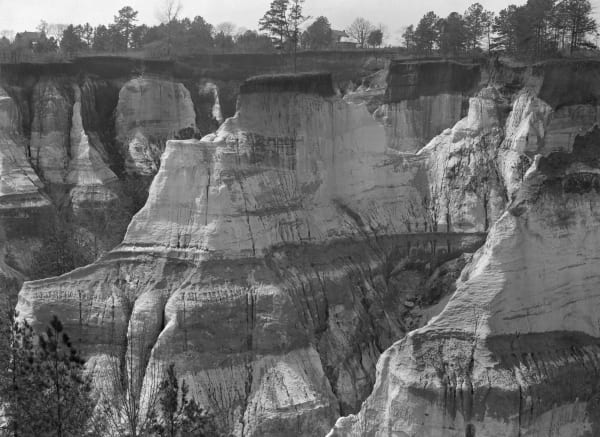
Pale, layered canyon walls and pinnacles of eroded sand in Stewart County, Georgia, photographed in February 1937.

Providence Canyon State Park

Lumpkin

Sixteen gullies up to 150 feet deep west of Lumpkin, cut not by a river but by rain running off cotton fields cleared in the early 1800s, with walls in dozens of colors.

View details →

Natural Areas

Radium Springs Gardens

Albany

One of Georgia's largest natural springs, pouring up to 70,000 gallons a minute of blue, 68-degree water into the Flint below Albany, at the site of a vanished 1920s resort.

View details →

Hikes & Trails

Florence Marina State Park

Omaha

A small park at the head of Lake Walter F. George on the Chattahoochee, on the site of the river town of Florence, near where Muscogee fighters burned Roanoke in 1836.

View details →

Historic Sites

Albany Civil Rights Institute

Albany

The 1906 Old Mt. Zion Baptist Church, where the Albany Movement held its first mass meeting in 1961, and the museum beside it on the movement, its songs and its people.

View details →
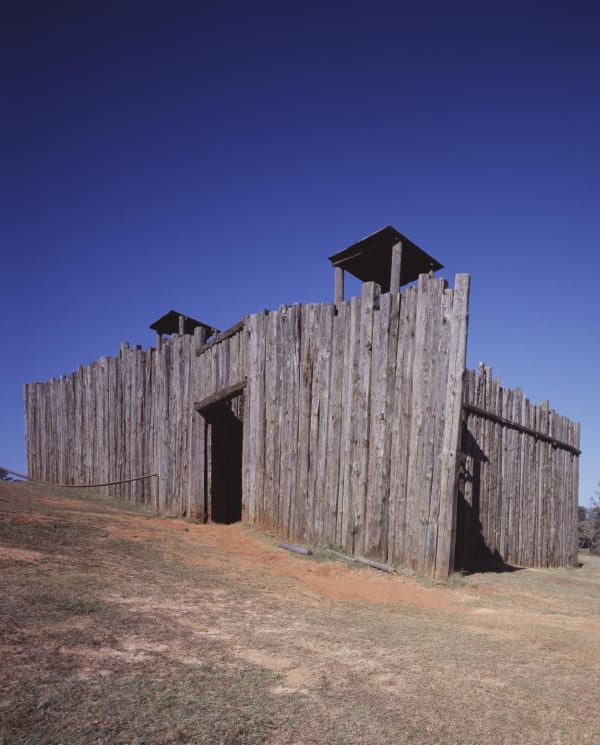
A reconstructed section of the Andersonville prison stockade, a wall of weathered upright logs with two roofed guard posts above an open gate, under a deep blue sky.

Andersonville National Historic Site

Andersonville

The ground of Camp Sumter, the Confederate prison where nearly 13,000 of 45,000 Union prisoners died in fourteen months, with the national cemetery and the National Prisoner of War Museum.

View details →
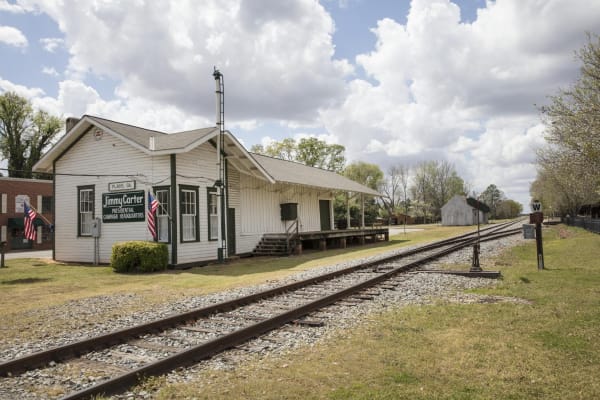
The white frame Plains railroad depot beside the tracks, with a sign for Jimmy Carter presidential campaign headquarters and American flags by the door.

Jimmy Carter National Historical Park

Plains

Plains High School, the 1888 depot that ran the 1976 campaign, the boyhood farm at Archery with the Clark family's house, and the garden where Jimmy and Rosalynn Carter are buried.

View details →

Koinonia Farm

Americus

The interracial Christian farm Clarence and Florence Jordan founded near Americus in 1942, boycotted, shot at and bombed in the 1950s, and the birthplace of Habitat for Humanity.

View details →

Kolomoki Mounds State Park

Blakely

The largest Woodland-period mound center in the Southeast, near Blakely, where people of the Swift Creek and Weeden Island cultures raised a 57-foot platform mound more than 1,500 years ago.

View details →

Leesburg Stockade

Leesburg

The Lee County public works building where some thirty Black girls arrested in the 1963 Americus marches were held for weeks without charges, until SNCC photographs forced their release.

View details →

Architecture

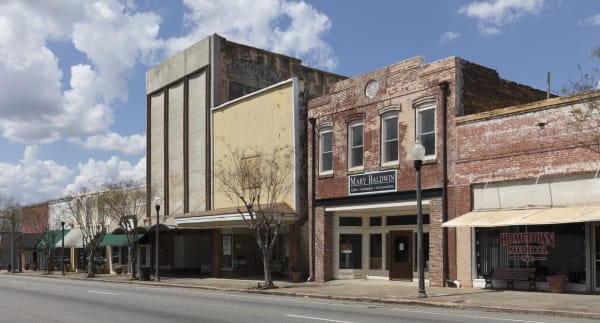
A block of old two-story brick storefronts on a quiet downtown street in Americus, with awnings, street lamps and young trees along the sidewalk.

Americus Historic District

Americus

The Sumter County seat of 1832, with the towering 1892 Windsor Hotel, the Rylander Theatre and the streets of the 1963-65 Americus Movement.

View details →

Scenic Drives through Andersonville, Plains & Southwest Georgia

Scenic Byway

Andersonville to Plains: GA 49 and US 280 through Americus

About 23 miles through Sumter County farm country, from the Camp Sumter prison ground at Andersonville south on GA 49 to Americus, then west on US 280 to Plains and the Jimmy Carter National Historical Park.

23 mi · 0.6 hrs

Andersonville, Plains & Southwest Georgia rewards the unhurried. Pick a base, fan out, and let the country between the headline stops surprise you.

← Explore more of Open Road Guide