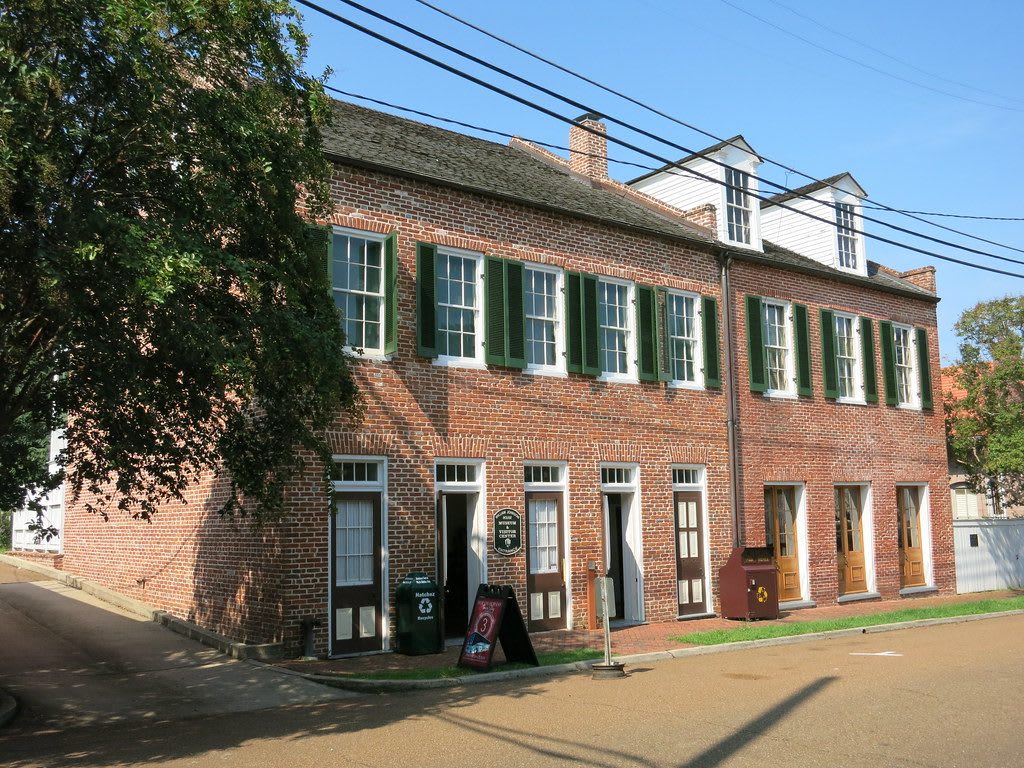
 James Case / CC BY 2.0 via Flickr
The Story
William Johnson was born into slavery in 1809 and died a prosperous man in Natchez, which is why his house is not a simple story. He became a free man, built three barbershops that gave him his main income, and kept looking for ways to add to his wealth. The Park Service also states plainly that he claimed ownership of several enslaved people who worked in his home, his shops and his farms. The house on State Street, with the adjoining McCallum House, was built of brick salvaged after the tornado of 1840. The family lived upstairs, and merchants rented the ground floor.
What makes Johnson known is his diary, kept from 1835 to 1851, a detailed record of everyday life in Natchez that the Park Service uses to show what life was like for free Black people before the Civil War. It was rediscovered in 1938 and published in 1951, and his papers are at Louisiana State University.
The diary ends with his death. After a dispute over land, Johnson was shot in 1851, as he returned toward town, by Baylor Winn, a neighbor who was claimed to be white. Johnson named Winn as the killer on his deathbed. Winn escaped conviction because Mississippi law barred Black testimony against a white man, and his defense rested on being counted as white. Visit the house after Forks of the Road, and it reads differently.
Visitor Info
On the Map
Nearby
The closest stops worth working into your route
Historical markers nearby
Roadside plaques and monuments within a short detour