 NatalieMaynor / CC BY 2.0 via Flickr
The Story
The Grand Village was the main ceremonial center of the Natchez from 1682 to 1730, the town French writers described on the banks of St. Catherine Creek. Its mounds were built from about AD 1350, and people lived here by AD 1200. The Great Sun, the nation's paramount leader, lived here, and so did his brother Tattooed Serpent, whom the French knew as a diplomat. Descent ran through the mother's line: the Great Sun was always the son of the Female Sun.
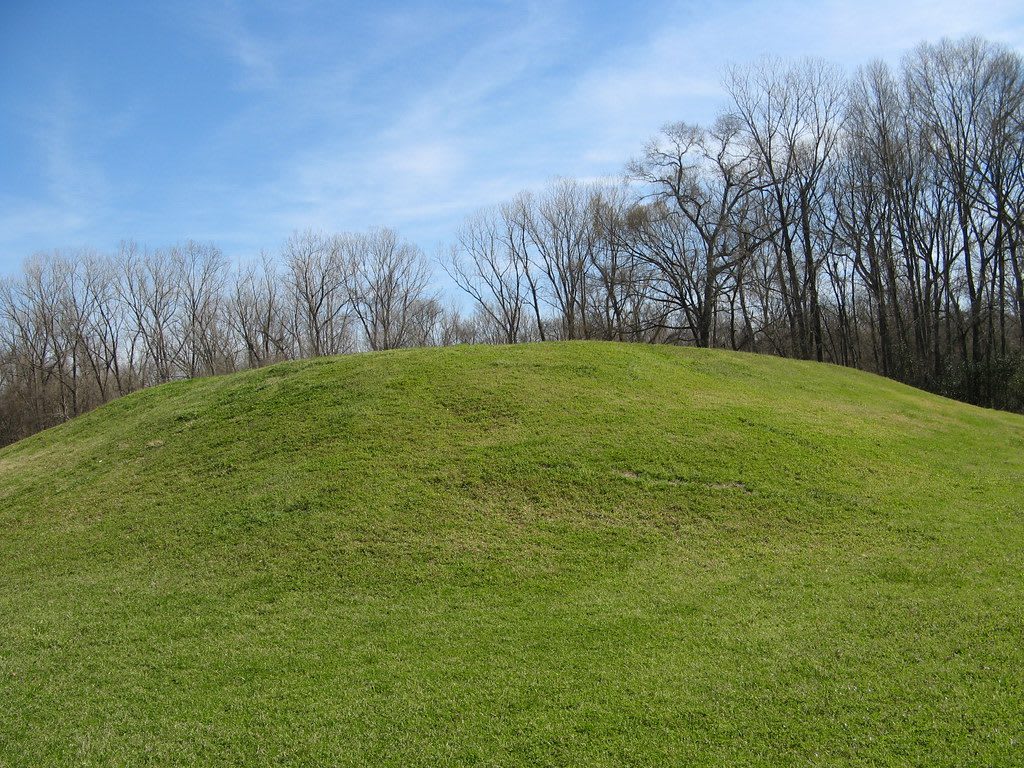
A French map of 1723 shows at least six mounds. Three still rise from the lawn, and two, the Great Sun's Mound and the Temple Mound, have been excavated and rebuilt to their original size and shape. A sacred fire once burned inside the temple on the second, a symbol of the sun from which the royal family traced its descent. In 1729 a pro-English faction within the nation attacked the French plantations and the garrison at Fort Rosalie, and the French answered with a force that drove the Natchez out of their homeland in 1730. Many captives were shipped to Saint-Domingue and sold into slavery, and others found refuge with the Chickasaw, the Muscogee and the Cherokee. Natchez descendants are enrolled today in the Cherokee Nation and the Muscogee (Creek) Nation.
It is a quiet 128-acre park with a small museum and a nature trail. The state archives department is consulting with tribal communities on a larger museum and has begun calling the site the Natchez Tribal History Center. Come here before you tour any mansion.
Visitor Info
On the Map
Nearby
The closest stops worth working into your route
Historical markers nearby
Roadside plaques and monuments within a short detour