 Preston Keres, USDA / public domain via Flickr
The Story
This was Muscogee (Creek) land before Scots Highlanders and other settlers turned it into small farms of livestock, corn and cotton. In 1931 Mose Coleman, a Toombs County farmer, found that his onions were mild rather than hot and sold them for $3.50 a fifty-pound bag, a fine price in the Depression, and his neighbors followed. The museum also names other early growers, Ed Tensley and Earlie Jordan among them. A state farmers' market in Vidalia and the Piggly Wiggly warehouse here carried the onions out across the South. After years of fights over the name and bootleg onions bagged as Vidalias, a 1986 state law fixed the twenty-county growing area, and a federal marketing order followed in 1989.
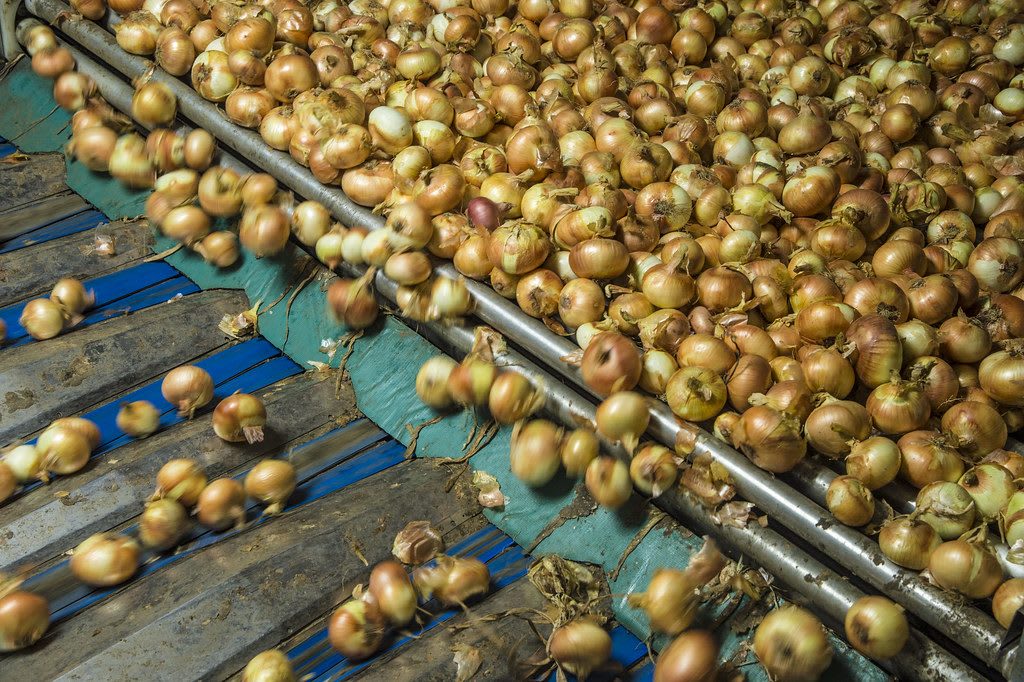
The work is still done largely by hand. Seedlings are pulled, trimmed and set in the field one at a time, some 80,000 to the acre, and most of the crop is pulled and clipped by crews in late spring. Georgia is second only to Florida in its number of H-2A guest workers, hired through labor contractors. In 2021 a federal indictment known as Operation Blooming Onion charged two dozen people, most of them contractors and recruiters, with forced labor, fraud and money laundering tied to farms in six South Georgia counties, Toombs and Tattnall among them; it alleged that workers dug onions with their bare hands for twenty cents a bucket and that at least two died.
The museum opened in 2011 in a 1,300-square-foot room shared with the visitors bureau, with two onion patches by the door. Harvest runs from mid-April to mid-June.
Visitor Info
On the Map
Nearby
The closest stops worth working into your route
Historical markers nearby
Roadside plaques and monuments within a short detour