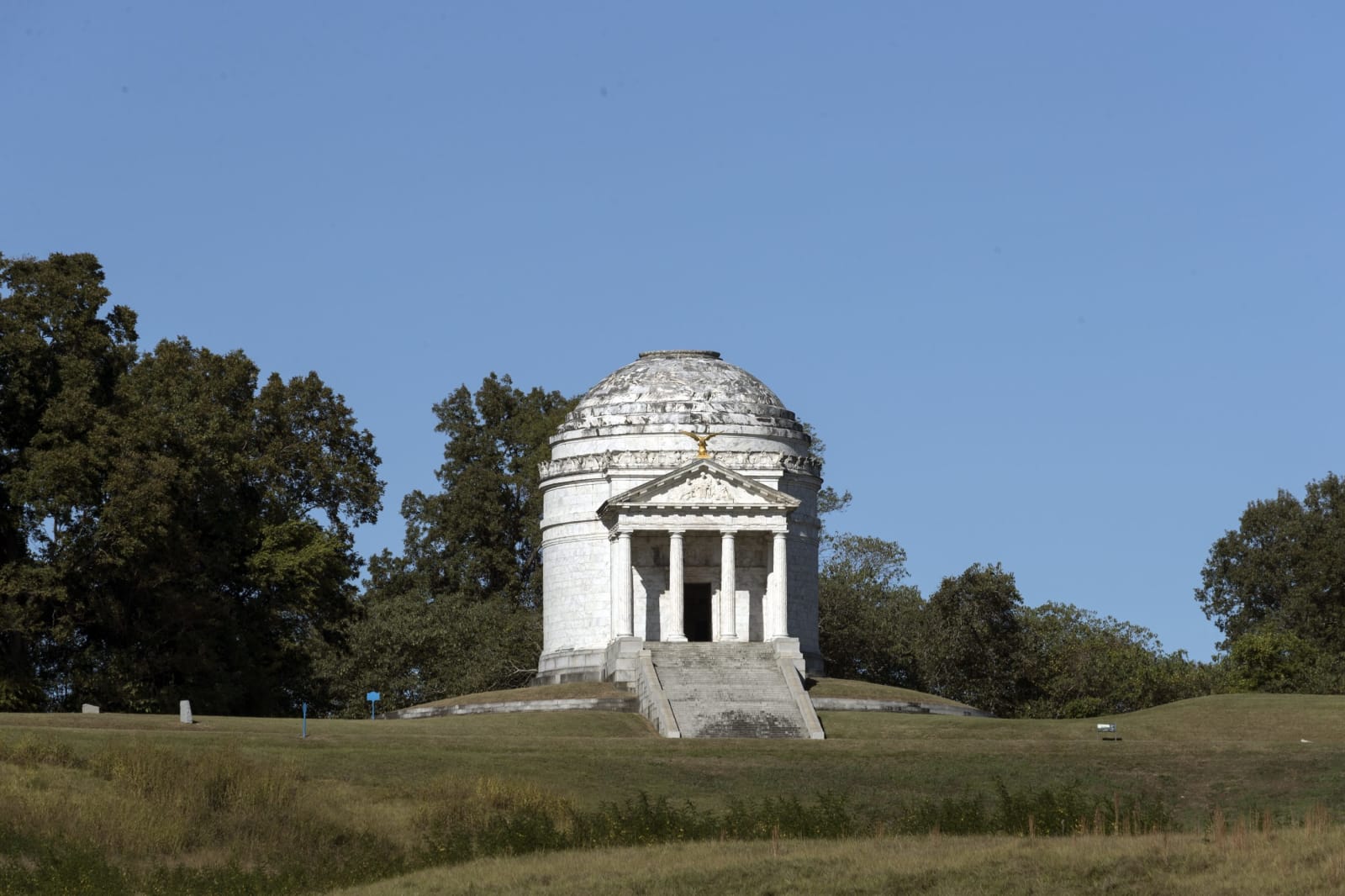
 Carol M. Highsmith / public domain via Library of Congress
The Story
Long before the siege, mound-building peoples lived on these bluffs, and in 1719 the French dealt with Tunica and other Native groups when they built Fort St. Pierre nearby. Congress made the military park in 1899 to commemorate the siege and defense of Vicksburg, and the National Park Service took it over in 1933. A 16-mile tour road passes about twenty miles of trenches and more than 1,300 monuments. The Illinois Memorial has 47 steps, one for each day of the siege that ended when Confederate General John Pemberton surrendered to Ulysses S. Grant on July 4, 1863.
The siege also ended slavery in Vicksburg. In 1860 two-thirds of Warren County's people were enslaved, and Vicksburg had a large slave market. After the surrender, as many as 20,000 enslaved people made their way to the city seeking freedom, and by November 1865 more than 2,200 Black students were enrolled in classes. United States Colored Troops garrisoned the town, and many are buried among 18,244 graves in the Vicksburg National Cemetery, most of them unidentified. The Mississippi African-American Monument shows two Black Union soldiers and a field hand.
The park also holds the aftermath. In December 1874 armed white men demanded the resignation of Peter Crosby, Warren County's first Black sheriff, and intercepted Black citizens marching to support him. About 23 Black residents were killed across the county. Homes on Old Jackson Road, now park land and including the Shirley House, were sites of that violence. An entrance pass is required.
Visitor Info
On the Map
Nearby
The closest stops worth working into your route
Historical markers nearby
Roadside plaques and monuments within a short detour