 Carol M. Highsmith / public domain via Library of Congress
The Story
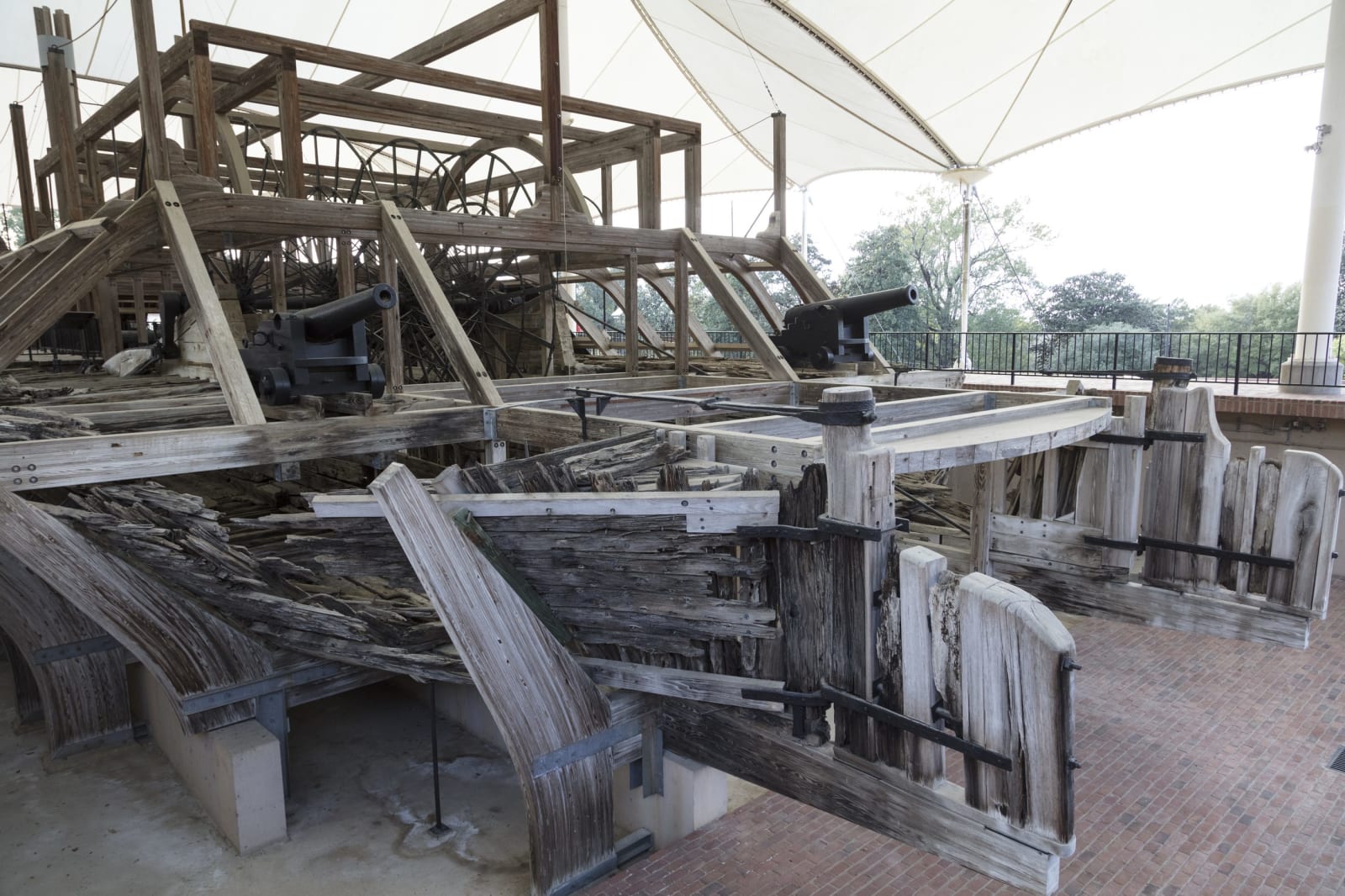
The USS Cairo was one of seven City-class ironclads that James Eads built at Mound City, Illinois, in 1861: 175 feet long, armed with thirteen cannons and drawing only six feet of water, so it could work the shallow Mississippi and its tributaries. Its service was short. It fought at Plum Point, Tennessee, in May 1862 and at Memphis in June. On December 12, 1862, Lieutenant Commander Thomas Selfridge led gunboats up the Yazoo River to destroy Confederate batteries and clear mines, then called torpedoes. Two explosions tore the bow and side open, and the Cairo slid into thirty-six feet of water in about twelve minutes. No one died. It was the first ship sunk by an electrically detonated mine.
The wreck then lay in the mud for roughly a century. Edwin Bearss, a National Park Service historian, searched with Don Jacks and Warren Grabau and by 1956 believed he had it. Divers confirmed the find in 1959 and lifted the pilothouse and an eight-inch cannon in 1960. Lifting cables cut into the hull in October 1964, so the Cairo came up in three sections that December and went to Ingalls Shipyard in Pascagoula for preservation. Congress authorized its display in the park in 1972.
The mud kept guns, equipment and dozens of other artifacts that normally rot away. The crew included four Black sailors ranked Seaman, at a time when the Navy had begun recruiting formerly enslaved men. The ship is displayed inside the national park.
Visitor Info
On the Map
Nearby
The closest stops worth working into your route
Historical markers nearby
Roadside plaques and monuments within a short detour