Home / Nebraska / The Sandhills / Valentine National Wildlife Refuge
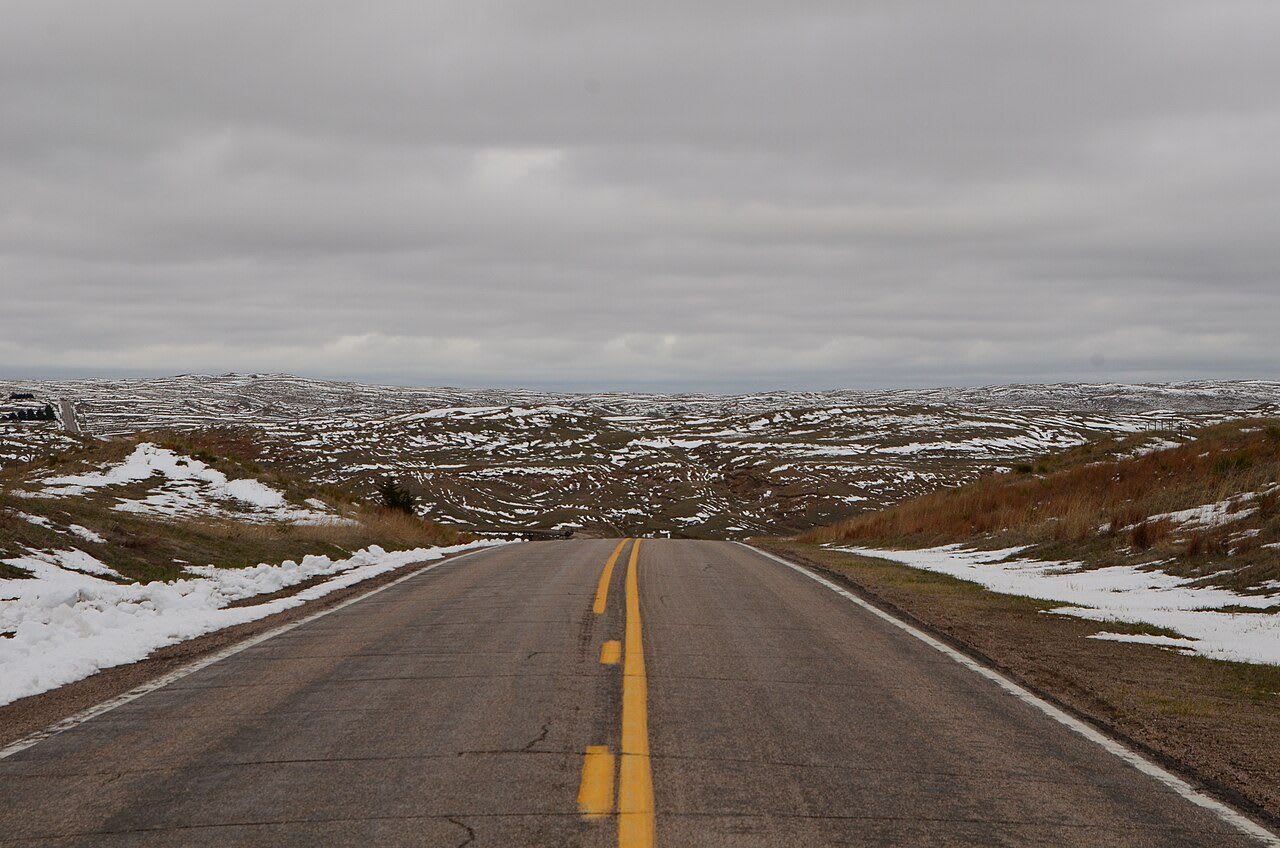
A two-lane road runs into Sandhills patched with melting snow at Valentine National Wildlife Refuge.Brandon Jones, USFWS / public domain via Wikimedia Commons
🌲Natural

Valentine National Wildlife Refuge

Part ofThe Sandhills

About 72,000 acres of Sandhills lakes, marsh and grass south of Valentine, set aside in 1935 for nesting birds, where prairie chickens and sharp-tailed grouse dance in April.

⏱
Duration
Two hours to a full day.
🎟
Admission
The refuge's pages list no entrance fee.
📅
Best Season
April and early May for the grouse and prairie chickens; spring and fall for migration. Open daylight hours every day; office open weekdays.

The Story

Valentine National Wildlife Refuge covers about 72,000 acres of the Sandhills south of Valentine, and most of what a visitor notices is water. Lakes, marshes and wet meadows lie in the valleys between the grass-held dunes, fed by underground seeps and springs. The refuge was established in 1935 as a breeding ground for migratory birds and other wildlife, and a Civilian Conservation Corps camp opened here the same year. In 1976 the National Park Service named it a National Natural Landmark for the tall and mid-grass prairie it protects.

About 260 bird species have been recorded, and some 150,000 birds pass through in spring and fall migration. The refuge is known for its greater prairie chickens. In April prairie chickens and sharp-tailed grouse gather on their dancing grounds for courtship displays, and the refuge has offered viewing blinds by reservation in April and early May; call the office. Blanding's turtles, muskrat and beaver live in the wetlands.

The headquarters is on US-83, 27 miles south of Valentine and 41 miles north of Thedford. The Civilian Conservation Corps Fire Tower Trail starts from a parking area at the west end of Hackberry Lake and ends on the old fire tower, now an observation deck over the lakes and hills, and the Marsh Lake Overlook looks across open water. Several lakes are open to fishing for perch, bluegill, bass and pike under the refuge's own rules. The refuge is open daylight hours only, vehicles stay on designated roads, and camping and fires are not allowed.

Visitor Info

⏱
Time Needed
Two hours to a full day.
🎟
Admission
The refuge's pages list no entrance fee.
📅
Best Season
April and early May for the grouse and prairie chickens; spring and fall for migration. Open daylight hours every day; office open weekdays.
🛣️
Highway
US-83

On the Map

Nearby

The closest stops worth working into your route

natural28 mi away
Fort Niobrara National Wildlife Refuge
An army post built in 1880 to watch the Sicangu Lakota at Rosebud, turned in 1912 into a refuge where bison and elk graze above the Niobrara east of Valentine.
natural30 mi away
Smith Falls State Park
Nebraska's highest waterfall, a spring-fed creek dropping 63 feet into a shaded canyon off the Niobrara, where Ice Age birch and an aspen hybrid found nowhere else still grow.
natural42 mi away
Nebraska National Forest, Bessey Ranger District
A pine forest planted by hand on the Sandhills from 1902 to prove a botanist's theory, still raising seedlings at its nursery and still recovering from the Bovee Fire of 2022.
cultural49 mi away
Buechel Memorial Lakota Museum
A Jesuit's half-century of Lakota words, plants and photographs, gathered with Lakota catechists on the Rosebud and kept where the objects were made and used.
historical54 mi away
Spotted Tail Gravesite
The grave of the Sicangu leader whose killing by Crow Dog in 1881 went to the Supreme Court and ended with Congress taking criminal law away from the nations.
cultural56 mi away
Sinte Gleska University
A university the Rosebud Sioux Tribe built in 1970 to teach its own language and history, with its own bison herd and the tribe's archives on campus.