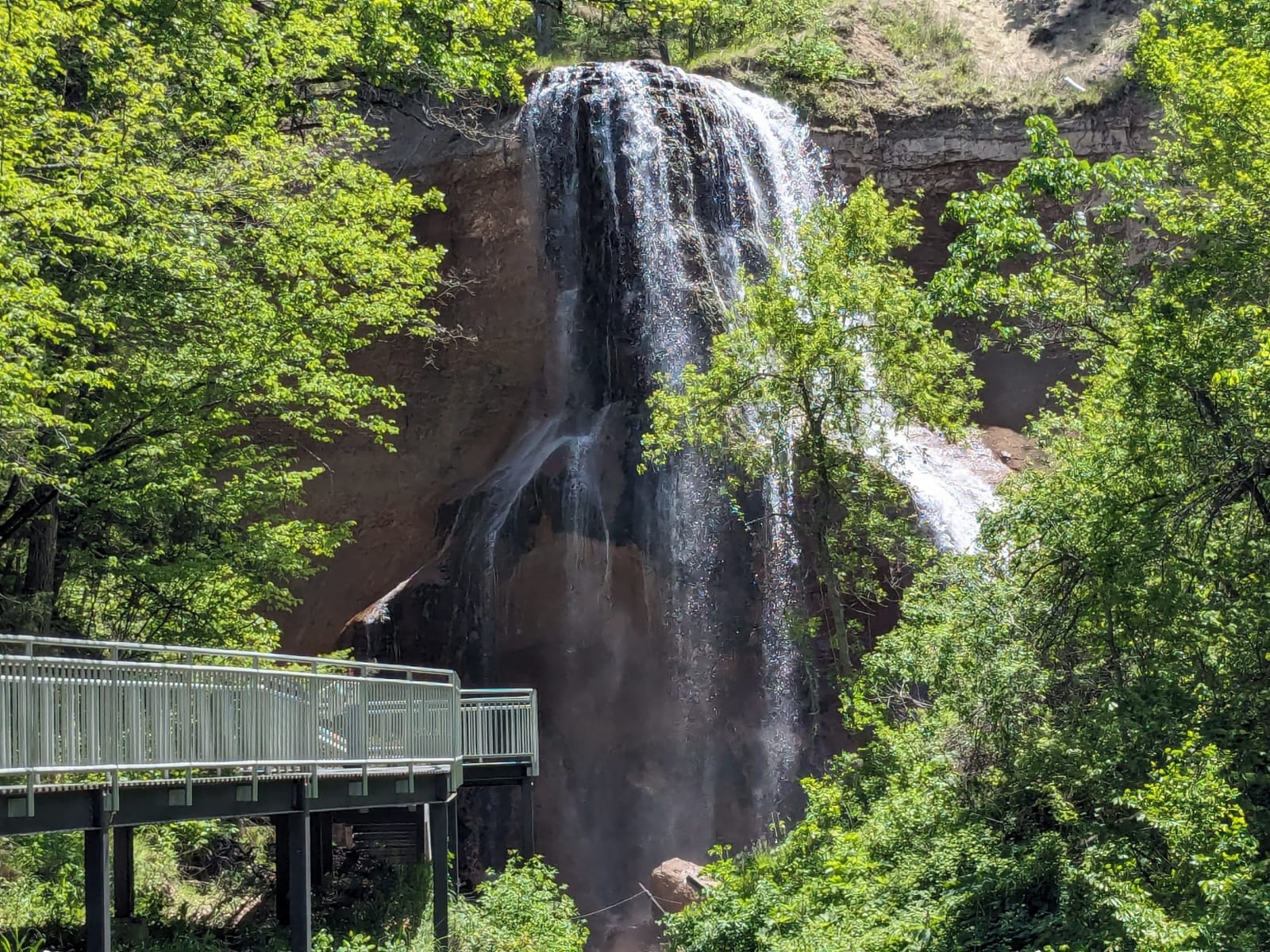
 Blaze Wolf / CC BY-SA 4.0 via Wikimedia Commons
The Story
Smith Falls is a short, spring-fed creek dropping off the south wall of the Niobrara valley into a narrow canyon. The National Park Service's most recent measurement put it at 63 feet, the highest waterfall in Nebraska. George Condra made it 68 feet in the 1910s, and claims have run as high as 100. Settlers called it Arikaree Falls. Frederic Smith received the first homestead patent on the land in 1896, and locals took to calling it the Smith fall.
The canyon's shade is the reason to slow down. Paper birch grows here, along with the Smith aspen, a hybrid of bigtooth and quaking aspen found nowhere else, boreal trees left behind when the glaciers retreated about 10,000 years ago. The birches are not reproducing, and they may not outlast a warming climate. This stretch of the river is where six plant communities meet: western pine, eastern hardwoods, northern boreal forest, and tallgrass, mixed-grass and Sandhills prairie.
Fred Krzyzanowski bought the land in 1941 for seven dollars an acre as cattle pasture, reportedly without knowing the falls were there, and let river floaters camp on it. The state leased it from his family and opened the park in May 1992. In 1996 a 1922 steel truss bridge moved from Verdigre was set across the Niobrara as a footbridge, the first way to the falls without floating or wading, and a new 500-foot boardwalk opened in May 2023. Many Valentine outfitters end their float trips here.
Visitor Info
On the Map
A story featuring this place
Go deeper into the history and character of this stop
Nearby
The closest stops worth working into your route