 Carol M. Highsmith / public domain via Library of Congress
The Story
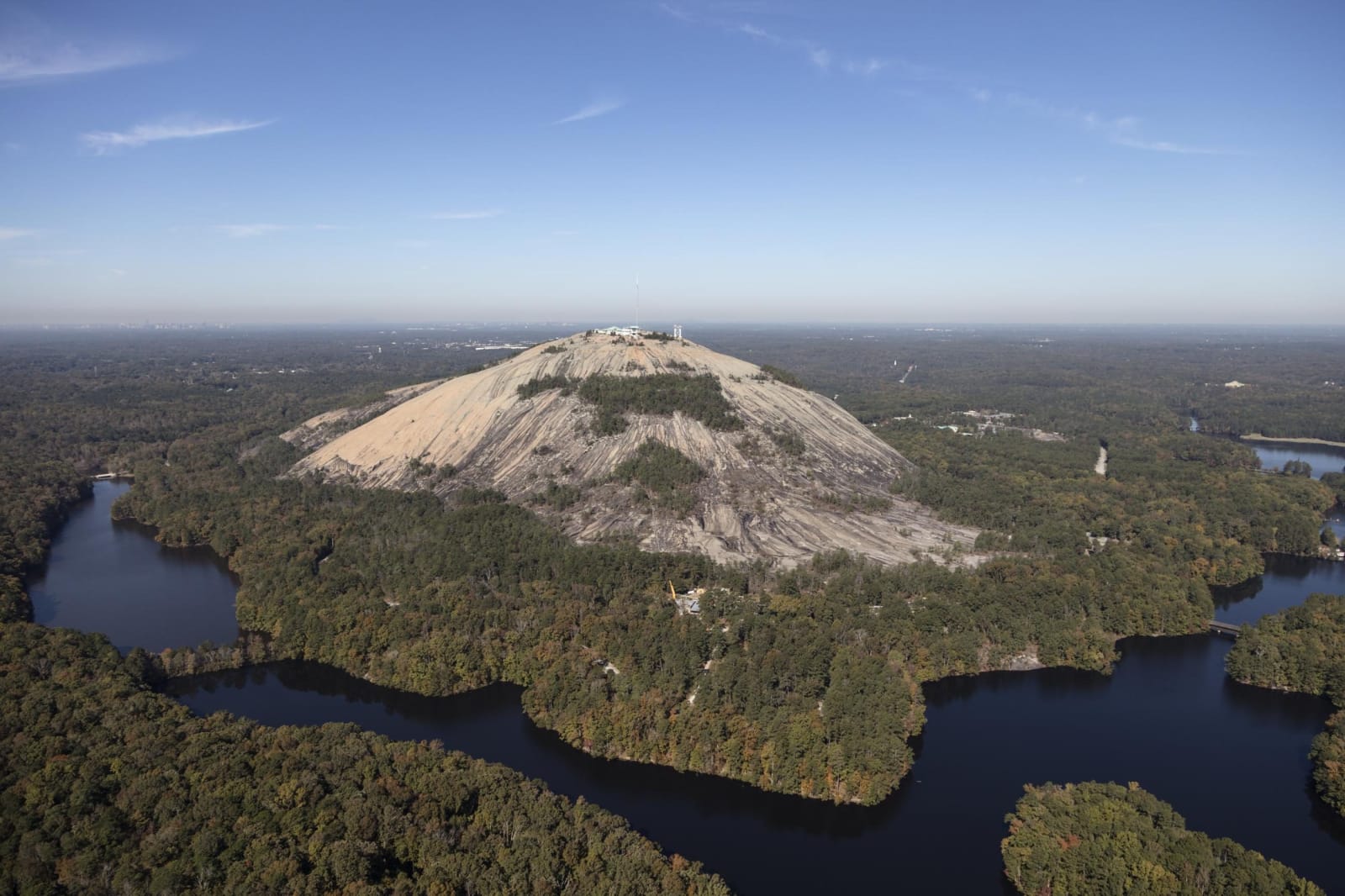
Stone Mountain rises 825 feet above the Piedmont, a dome of quartz monzonite and granite that people first visited about 9,000 years ago. By the late 1700s it lay between the Muscogee (Creek) confederacy and the Cherokee, and two trails made it a meeting place. The 1821 Treaty of Indian Springs took the Muscogee land east of the Flint River, and white settlers had the base by the late 1820s. Quarrymen cut its granite for the steps of the U.S. Capitol.
On Thanksgiving night 1915, a week before The Birth of a Nation opened in Atlanta, William Simmons and a small band burned a cross on the summit and launched the second Ku Klux Klan. The mountain's owner, Samuel Venable, was a Klansman and in 1923 gave the Klan a perpetual right to meet here. The United Daughters of the Confederacy's leader, Caroline Helen Jemison Plane, wanted Klansmen carved beside Robert E. Lee. Gutzon Borglum began in 1923 and was fired in 1925. After Brown v. Board of Education, segregationist Governor Marvin Griffin's legislature bought the mountain in 1958, voiding the Klan's easement, and the carving of Jefferson Davis, Lee and Stonewall Jackson was dedicated in 1970.
In his 1963 "I Have a Dream" speech, Martin Luther King Jr. gave the mountain one line: "Let freedom ring from Stone Mountain of Georgia." The carving remains and so does the argument. Many come for the rock itself; the walk-up trail from Confederate Hall reaches the summit, where the rare Georgia oak was first found.
Visitor Info
On the Map
Nearby
The closest stops worth working into your route
Historical markers nearby
Roadside plaques and monuments within a short detour