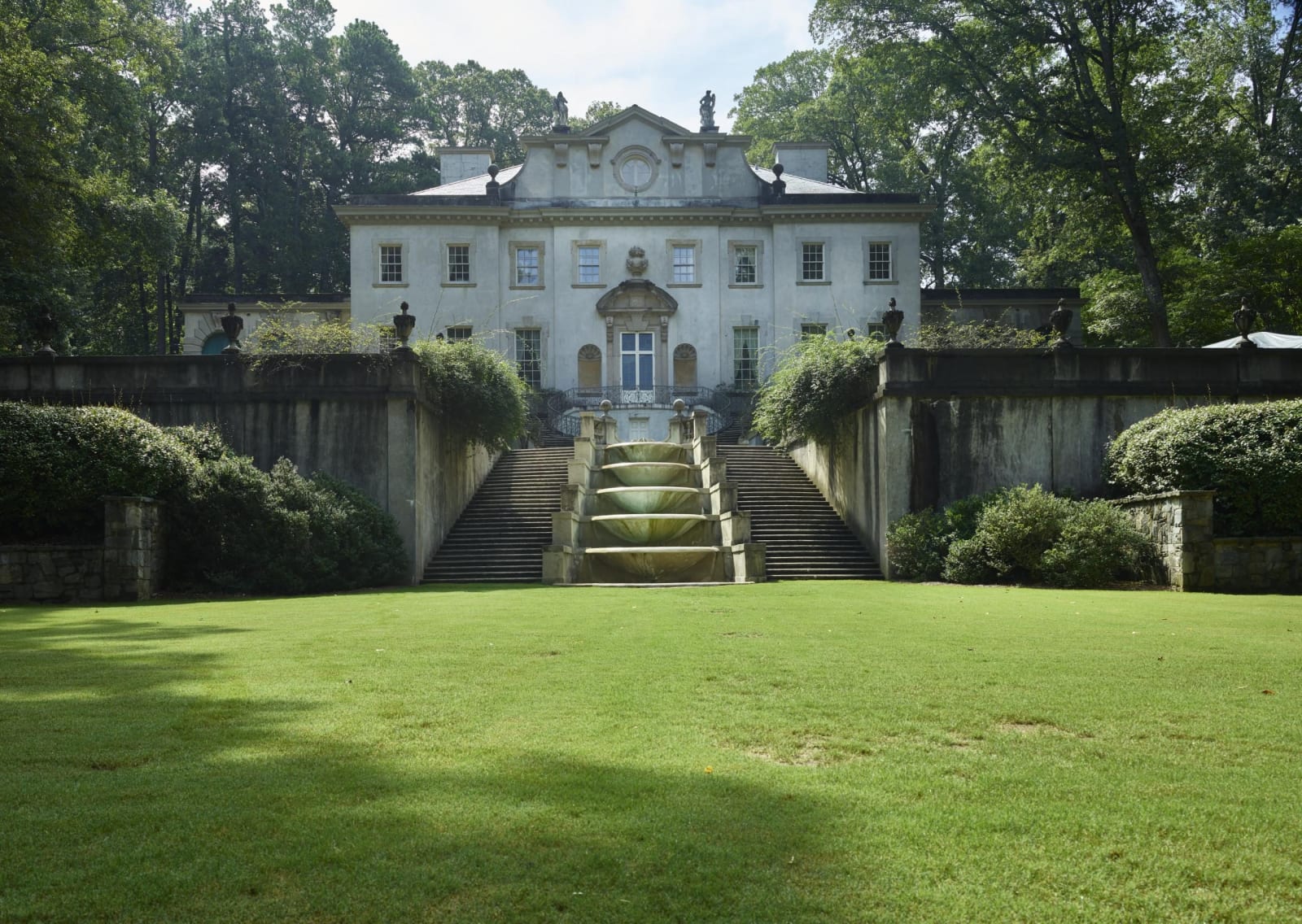
 Carol M. Highsmith / public domain via Library of Congress
The Story
The Atlanta Historical Society began in 1926 when fourteen of the city's leading citizens met to collect papers, and for decades its audience was mostly the city's white elite. A large bequest let it buy the Edward Inman estate, the Swan House, in 1966. It later moved the 1840s Tullie Smith Farm onto the grounds, worked from the 1970s on to take in African American, women's and working-class history, and took its present name in 1990.
Its centerpiece now is The Battle of Atlanta, a cyclorama painted in Milwaukee in the 1880s by German artists of the American Panorama Company. It hangs in the round and puts the viewer inside the Union lines at about 4:30 p.m. on July 22, 1864, and it was painted as a Union triumph for Northern crowds. After it came to Atlanta in 1892 it was altered and billed as "the only Confederate victory ever painted," though the battle was nothing of the kind; most of those changes were undone in the 1930s. A plaster diorama added under the Works Progress Administration gave one dead Union soldier the face of Clark Gable, on the mayor's order, after the actor's 1939 visit.
The painting moved here from Grant Park in 2017 and reopened on February 22, 2019, after a 35-million-dollar restoration that put back lost sky and canvas. A twelve-minute film projected on the painting tells how its meaning shifted, from New South pride to Lost Cause myth, and asks what such pictures leave out.
Visitor Info
On the Map
Nearby
The closest stops worth working into your route
Historical markers nearby
Roadside plaques and monuments within a short detour