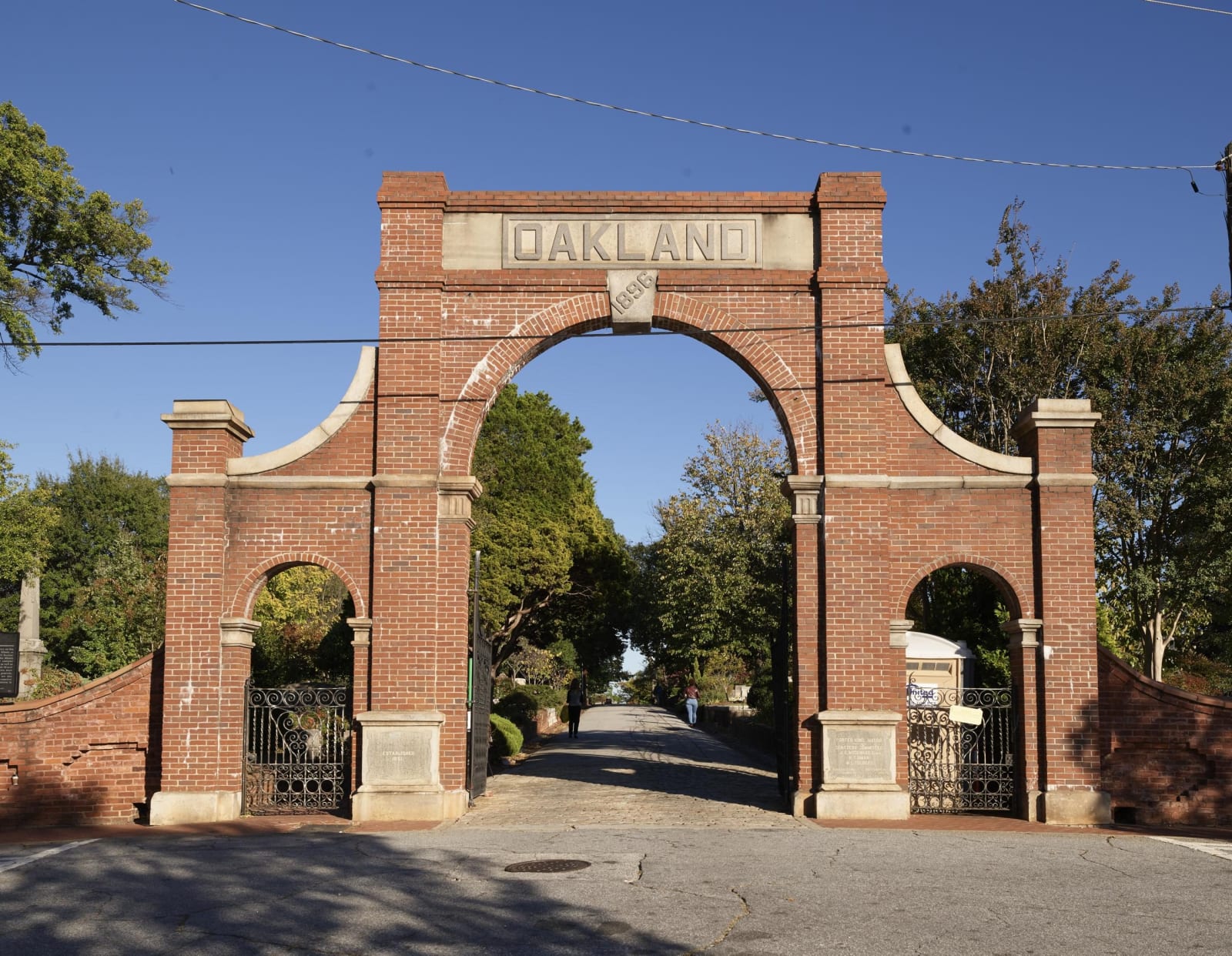
 Carol M. Highsmith / public domain via Library of Congress
The Story
Atlanta bought six acres southeast of town for a city cemetery in 1850, while slavery was still legal, and renamed it Oakland in 1872. It grew to 48 acres in the garden-cemetery style, with winding paths and carved monuments, and holds about 70,000 people. The city's divisions are laid out on the ground. The Black section, segregated when the cemetery expanded, has few stones left because many families could only afford wooden markers, and most graves there are now unknown. Carrie Steele Logan, who founded the first Black orphanage in Georgia, is buried there, along with Bishop Wesley John Gaines; Antoine Graves built the section's only mausoleum.
Next to it lies Potter's Field, seven and a half acres where a 1978 survey estimated some 17,000 burials of people too poor for a plot. The Hebrew Benevolent Congregation's old section in the original six acres is the second-oldest Jewish burial ground in Georgia; in the newer one, the stones of the Orthodox Ahavath Achim members carry Hebrew lettering. A Confederate section holds about 6,900 soldiers, many from the hospitals nearby; the city removed its marble lion in 2021.
Maynard Jackson, the city's first Black mayor, was buried in the original six acres on a plot the city gave. Margaret Mitchell and the golfer Bobby Jones are here too. The 1899 Bell Tower, near where John B. Hood watched the Battle of Atlanta, holds the visitor center.
Visitor Info
On the Map
Nearby
The closest stops worth working into your route
Historical markers nearby
Roadside plaques and monuments within a short detour