 Carol M. Highsmith / public domain via Library of Congress
The Story
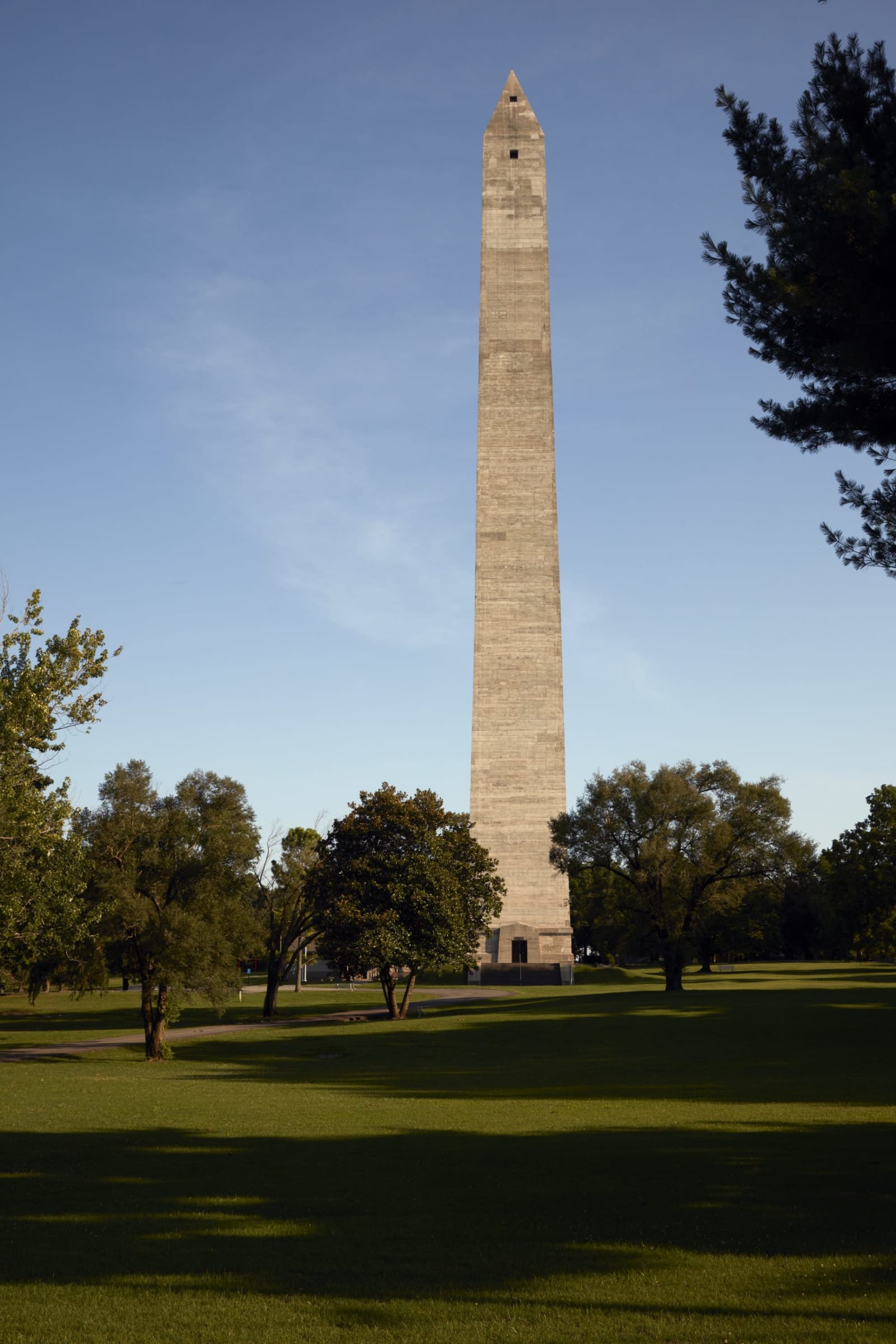
Jefferson Davis was born near here in 1808, in a log cabin about eighty miles from where Abraham Lincoln would be born the next year. His family moved south while he was a child, and he grew up to own a Mississippi cotton plantation worked by enslaved people and to lead the Confederacy, a government formed to keep slavery. Kentucky never left the Union. This monument is how part of the state chose to remember him anyway.
The idea came from former Confederate general Simon Bolivar Buckner at a 1907 reunion of the Orphan Brigade, Kentucky's best-known Confederate brigade. The Jefferson Davis Home Association bought the land, and the United Daughters of the Confederacy and the Kentucky General Assembly put money in. Work began in 1917, stopped at 175 feet when wartime rationing cut off materials, resumed in 1922 and finished in 1924 at 351 feet, at a cost of $200,000. It went up in the same years the Daughters were placing Confederate statues on courthouse squares across the South, as Lost Cause memory meant to cast the war as noble and slavery as beside the point.
The state took the park in 1927 and added an elevator in 1929. It is still among the tallest concrete obelisks in the world, and from the observation room you look out over miles of farm country. See it for what it is: not a record of the war, but of how the generation after it wanted the war remembered.
Visitor Info
On the Map
Nearby
The closest stops worth working into your route
Historical markers nearby
Roadside plaques and monuments within a short detour