 Missouri State Parks / public domain via Wikimedia Commons
The Story
Drivers coming to Roaring River go down and down: the last mile into the valley drops 400 feet. The park sits where the White River and its tributaries have cut into the edge of the Ozark Plateau, and the cut lays open shale, limestone, dolomite and chert in a small space, one of the few places in Missouri to see so many rock layers together. Roaring River Spring rises in a canyonlike gorge hung with ferns and moss and puts out more than 20 million gallons of 57-degree water a day. On the cherty ridges grows the rare Ozark chinquapin, and the 2,075-acre Roaring River Hills Wild Area is managed for solitude.
The money that made the park came from medicine shows. Thomas M. Sayman, a St. Louis businessman who had made millions selling patent medicines and soaps from traveling tent shows, could not get the state's game and fish commission to buy the spring, so he bought 2,400 acres around it and turned them over to the state, which acquired the original park in 1923. William McClure had dammed the river in 1865 to run a mill, and in 1933 the Civilian Conservation Corps rebuilt the dam for a fish hatchery. CCC and WPA crews built shelters, cabins, trails and the stone lodge, which was the work of the WPA, not the CCC. A bronze statue of a CCC worker stands in the park.
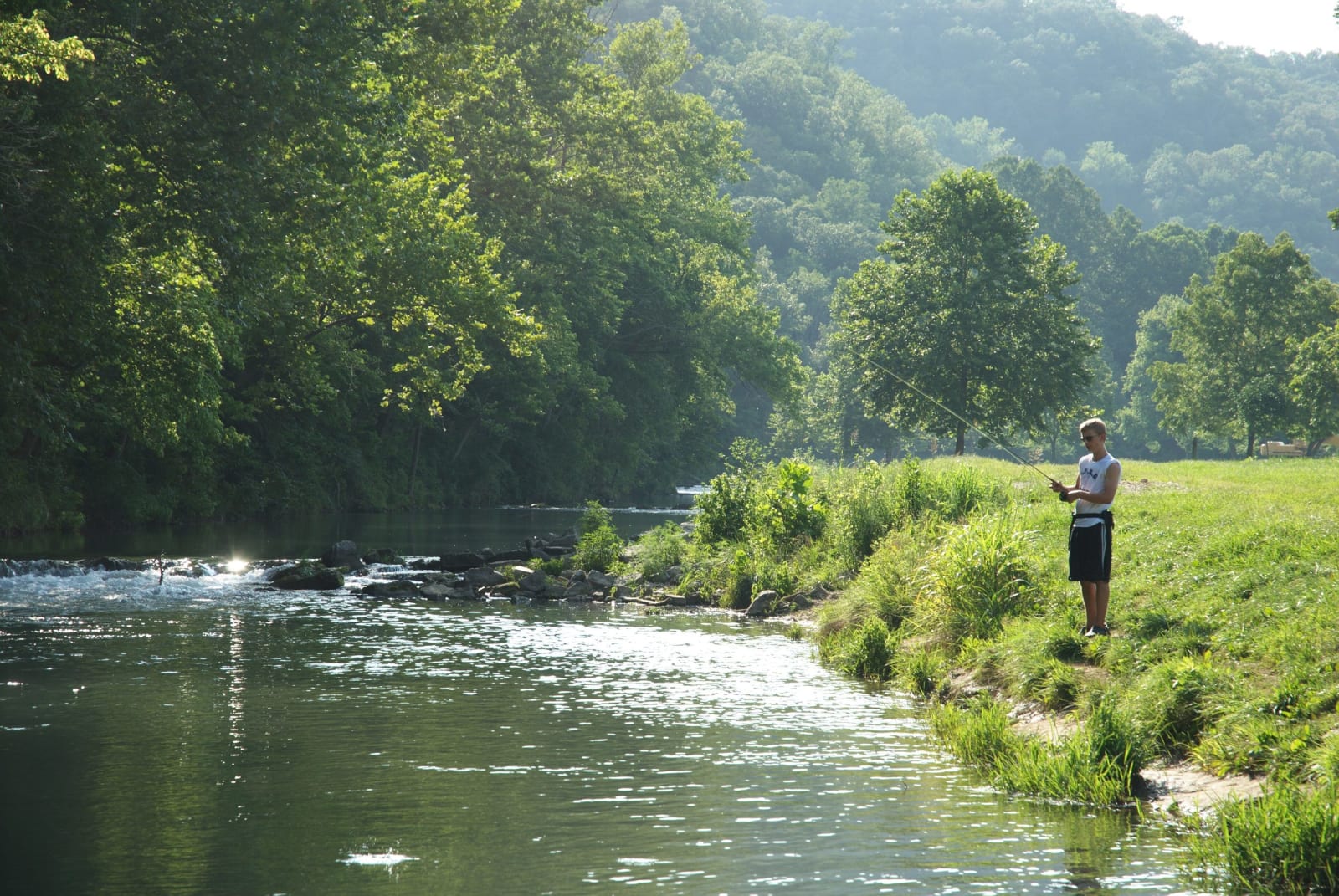
Roaring River is one of three Missouri state parks stocked with rainbow trout, and anglers come year-round.
Visitor Info
On the Map
Nearby
The closest stops worth working into your route
Historical markers nearby
Roadside plaques and monuments within a short detour