 jchapiewsky / CC BY-SA 2.0 via Flickr
The Story
Lucy Morgan came to Penland in 1920 to teach at the Appalachian School, and in 1923 she spent three months at Berea College learning to weave. Back in the mountains she started the Penland Weavers, a cottage industry that gave local women looms and materials and then marketed the cloth they wove, so they could earn money at home. Local volunteers built a cabin for the work, and then a larger hall.
In 1928 Morgan invited the weaving teacher Edward F. Worst to work with the weavers, and when he returned in 1929 several students from out of state joined a group of local women for a one-week class. That was the beginning of the Penland School of Handicrafts. Within a few years she had added other crafts and was raising money and putting up buildings. When she retired in 1962, the sculptor Bill Brown took over and added iron and glass, eight-week concentrations, a core fellowship and the resident artist program, which has helped root more than a hundred professional craft artists in the surrounding counties.
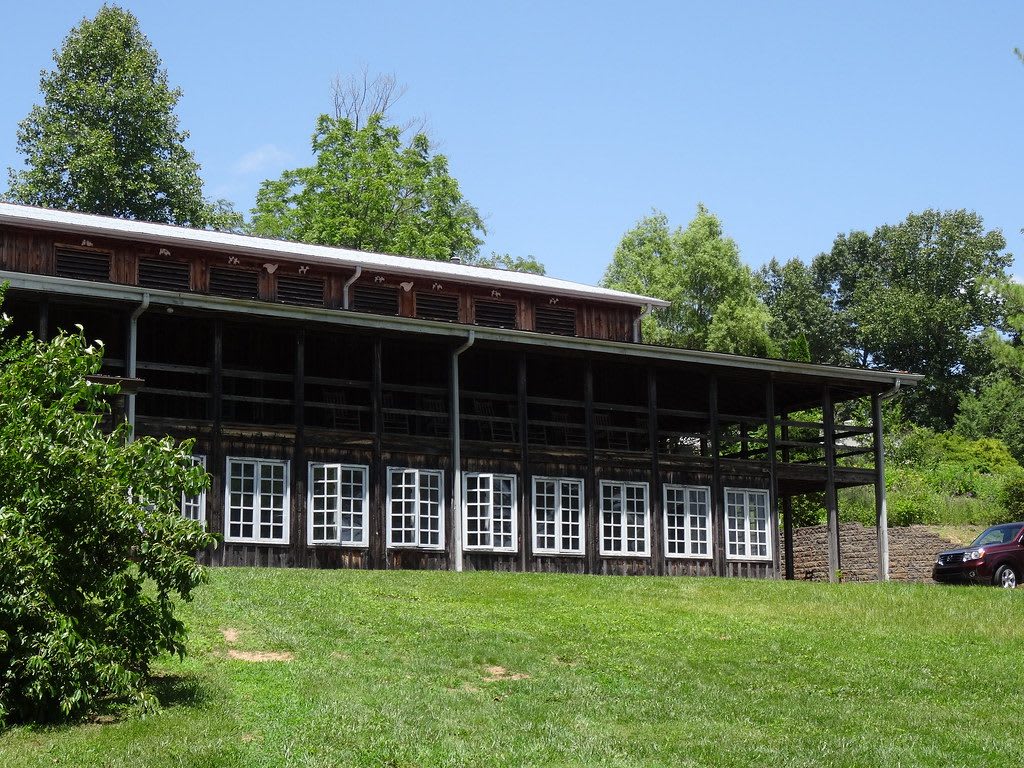
The campus covers about 420 acres and 57 buildings, and its historic core was listed on the National Register in 2003. Visits begin at the Penland Gallery, which shows and sells work by artists tied to the school and hands out a map for a self-guided walk. Classroom studios are closed to visitors, but the barns where resident artists work, the coffee house and the supply store in the old Craft House can be seen, along with places where students may be watched at work.
Visitor Info
On the Map
Nearby
The closest stops worth working into your route
Historical markers nearby
Roadside plaques and monuments within a short detour