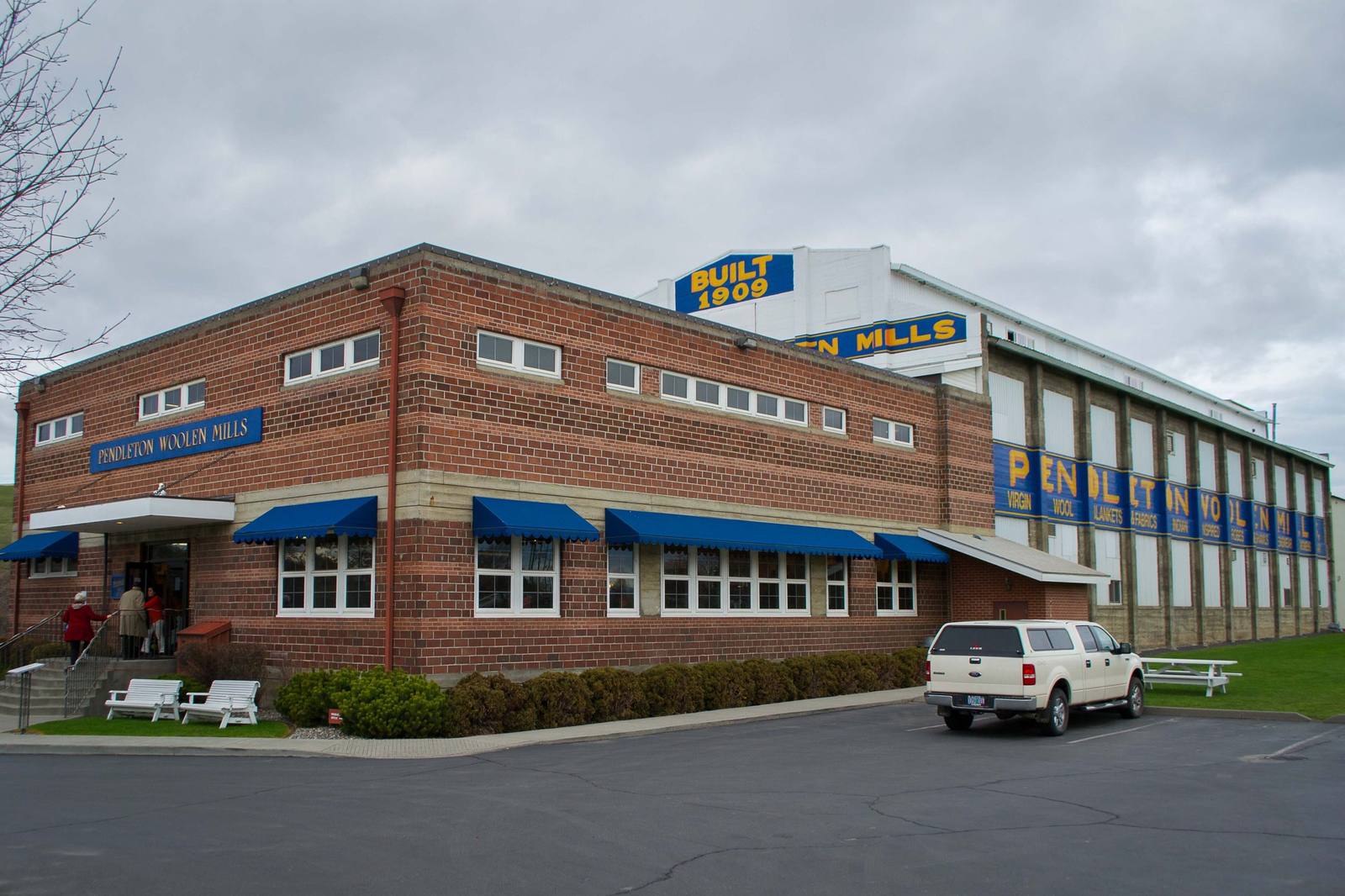
 Visitor7 / CC BY-SA 3.0 via Wikimedia Commons
The Story
The blankets came before the brand. A woolen mill opened in Pendleton in the 1890s to weave robes and shawls for the neighboring Umatilla, Cayuse, Walla Walla and Nez Perce, unfringed robes for men and fringed shawls for women, in the patterns and colors its customers asked for. It failed. In 1909 the Bishop brothers, Clarence, Roy and Chauncey, from the family behind Salem's Thomas Kay Woolen Mill, took it over with a $30,000 local bond issue that the family matched, built a concrete mill, and went back to the same trade.
Their designer, Joe Rawnsley, an English-born Jacquard weaver, spent long stretches with the tribes learning what designs and colors they wanted, first among the Nez Perce and then for months among the Navajo, Hopi and Zuni. The patterns drew on Plateau cornhusk, hemp and beaded work, diamonds, arrows and eight-point stars. The blankets became standard trade goods and then something more: the Cayuse, Umatilla and Walla Walla made them gifts at honor dinners, namings and funerals, and a Pendleton is still a customary gift across Indian Country. The company has called Native Americans its original and most valued customers; since the 1990s it has commissioned Native artists for designs and raised more than a million dollars for the American Indian College Fund.
The Pendleton mill still operates, with a store beside it.
Visitor Info
On the Map
Nearby
The closest stops worth working into your route
Historical markers nearby
Roadside plaques and monuments within a short detour