Home / Oklahoma / The Cherokee Outlet & the Osage Hills / Joseph H. Williams Tallgrass Prairie Preserve
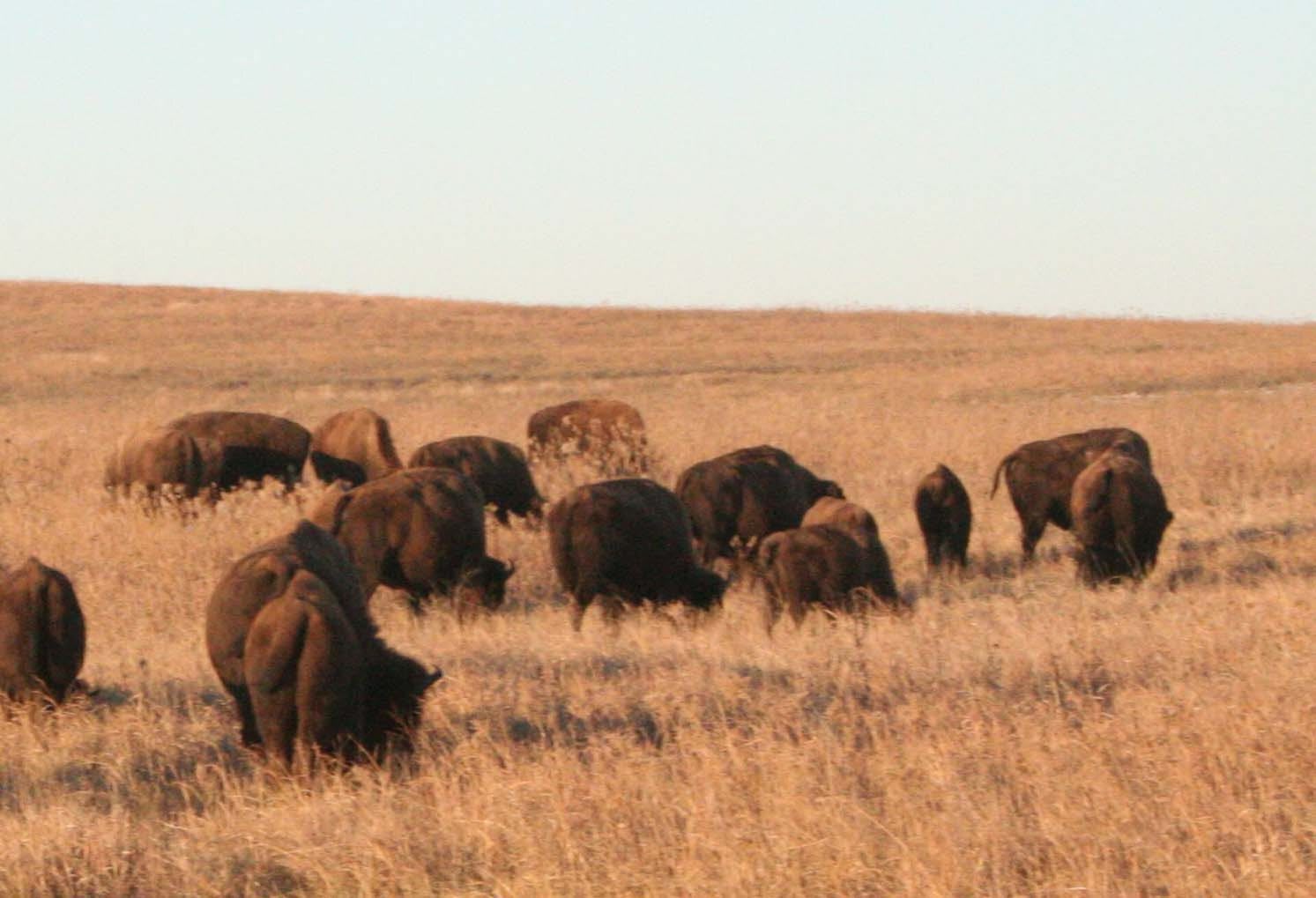
Bison grazing on the tallgrass prairie of the preserve north of Pawhuska.Reservoirhill / public domain via Wikimedia Commons
🌲Natural

Joseph H. Williams Tallgrass Prairie Preserve

Part ofThe Cherokee Outlet & the Osage Hills

Nearly 40,000 acres of unplowed Osage County prairie north of Pawhuska, worked with fire and some 2,500 free-roaming bison, with the cabin where John Joseph Mathews wrote his books.

⏱
Duration
Two to four hours for the drive and a trail.
🎟
Admission
Free. Open daily, dawn to dusk; the visitor center is staffed by volunteer docents on scheduled days, 10 a.m. to 4 p.m.
📅
Best Season
Late March to early May for booming prairie chickens at sunrise; mid-May to mid-June for calves and wildflowers; September for six- to eight-foot grass. The herd is out of sight of the road from October 1 to late November during the roundup.

The Story

In 1985 local supporters asked the federal government to buy one of the big ranches for a national park. Many ranchers, oilmen and members of the Osage Nation opposed the plan, and a 1987 bill for a 50,000-acre park run by the Park Service failed. In 1989 The Nature Conservancy bought about 29,000 acres of the old Chapman-Barnard Ranch instead. Today the preserve covers 39,650 acres, and the Conservancy calls it the largest protected tallgrass prairie left on earth. The Conservancy does not own the mineral rights, so oil wells still pump on the land.

In 1993 the preserve brought back 300 bison, given by the rancher Kenneth Adams. The herd has since grown to about 2,500, and it grazes ground that is burned in patches, a third of the productive range each year. During the fall roundup, from October 1 into late November, the herd is out of sight of the road.

A 15-mile drive loops through the range; bison are dangerous, so stay in the car. Three trails start near the visitor center: a level half mile on the Sand Creek bottomland, a one-mile study loop, and the two-mile Prairie Earth Trail over steep hills. Mathews built his stone cabin here in 1932 and called it The Blackjacks. He wrote Wah'kon-tah and Talking to the Moon there. The Conservancy bought the cabin in 2014 and offers free tours on the fourth Saturday of each month from May to October. Space is limited, so ask ahead.

Visitor Info

⏱
Time Needed
Two to four hours for the drive and a trail.
🎟
Admission
Free. Open daily, dawn to dusk; the visitor center is staffed by volunteer docents on scheduled days, 10 a.m. to 4 p.m.
📅
Best Season
Late March to early May for booming prairie chickens at sunrise; mid-May to mid-June for calves and wildflowers; September for six- to eight-foot grass. The herd is out of sight of the road from October 1 to late November during the roundup.
🛣️
Highway
OK-99 / County Road 4201

On the Map

Nearby

The closest stops worth working into your route

cultural13 mi away
Osage Nation Museum
The Osage Nation's own museum on the Pawhuska agency campus since May 1938, built around a trader's collection the council bought back and the faces of the 2,229 original allottees.
cultural25 mi away
Kanza Museum
The Kaw Nation's museum at its Kaw City headquarters, telling in the Nation's own voice the century after the Kanza left Kansas: allotment, legal erasure, a drowned reservation and the return.
architectural26 mi away
Frank Phillips Home
The 26-room Neo-Classical house in Bartlesville that the founder of Phillips Petroleum built in 1909, kept almost as the family left it, furniture and all.
historical36 mi away
Etzanoa
The ancestral Wichita town on the Walnut River that Spanish soldiers called the Great Settlement in 1601, located again by archaeologists at Arkansas City and opened to visitors in 2026.
architectural36 mi away
Marland Mansion
E. W. Marland's 55-room Palace on the Prairie, built in Ponca City from 1925 to 1928 on oil first struck on a Ponca allotment, and lived in for only about three years.
historical38 mi away
Little House on the Prairie Museum
The Ingalls family's claim of 1869 and 1870 southwest of Independence, a squatter's homestead on the Osage Diminished Reserve, with a replica cabin, schoolhouse and post office.

Historical markers nearby

Roadside plaques and monuments within a short detour

Marker13 mi away
Oil in the Osage Indian Nation and the "Million Dollar Elm"
Marker24 mi away
The Gas That Wouldn't Burn
Kansas