 Carol M. Highsmith / public domain via Library of Congress
The Story
Two battles were fought across these fields near the rail junction at Manassas. On July 21, 1861, the first major battle of the Civil War ended in a Union rout back toward Washington; here Thomas J. Jackson's brigade held Henry Hill and Jackson got the name Stonewall. On August 28-30, 1862, the second battle was larger and bloodier, ending with James Longstreet's counterattack across Chinn Ridge. The Confederacy these men fought for had been founded to protect slavery, and many of the farms they fought over were worked by enslaved people.
Civilians lived at the center of both fights. Judith Carter Henry, 84 and bedridden, was mortally wounded when Union artillery fired into her house on July 21, the battle's only known civilian death; her household included Lucy Griffith, an enslaved teenager hired out to help with the work. Nearby stood the house of James Robinson, a free Black man born in 1799 who saved his wages as a tavern waiter, bought 170 acres in 1840 and became one of the wealthiest free African Americans in the county. His wife, Susan Gaskins, and their children were born enslaved to a neighbor; he bought two of his sons, and the rest of the family was entrusted to him when that neighbor died in 1847. The Robinson house stood until arsonists burned it in 1993, and its site is on the Henry Hill Loop Trail.
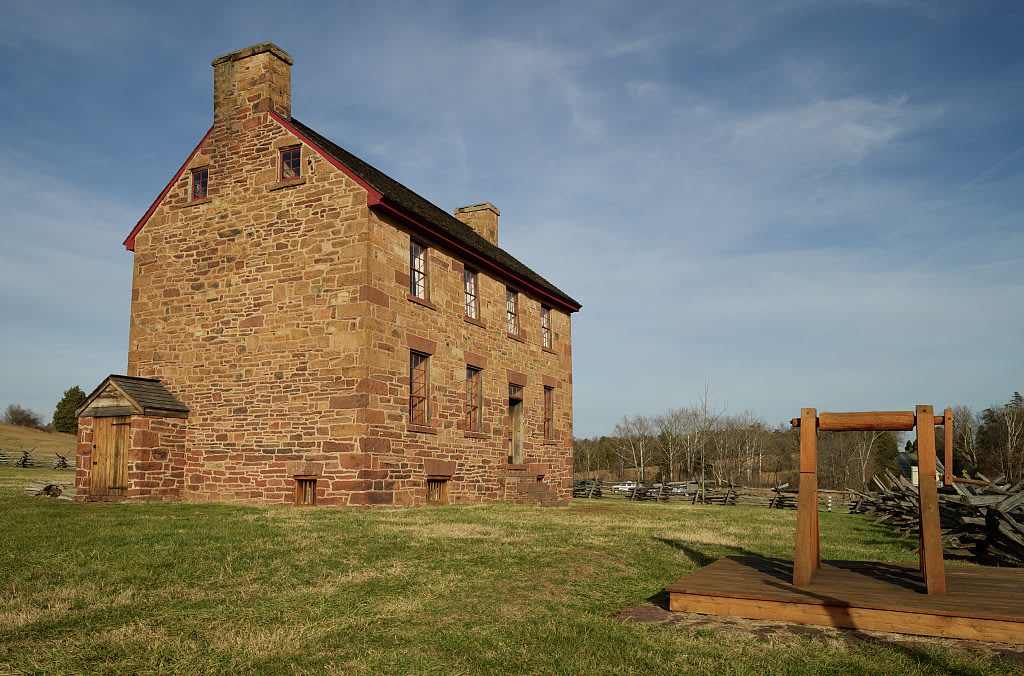
Start at the Henry Hill Visitor Center for the film and the loop walk, then drive to the Stone House, a hospital in both battles, and to Brawner Farm.
Visitor Info
On the Map
Nearby
The closest stops worth working into your route
Historical markers nearby
Roadside plaques and monuments within a short detour