Home / Virginia / Northern Virginia & the Potomac / Woodlawn and Pope-Leighey House
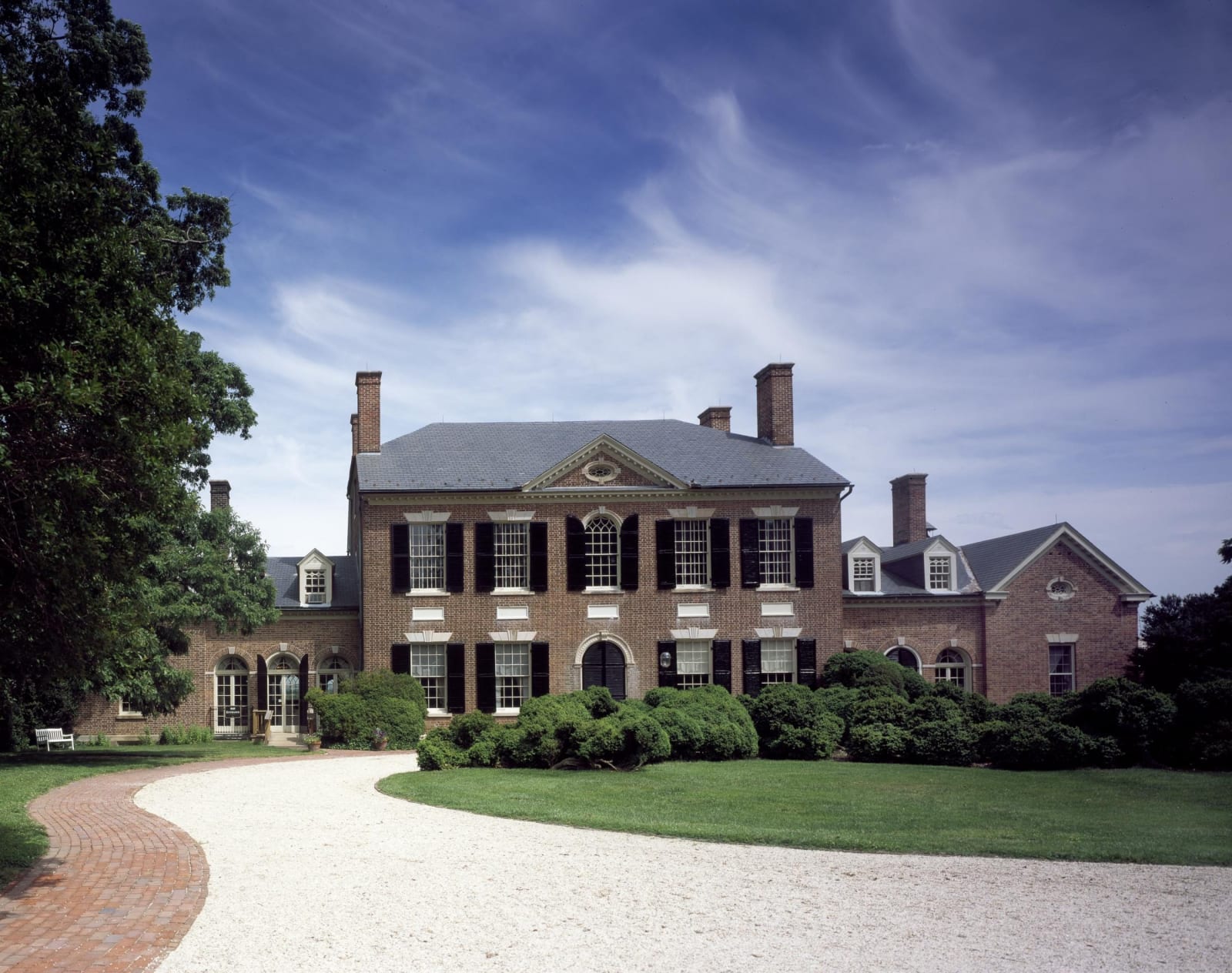
The brick Georgian mansion at Woodlawn with its wings, seen past a curving gravel drive and boxwoods.Carol M. Highsmith / public domain via Library of Congress
🏗️Architectural

Woodlawn and Pope-Leighey House

Part ofNorthern Virginia & the Potomac

Nelly Custis's 1805 house on Mount Vernon land, sold in 1846 to Quakers who farmed it without slaves, with Frank Lloyd Wright's 1941 Usonian house beside it.

⏱
Duration
One to one and a half hours for one house; two to two and a half for both.
🎟
Admission
Tour tickets charged; the grounds are free during open hours (Woodlawn and Pope-Leighey House, 2026).
📅
Best Season
April 16 to December 28 in 2026, Thursday to Monday 10 a.m. to 4 p.m., last tour at 3 p.m.

The Story

Before it was a plantation, this ground above Dogue Creek was home to the Doeg, or Tauxenent, people, and since 2024 an exhibit made with contemporary Native artists has honored them here. In 1799 George Washington gave 2,000 acres of Mount Vernon, with a gristmill and distillery, to Nelly Custis, Martha Washington's granddaughter, and his nephew Lawrence Lewis on their marriage, and had William Thornton, architect of the Capitol, design their house. It went up between 1800 and 1805, and people the Lewises enslaved worked its fields and kept its rooms.

In 1846 Nelly Lewis sold the place to Quakers from New Jersey led by Chalkley Gillingham and Jacob Troth, who divided it into small farms worked without slaves to show that free labor could prosper in Virginia. They built a meetinghouse nearby in 1851. The next owner, the Baptist John Mason, also refused to use slave labor, and in 1861 his son Eben Mason and the Quaker John Hawxhurst went from Fairfax County as Unionist delegates to the Wheeling convention that led to West Virginia. Woodlawn later became the National Trust for Historic Preservation's first property.

A five-minute walk away stands the Pope-Leighey House, an L-shaped Usonian house Frank Lloyd Wright designed for the journalist Loren Pope in Falls Church, finished in 1941 for about $7,000 on a copy editor's pay. When Interstate 66 was routed through its lot in the 1960s, it was moved here. Guided tours of each house run several times a day in season, and a combined tour takes both.

Visitor Info

⏱
Time Needed
One to one and a half hours for one house; two to two and a half for both.
🎟
Admission
Tour tickets charged; the grounds are free during open hours (Woodlawn and Pope-Leighey House, 2026).
📅
Best Season
April 16 to December 28 in 2026, Thursday to Monday 10 a.m. to 4 p.m., last tour at 3 p.m.
🛣️
Highway
US 1 (Richmond Highway)

On the Map

Nearby

The closest stops worth working into your route

historical2.6 mi away
George Washington's Mount Vernon
Washington's Potomac plantation, home in 1799 to 317 enslaved people, with the 1983 Slave Memorial beside their burial ground near the family tomb.
historical7.5 mi away
Freedom House Museum
The 1315 Duke Street office of Franklin and Armfield, the largest slave-trading firm in the country, now a city museum and National Historic Landmark.
historical8 mi away
Old Town Alexandria
The 1749 Potomac port town, with Market Square, markers for two lynching victims, and the library born of the 1939 sit-in, now the Black History Museum.
historical12 mi away
Arlington House
The Custis mansion above the Potomac, built as a memorial to Washington, home to nearly 100 enslaved people and to Robert E. Lee, now inside Arlington National Cemetery.
natural16 mi away
Prince William Forest Park
About 15,000 acres of Piedmont forest along Quantico Creek, made in the 1930s from the land of Batestown and Hickory Ridge, and an OSS spy school in the Second World War.
historical19 mi away
Jennie Dean Memorial (Manassas Industrial School)
The site of the Manassas Industrial School for Colored Youth, founded in 1893 by Jennie Dean, born enslaved, and for two decades the only Black high school in five counties.

Historical markers nearby

Roadside plaques and monuments within a short detour

Marker0.2 mi away
George Washington's Gristmill
Alexandria
Marker0.2 mi away
Doeg Indians
Mount Vernon
Marker0.6 mi away
Fort Belvoir
Fort Belvoir
Marker2.5 mi away
Ona Judge (ca. 1773-1848)
Mount Vernon
Marker3.3 mi away
William Brown, M.D. (ca. 1748-1792)
Lorton
Marker3.6 mi away
Harper v. Virginia Board of Elections
Alexandria