 Carol M. Highsmith / public domain via Library of Congress
The Story
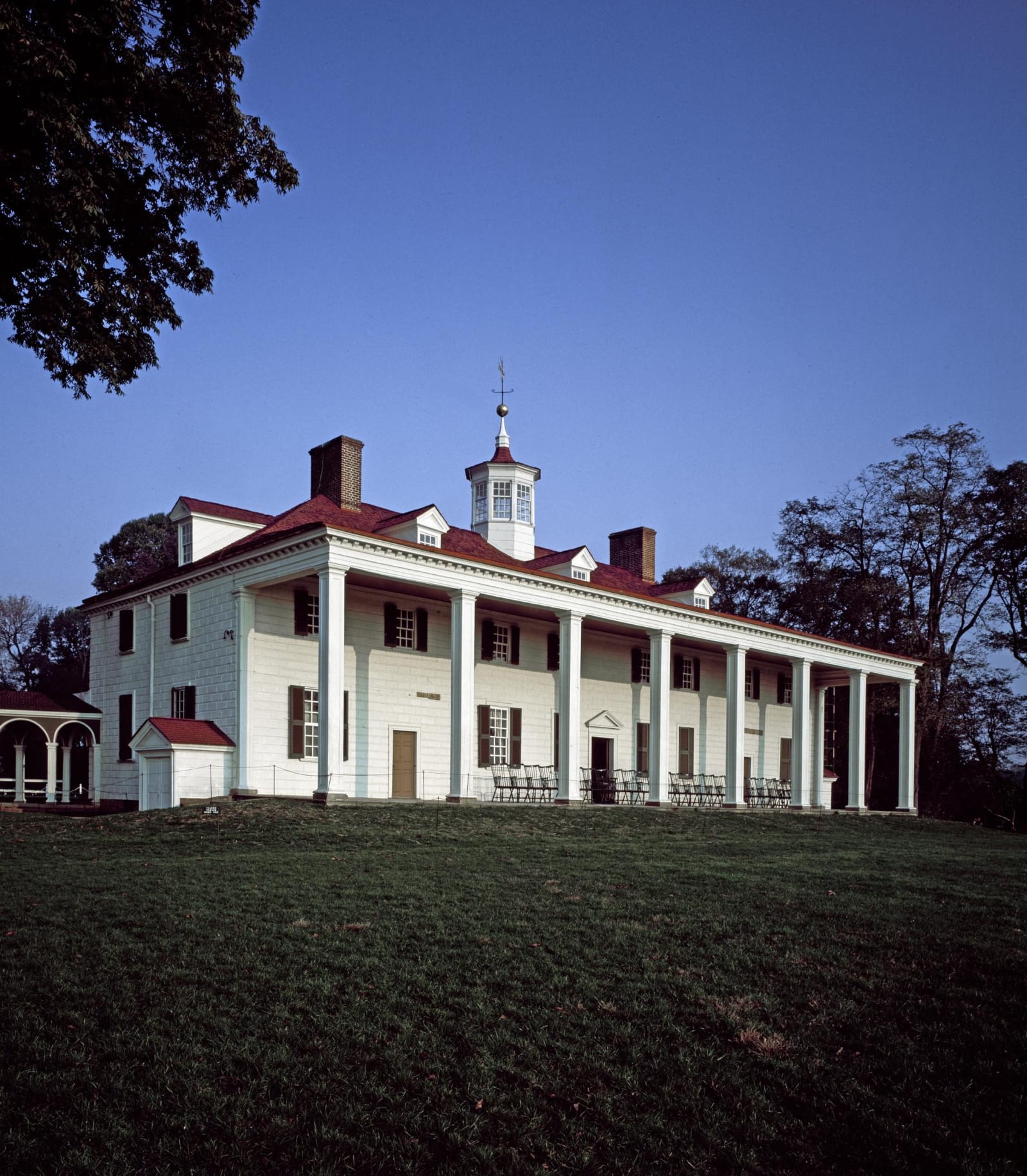
Mount Vernon was George Washington's home and a plantation of five farms, and in 1799 it held 317 enslaved people. Washington raised the house he took over in two campaigns, in 1758 and in the 1770s, into the 21-room mansion with its long piazza over the Potomac. When tobacco declined he turned to wheat and corn, a gristmill and, from 1797, a whiskey distillery, the most profitable venture the estate ran. All of it rested on the labor of the enslaved men, women and children who farmed, cooked, spun, built and served here.
Washington's will freed the 123 people he owned outright, but only after Martha Washington's death. She signed a deed of manumission in December 1800, and they became free on January 1, 1801. The 153 people held as dower property of the Custis estate could not be freed by either Washington; when Martha died they passed to her grandchildren.
The Mount Vernon Ladies' Association bought the mansion in 1858 and opened it in 1860. In 1929 it set a marker on the bluff for the enslaved people buried there in unmarked graves, likely the first such marker at a historic home, and in 1983 it dedicated the Slave Memorial with Black Women United for Action, to a design by Howard University architecture students. Archaeologists have since documented 87 burials. The memorial stands at the edge of the burial ground, near the Washington tomb, and daily tributes are given there. Mansion tours are timed, and on busy days the first open slot may be two hours after you arrive.
Visitor Info
On the Map
Nearby
The closest stops worth working into your route
Historical markers nearby
Roadside plaques and monuments within a short detour