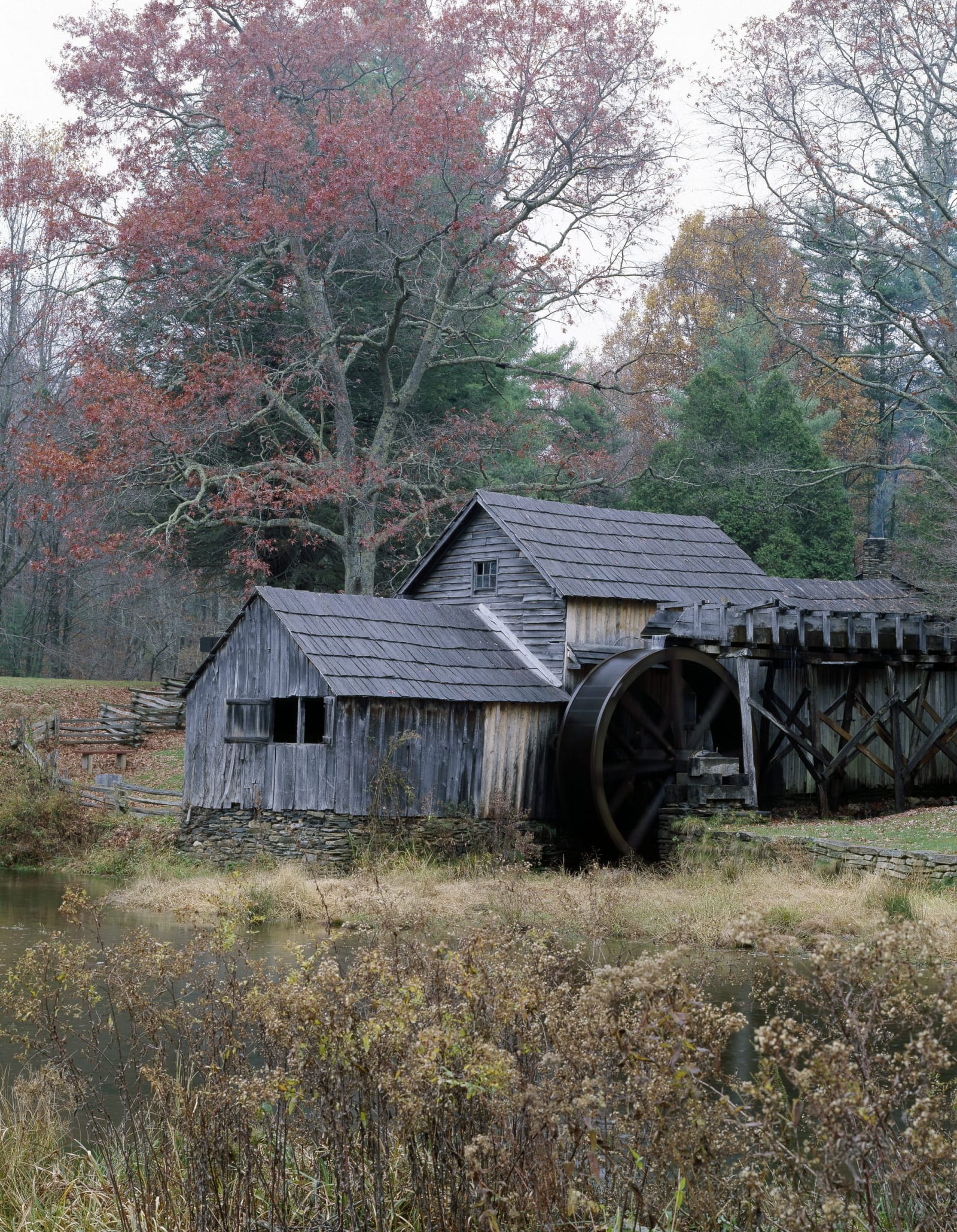
 Carol M. Highsmith / public domain via Library of Congress
The Story
Edwin Boston Mabry, known around Meadows of Dan as Uncle Ed, married Mintoria Elizabeth DeHart, called Lizzie, in 1891. He had worked at the Bertha zinc mines in Pulaski County and as a blacksmith in the West Virginia coalfields, and the couple saved toward a mill of their own. On this land Ed first built a blacksmith and wheelwright shop around 1900. Between 1903 and 1905 they bought land and water rights, and the gristmill was likely finished by 1908, with a sawmill added by 1910 and then a woodworking shop. Wagon wheels were Ed's specialty on roads that broke them constantly.
Dry years and a failing body wore him down in the 1930s, and he died in 1936. The government was buying land for the Blue Ridge Parkway through his farm, and its designers, led by the landscape architect Stanley Abbott, chose the mill for keeping. Even so, a state crew arrived in 1938 with orders to knock it down, until the first ranger on this stretch, Mac Dale, stopped them and raced to a telephone in Hillsville to get the order cancelled. During World War II the landscape architect Ken McCarter measured the mill for the Historic American Buildings Survey and had it rebuilt.
The trail loops past the gristmill, sawmill and blacksmith shop, a moved-in log cabin and other exhibits on mountain work. On summer and fall weekends volunteers demonstrate old crafts, and Sunday afternoon music and dancing has been a habit here for decades. Meadows of Dan is three miles south.
Visitor Info
On the Map
Nearby
The closest stops worth working into your route
Historical markers nearby
Roadside plaques and monuments within a short detour