 vastateparksstaff / CC BY 2.0 via Flickr
The Story
The hills here are full of staurolite, a mineral of silica, iron and aluminum that grew during the rise of the Appalachians into crystals crossing at sixty or ninety degrees. Most come out as an X, a few as a T or a square cross, and Virginians have called them fairy stones for generations, carried as charms against sickness and accident. The park takes its name from them, and hunting for them on the hillsides is still the first thing many visitors do.
The same ground held iron. Ore was dug from Stuart's Knob through the 1800s, first from the surface and then from shafts, at works owned by the Hairston family; local tradition that it armored the CSS Virginia has never been confirmed. A mining and logging town named Fayerdale grew up after 1905 and was abandoned when fire took its sawmill. In 1933 Junius B. Fishburn, a Roanoke banker and newspaper owner who had bought the tract, gave it to the state, and three companies of the Civilian Conservation Corps, most of the men from New York and New Jersey, came to build a park. The lake they made covered the old town site.
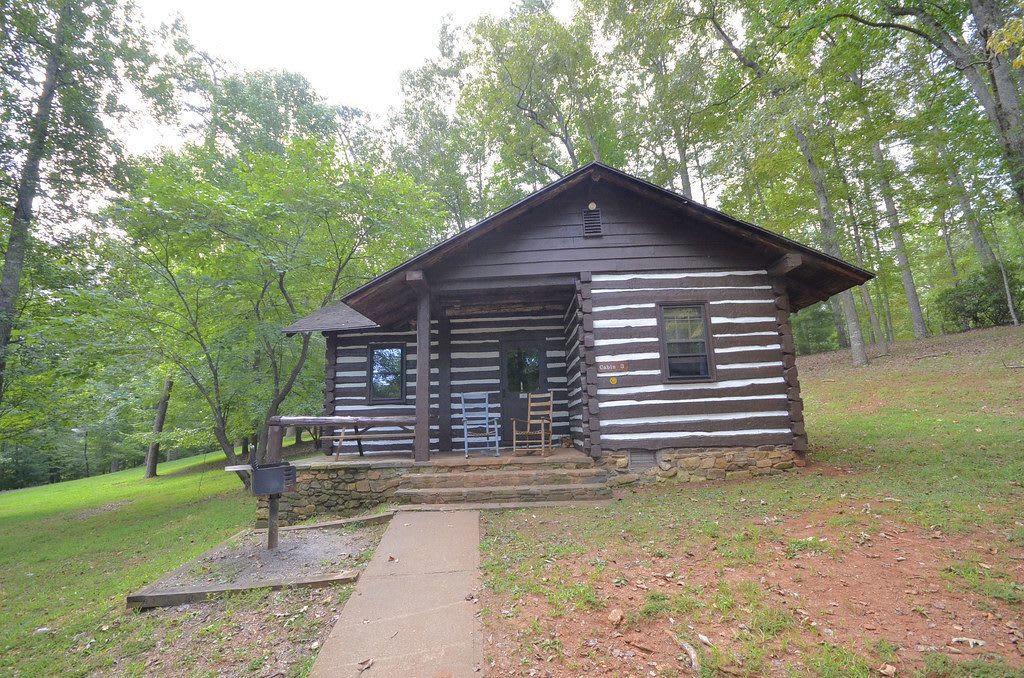
The park opened on June 15, 1936, the largest of Virginia's original six, though so unfinished that it closed again that August for the CCC to keep working. It now covers 4,741 acres around a 168-acre lake joined to Philpott Reservoir. Nine of the CCC's log cabins are still rented, Fayerdale Hall is the old restaurant, and an old shaft can be seen along the Iron Mine Trail.
Visitor Info
On the Map
Nearby
The closest stops worth working into your route
Historical markers nearby
Roadside plaques and monuments within a short detour