Roanoke & the New River Valley
Roanoke and the New River Valley: Smithfield's enslaved, Christiansburg Institute, Green Pastures, Link's steam trains, Mabry Mill, Floyd's Jamboree and McAfee Knob.
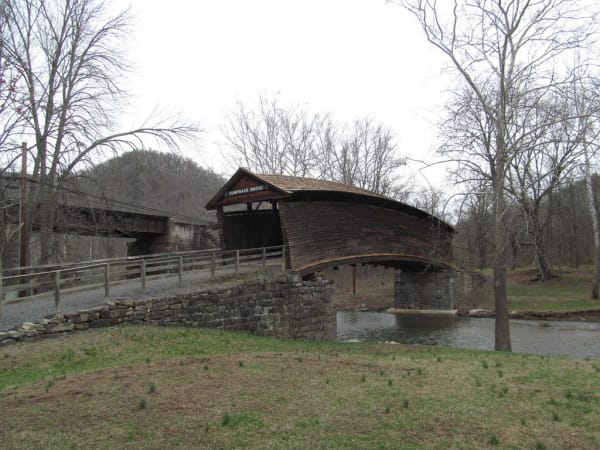
Siouan-speaking peoples lived in these valleys before the English came; the Tutelo met the traders Batts and Fallam at Totero Town, perhaps near Salem, in 1671, and their guides led them on to the New River. The turnpike over Humpback Bridge followed an old Native path, and at Historic Smithfield the Prestons' own papers tell of the Shawnee and Cherokee who fought for this country.
Smithfield is told through the roughly two hundred people the Prestons enslaved there. At Christiansburg Institute freedpeople began a school in 1866 that taught Black students for a century, and in Roanoke the Harrison Museum carries on Lucy Addison's school and the Gainsboro that urban renewal cleared. Green Pastures, built after an NAACP campaign, was where Black families could swim when Virginia's parks would not have them.
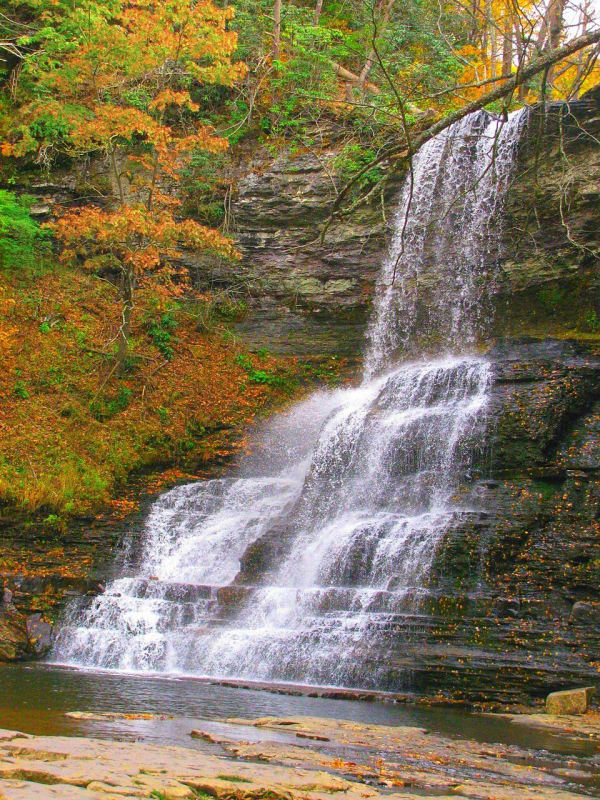
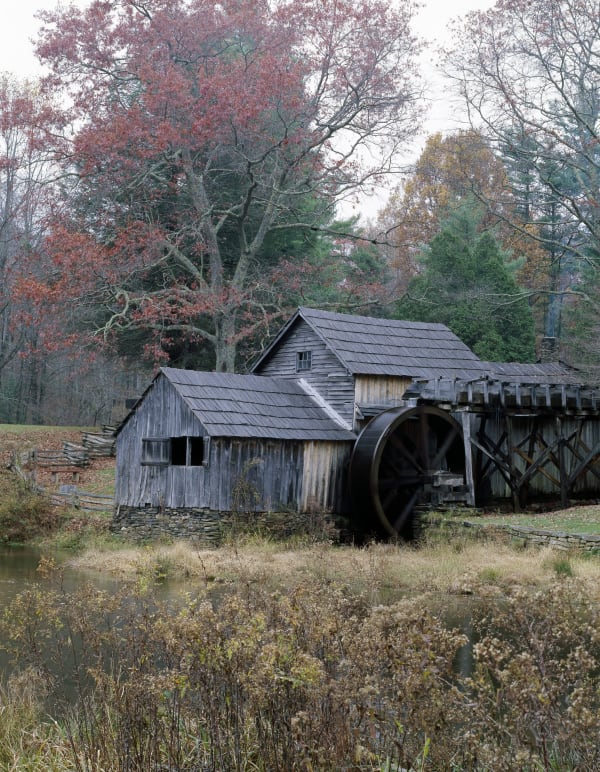
The railroad made Roanoke, and the O. Winston Link Museum keeps the last steam trains in flashbulb light. In Floyd County, Mabry Mill still turns its wheel beside the Blue Ridge Parkway and the Friday Night Jamboree fills the Floyd Country Store. The high country closes the drive: McAfee Knob over the Catawba Valley, Mountain Lake, which drains and refills on its own, and the Cascades falling toward the New River.
What to See in Roanoke & the New River Valley
11 places across the region, grouped by what they are.
Natural Areas
Historic Sites
Towns & Gateways
Architecture
Roanoke & the New River Valley rewards the unhurried. Pick a base, fan out, and let the country between the headline stops surprise you.
← Explore more of Open Road Guide