 carlfbagge / CC BY 2.0 via Flickr
The Story
Castroville was planned as a day's wagon ride west of San Antonio, 25 miles out on the freight road to Chihuahua and El Paso. The empresario Henri Castro picked this ford of the Medina River, where water, shade and game had long drawn American Indian peoples, Tejanos and travelers, and on September 3, 1844, 27 people founded a European-style village here. Most of the colonists came from Alsace, and the town is still called the Little Alsace of Texas.
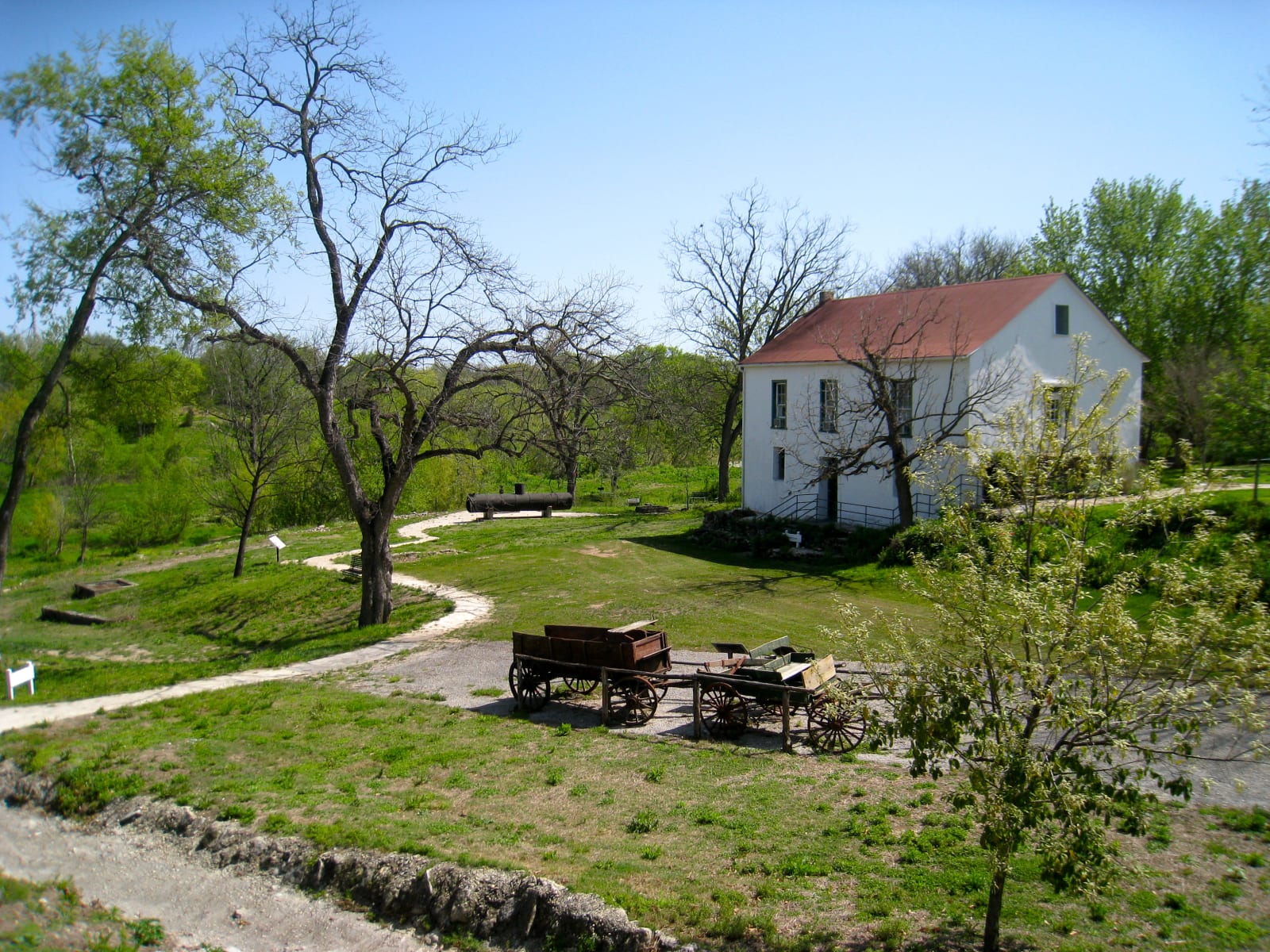
In 1849 César and Hannah Monod built a one-story L-shaped house with a store, stage stop, post office and separate kitchen. John and Rowena Vance bought them out in 1853; John was postmaster until 1872, and the Vances added a second floor and began renting rooms to travelers. In 1854 George Louis Haass and Laurent Quintle built a gristmill and cotton gin on the river, fed by a headrace from the dam through an underground channel to the mill pit. The Alsatian Courand family ran the mill from 1876 and bought the Vance place in 1899, milling corn, wheat, cotton and wool even after the railroad bypassed the town in the 1880s.
Jordan T. Lawler bought the property in 1925 and turned the mill to making electricity in 1927. His sister Ruth Lawler, inspired by the 1936 Centennial, restored the buildings and named the hotel Landmark Inn in 1942. She gave the site to the state on March 11, 1974, keeping the right to live here until her death in 1990. The inn still rents eight rooms.
Visitor Info
On the Map
Nearby
The closest stops worth working into your route
Historical markers nearby
Roadside plaques and monuments within a short detour